
THIS MONTH IN KOREAN HISTORY - August 2026
Oldest map of Joseon with Hangeul, 한글조선전도, created mid 18th CE to 19 CE.
WHAT LED TO JAPAN COLONIZING KOREA?
By Sharon Stern
August 15th marks National Liberation Day in Korea. It commemorates the day the Korean peninsula was liberated by the Allies at the end of WWII from the occupation of Japan. It is the only political holiday celebrated in both North and South Korea. This liberation ended the first occupation by a foreign power of the Korean peninsula since the mythological founding of the kingdom in 2333 BCE, documented in the Samguk yusa– the collection of history, myths and legends of the Three Kingdoms.
The celebration is, in one way, is bittersweet, since Korea was immediately occupied again by the Soviet Union and the United States – deemed after Japanese occupation to be unable to rule itself. In the US, we often hear the phrase “freedom isn’t free.” There is a price for being free. The phrase has specific meanings in the US, but reflecting on the last 150 years of Korean history, we can see a price for trying to be free being paid over and over and over again. The phrase Hermit Kingdom was coined for Korea by American Author William Elliot Griffit in the title of his 1882 book The Hermit Kingdom. The definition of hermit is someone who has withdrawn from society to live alone. Korea had a very, very vibrant society and wasn’t withdrawn. They just wanted to be left alone. But the rapidly changing world was not going to leave anyone alone.
This month, we are going to take a look at what led up to the Japanese occupation. Not the immediate events in the few years prior, but the endless, cascading events that yanked Korea out of its self-determined bubble where it sought to determine its own destiny. Colleges and universities worldwide focus entire courses on the period from 1750-1900 because so much happened worldwide at this time. We will look at tiny snippets from around the world, precisely because the world was around Korea, and then we will focus in on the peninsula and its immediate surrounding areas.
*Throughout the article - click on any image to enlarge
Introduction
World Expo in France showcasing Korea in the year 1900, Le Petit Journal, France, December 16, 1900.
People have been crisscrossing the globe since at least 2500 BCE, both by land and by sea, to explore new places and find routes to trade goods. Because we are situated in the “Western” world, the focus of our history lessons is always on Europe, which is a completely unfair narrative to the ancient explorers of Polynesia, Persia, Egypt, China.
From the 1500s on, the world changed rapidly. As different people around the world developed ways to move greater distances, people came into contact more and there was more conflict. Voyaging people wanted to lay claim to places they came upon.
The exact causes that left Korea in a vulnerable position to Japanese occupation are clear, but they include a pretty long list of events involving China, Japan, Russia and European countries that happened in fairly quick succession. We will look at the key events that brought sweeping change to the Korean peninsula.
Western Explorers
Map with the main travels of the Age of Discovery
Global maritime exploration has taken place from at least 500 or 600 CE with overland exploration starting much, much earlier than that, but the exploration we typically learn about is from Western Europe, which is loosely referred to as the second wave of exploration and specifically in Europe as the Age of Discovery and the Age of Sail.
The term “Western” originates from a reference to Western Europe or West of the Mediterranean, which was separated, to a great extent, from Eastern Europe or East of the Mediterranean after the fall of the Roman Empire. Western Europe colonized, enslaved people and traded goods around the globe in the 11th through the 14th centuries. They almost always had Catholic missionaries alongside them because of the very strong belief that it was their responsibility to convert the entire world to Christianity as part of imposing the “benefits” of European society. There was no distinction between the religious message they were imparting and the cultural norms, values and customs that were part of who they were and therefore imposed on those they encountered as well as used to judge them.
German Jesuit Johann Adam Schall von Bell (1592–1666), who was a Jesuit missionary in China (Ming and Qing dynasties) from 1622 to his death in 1666. Schall’s exchange with Crown Prince Sohyeon of Joseon was covered in our previous article.
The Chinese Ming Dynasty (the Ottoman Empire too), as well as its tributary Korea, were not open to the proselytization of Catholicism during the early centuries of European exploration and therefore more reserved in the way they traded with them. This didn’t stop European explorers from wanting to come in or at least pass by, however, and to map what they were sailing past. There were a number of Western encounters with the peninsula of Korea. Western explorers were persistent in their insistence to go where they wanted to go and if there was protest against that, well, they would just kill whoever was protesting.
Western Explorers represented a culture so different from the places they went that there was a shock factor to the encounters. Explorers kept detailed logs and diaries of their journeys and several of these are available electronically online, which we link to. Explorers were sort of the reality TV of this era. People at home were hungry for stories of their encounters and most explorations added artists to their crews because both maps and artistic depictions of new people, animals, plants and lands sold very well. There was definitely competition between countries for who could establish trade routes first and who could be the first to “discover” a place. There was an attitude of superiority and a belief that if Europeans hadn’t been somewhere yet, it needed to be “found” and documented.
The Veritable Records of the Joseon Dynasty
If you know anything about the history of the Joseon Dynasty or if you have even seen an historic K-drama, you know that the structure and culture of Joseon was complex and vibrant. The Veritable Records of the Joseon Dynasty recorded the history of the entire dynasty from 1392-1910 and are the longest continuous documentation of a single dynasty in all of history. Korea’s culture was sophisticated, complex and based on a depth of understanding of thousands of years of literature and tradition. Europeans "finding” it didn’t mean it didn’t already exist.
It is very interesting to read Western descriptions of encounters with Korean people that describe people as wild and savages, simply because the people describing them hadn’t encountered men with long hair or flowing robes or didn’t understand the language or customs. One explorer felt he needed to describe the women of Joseon as ugly because their features were different than Europeans. In our current revival of villainization of anyone who is “other” than ourselves, we need to remember that the roots of villainizing those who are different from us go back a very long way in history. It is worth the time to read these explorer’s diaries and remember that no single country or culture is superior nor knows everything.
We will cover just a partial list of Western explorers who visited Korea from the 1500s up until the late 1800s in this section. We will look at incidents that resulted in direct conflict with Korea separately. A collection of photographs of a number of the diaries of the explorers is available from The National Maritime Museum of Korea in Busan via Google Arts and Culture. You can view them here.
The National Maritime Museum of Korea in Busan also has an online exhibit showing the history of the mapping of Korea by external explorers that is very interesting to walk through. You can view it here.
Gregorio de Céspedes
Céspedes memorial park in Changwon, Korea. There was some controversy when the park opened because there were no direct record of contact between Céspedes and Koreans.
This was the first known Westerner to visit Korea during the Imjin War. We covered the Imjin War in great depth in another newsletter and you can read the details here. This war represented the first attempt by Japan to take over the Korean peninsula because of Korea’s refusal to allow the Japanese to pass through and use Korea to attack China. It set up a future of tensions between China and Korea with Japan.
Gregorio de Céspedes was a Spanish Jesuit priest who wanted to proselytize in Korea, but there is no record showing that he actually was able to communicate directly with Koreans. He did proselytize Japanese soldiers during the war and he may have had contact with Korean prisoners. However, it is documented that these prisoners were repatriated, so it is possible they brought with them Christian ideas, though most likely clandestinely. He was invited onto the Japanese warships by an officer who had converted to Christianity by de Céspedes. De Céspedes ended up returning to Japan and continued his missionary work there.
Henricus F. Van Langren
Van Langren, H. F., Extra & Accurata Delinerarie World Map, Henricus F. van Langren (1595), Korea Museum Maritime Museum
Henricus F. Van Langren places Korea on a map as an island and labeled it as the Island of Thieves in 1595. His map was based on documented calculations by Marco Polo and is repeated in Jan Huyghen van Linschotten’s book (see below).
Jan Huyghen van Linschoten
Map in Discourse of Voyages into the East and West Indies (1595)
Jan Huyghen van Linschoten was a Dutch merchant from Holland, and his book Discourse of Voyages into the East and West Indies contained maps and information about the area for seafarers and contributed to more curiosity about the people and possible trade with the West. You can download a pdf version of the entire book here. It is in Old English, so if you are not used to reading that, you may find it challenging. References to Korea are in maps related to China, because it was believed that Korea was an island that was part of China.
Robert Dudley
On the Mystery of the Sea by Dudley On the Mystery of the Sea by Dudley (1646/1667), Korea Museum Maritime Museum.
On the Mystery of the Sea (Dell’Arcano del Mare) by Robert Dudley - 1646/1667. It was published in Italian. This was the first maritime encyclopedia that covered the entire world and the first maritime encyclopedia published by and Englishman. It is also the first to use the Mercator projection – the global map layout perspective we are used to seeing. The maps were made by Dudley himself and not mapmakers. The map that includes Korea shows the peninsula as an island, which was the case with mapmakers until the middle of the 1700s.
Luís Teixeira
Map of Japan by Luís Teixeira – 1636 is the first map where only Japan and Korea appear for the first time.
Martino Martini
Italian Jesuit missionary Martino Martini shapes Korea as a peninsula on a map for the first time in 1650
William Janszoon Blaeu
William Janszoon Blaeu map with Korea named as a separate country for the first time in 1571.
Hendrick Hamel
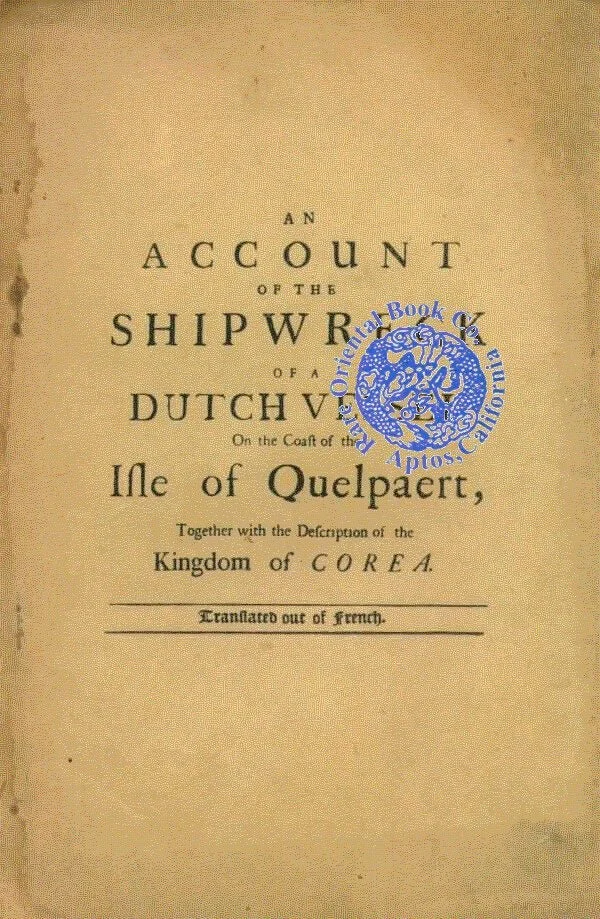
Hamel’s account of his travel to Korea.
Hendrik Hamel (1630–1692) deserves an entire article just about him and his experiences in Korea, which we may need to feature soon. He was a crew member of the ships of the Dutch East India Company. In 1653, while sailing to Nagasaki, Japan on the ship “De Sperwer,” he and 36 other crewmates survived a shipwreck off of Jeju Island. Korea was closed to outsiders and he was not allowed to leave. He lived basically in captivity until escaping in 1666 and returned to the Netherlands in 1668. Only a few of his fellow crew members also survived the thirteen-year imprisonment.
After returning to his homeland, Hamel wrote an account of the events of his travels and his life in captivity, which became the first report received in Europe of Korea and its geography, customs, politics, military, education, trade, etc. It is available on line and the details about the way the authority of the royal court, the class system and how the classes differed, gender separation, housing arrangements, food and animals are very interesting. Because his stay was so long, his descriptions are more observational than judgmental, making them even more interesting. Multiple print and electronic versions of the diary in English are available. Here is a link to a copy that you can also download, illustrations and all! The opening lines of the diary describe the Korean peninsula as shaped like Florida, but the size of Minnesota and the climate of California, which is pretty accurate and very helpful for someone that knows the geography of the US.
J.B.Du Halde
Map of China and Tibet by J.B. Du Halde.
Map of the Qing Dynasty was produced by Du Halde (J.B.Du Halde, 1674-1743) – Qing invited French cartographers to create a more accurate map and a map finally shows Korea as a separate nation
Jean Baptiste Bourguignon d'Anville
Map of Korea by Jean Baptiste Bourguignon d'Anville – first complete map of Korea, but with Romanized place names from Chinese
Jean-François de Galaup, comte de Le Pérouse
He was the first Westerner to visit Ulleungdo Island (울릉도) off the East Coast of Korea. He also visited and mapped Jeju Island. His expeditions were ordered by King Louis XVI of France. He sent his findings regularly to France, which is how they survived because de Galaup and his crew lost their lives in a shipwreck on coral reefs in 1788 in the Santa Cruz Island group of the Solomon Islands. There is a website of the dedicated curators of the objects recovered from de Galaup’s travels found on his sunken ship.
The original collection of his writings is in French and are available in a pdf here. Chapter 16 (XVI) is where he describes his encounters on Jeju and he talks about Henrick Hamel’s captivity. An English translated version is available in pdf here. His encounters with the local magistrate are described in detail and are interesting, including how the magistrate punished members of his entourage for mingling too closely with the explorers and getting drunk on the alcohol they were offered. The magistrate did not want de Galaup or his crew to come to land and met him on the ship, although they are allowed briefly on land later.
William Robert Broughton
Englishman William Robert Broughton Voyage explored the East coast of Korea 1797. His findings were overshadowed by the fact that he shipwrecked later and was court martialed for the loss of the ship. However, his diaries mention the coast of Korea many times, though it appears that he had several interactions with Koreans, as he includes a small dictionary of Korean terms in his diaries. You can read the diaries here.
Basil Hall
Hall’s diary on his voyage to Korea.
Basil Hall was a famous British naval officer and explorer. His voyage in 1816 included the West coast of Korea and his account - Account of a Voyage of Discovery – can be read here. Hall landed in several places and interacted with Koreans and his descriptions are detailed. He makes it clear that nowhere on the coast of Korea did anyone want them to land or come ashore, but they did so anyway. It is interesting that most of the explorers’ diaries emphasize how polite Koreans were while at the same time trying to urge them to leave. Hall had a Chinese interpreter with him and was initially confused that he couldn’t communicate with the Koreans, but once they figured out that if they wrote in Classic Chinese, communication could happen, things went a bit better. He details a multiple day encounter with a magistrate and his entourage coming aboard their ships. The Korean entourage got very drunk and the magistrate made a showing of punishing them aboard their own ship so that Hall’s party could see the punishment. Hall visited a number of places on the coast.
Karl Gutzlaff and H. Lindsay
Karl Gutzlaff
The diary of Karl Gutzlaff and H. Lindsay’s voyage in 1832 is available here.
Belcher Edward and Arthur Adams
Belcher Edward and Arthur Adams’s voyage in 1845 surveyed the Geomundo Islands in the Jeju Straight and his diary is available here.
Ernst Jakob Oppert
The tomb of Prince Namyeon.
The diary of German explorer Ernst Jakob Oppert’s three voyages to the forbidden land between 1866-1868 is available here. Opert’s name is notoriously known for his failed attempt to raid the tomb of Prince Namyeon, the grandfather of King Gojong. The history records demonstrate taht Opert may have tried to steal the body in the tomb as a hostage for Joseon to open trade with Germany. Read the details of the story below.
Isabel Bird
Isabella Bird’s Diary on Korea.
One of the most interesting diaries of a non-politician, not military person is that of Isabel Bird. She came later in the timeline of exploration than many, but she is interesting because she is a female explorer. She traveled to Korea in 1878 and her diaries are available here. She returned to Korea later as a missionary and her writings document in great detail Korean marriage customs, Buddhist temples in the mountains, Koreans living in Russia.
Timeline
Even though we looked at earlier explorers encounters with Korea, the real pressure both from within Korea as well as from other countries began in the middle of the 18th century. We are going to concentrate on events that happened from after 1750 up to 1905. The world underwent such rapid change during this period that entire history classes in major universities are dedicated specifically to these years. So much was going on everywhere in the world that it is impossible to cover barely any of it, but touching on a very brief overview can help us understand that what eventually happened to Korea did not happen in a vacuum. It was part of enormous changes transpiring globally.
Korea’s desire to simply be left alone was part of its eventual demise. Western countries were vying for global power and global control and they didn’t care if there was a country somewhere wanting to be left alone. As the West encroached on Eastern Asia, Japan was sucked into its influence both before and to a greater extent than China or Korea, forcing them to modernize sooner. This gave Japan a decided advantage at the turn of the century.
What Was Going on Elsewhere in World
It will help to begin by seeing what else was going on outside of Asia at this same time. The world was changing in very big ways and at a more rapid pace than any time prior to this. Advances in technology and medicine made travelling easier, as seen above. Countries no longer had the choice to remain completely isolated. Nationalism grew worldwide, helping to spark revolutions in Europe and calls for reforms away from monarchical and totalitarian governments. This era is referred to as the Age of Revolution, which includes the Industrial Revolution.
European States
The Scramble for Africa, map in 1913
The French Revolution (1789-1799) because of great social inequalities brought about the end of the monarchy, the rise of Napoleon and reshaped attitudes in all of Europe
The Napoleonic Wars (1803-1815) were wars between Britain, France, Russia, Austria, Hungary, Spain, Portugal, Switzerland, the Netherlands, Prussia, Saxony, Poland, Sweden, Denmark, Norway, Montenegro, the Serbian Empire and consequently the Ottoman Empire, the Balkans and America over territory, but also over trade routes and trading posts
The Greek War of Independence (1821-1829) sparked the Russo-Turkish War of 1828-1829. 1829Treaty of Adrianople – between Russian and Ottoman Empire – ceded the eastern part of the Black Sea and Armenia to Russia. This was the first of several conflicts where Russia sought more territory, which would eventually affect Korea directly.
Greece (1830), Serbia (1867), Romania (1877), Bulgaria (1908), won independence from the Ottoman Empire
Holland became independent from French and Belgian rule (1839)
Italy unified as a single state (1870)
Germany unified as a single state (1871)
The Scramble for Africa saw competitions between European (including British) powers for areas across the African continent
British Empire
British Empire in 1897, marked in pink.
Expansionism, control over trade and trade routes and colonialism were a top focus of the British Empire during this period
The loss of the American colonies in 1776 turned British attention away from the Americas and towards Asia and the Pacific
Wars fought by the British East India Company brought about British control over most of the Indian subcontinent by 1818
Britain pushed its way into conflict with the Dutch in what is now South Africa
Britain fought with Russia to control weakened areas of both the Ottoman Empire and the Qing
Russia
Peter the Great
Most of Russia’s expansion happened during this period
Peter the Great (1721-1725) had changed the political system in Russia from tsardoms to an Empire
Russia lost the Crimean War to the Ottoman Empire, Britain and France
Russia created the Trans-Siberian Railway (1890-1904)
Ottoman Empire
Ottoman Empire 1914
Modernization and decline (1828-1908) hit the Ottoman Empire as trade, conflict and change challenged the Empires traditions
Conflict with Muslim populations by the rapid growth of Christian populations created internal struggles
The Crimean War (1853-1856) brought armed conflict with Russia by a united France, Britain, Sardinia and the Ottoman Empire, but weakened the Ottoman rule by draining its financial resources
Americas
Declaration of Independence
The American Revolution (1775-1783) provoked because of British taxation without representation, saw America become an independent nation
Latin American countries began seeking independence and the abolition of slavery from Spain and Portugal because of racial discrimination and inequality of indigenous peoples
Central American countries gained independence in 1821
José de San Martín and Simón Bolivar (1821-1833) led independence movements in Chile, Peru, Ecuador, Venezuela, Colombia
Mexico fought several wars in order to finally establish its independence in 1824
The Mexican Revolution of 1910-1920 ushered in a truly centralized government and single-party rule
American joined the end of the Napoleonic Wars in the War of 1812 against the British
Elsewhere
The Haitian Revolution (1791-1804) brought about the end to slavery and French colonial exploitation. This was the most successful slave rebellion in history and influenced views on slavery in Europe. Napoleon’s defeat here in the New World was symbolically important to the rest of the colonially oppressed Americas
Industrial Revolution – 1760-1840
The creation of mechanized equipment to produce textiles and metals brought a transition in European and American economies, away from agriculture and buying of hand-produced goods to selling mass-produced goods
The unstoppable migration to urban centers and less physical labor brought about large population increases.
International Slave Trade
Slavery and the ownership of a person by another person have existed throughout all of human history. The first Korean diaspora was created when, during the Imjin War (1592-1598) the Japanese sold prisoners to the Portuguese for them to be resold as slaves, as well as the Japanese taking Koreans prisoner back to Japan.
The Arab Slave Trade lasted later than most and took 10-18 million people back to Arab countries from Africa, but also from Europe
The Trans-Atlantic Slave Trade saw Britain, America, France, Portugal, Spain take 12.5 million people to power plantations in the Americas and Caribbean
The international trade of slaves brought a large and constant movement of ships and people from one side of the world to another
So much change and movement were happening everywhere in the world that it was impossible for change to not come to Korea as well.
Korea and Surrounding Countries
Conflicts closer to home and internally combined with simultaneous Western encroachment forced Korea out of its much-desired isolation. Conflicts in China, Russia and Japan directly affected life in Korea. By the beginning of the 1800s, something major was happening all of the time, either directly in Korea or very close by. The number of events is head-spinning, but let’s work our way through the history.
Jeong Yak Yong was one of the most prominent Silhak scholars.
After the Imjin War and the Manchu invasion in 1627 that forced Joseon to recognize the power of the Qing Dynasty, the Joseon Dynasty saw relative stability and peace for the next 150 years. The Joseon Dynasty continued to resent the Qing, who they saw as barbarians, but they were obligated to pay an annual tribute to them and not do anything completely opposed to their command. An influx of Ming refugees into Korea aided in a continuation of Joseon intellectuals favoring Ming as the center of a civilized world while having to abide by foreign relations dictated by the Qing. This embracing of “(Ming) Chineseness” influenced Korean cultural identity through the end of the Joseon Dynasty.
The king was the absolute authority in Joseon. He referred to tradition, Confucian teachings, precedents of prior kings and consultation with the court. The composition of the royal court of the Joseon Dynasty included scholars from different clans who had passed national civil service exams (과거). The clans tried to influence politics both from within and outside of the palace. Clan faction fighting lead to the downfall of more than one Joseon king. The clans split into smaller factions throughout the Joseon Dynasty. The divisions came from differences in philosophy and Confucian interpretation and were usually very focused on royal succession.
Silhak (실학) scholars had existed in Joseon from the early 1500s. These scholars were generally from outside of the ruling clans and advocated for critical thinking toward strict Confucian teaching. They pushed for more open thinking in practical ways and advocated for social changes such as land reforms for poor farmers. They encouraged the study of science and technology and the exchange of ideas with foreign countries. Their influences became important when corruption and clan fighting began to break down the tight social structure of the court.
We are going to refer to different Korean royals. If you do not already know this, their royal names are assigned posthumously. That means that they have multiple names in their lifetimes, if you are searching for more information.
Joseon’s Throne Goes into Turmoil
The Throne (2015) depicts the death of Crown Prince Sado at the hands of his father.
In 1762, Crown Prince Sado was executed by his father, King Yeongjo, by locking him in a rice chest until he died. Crown Prince Sado had been mentally ill and had murdered people in the palace as well as raping palace maids, which was corroborated in both the memoirs of his wife and the Annals of the Joseon Dynasty (also called the Veritable Records of the Joseon Dynasty). The king could not directly execute the prince without implicating his wife and children, and in doing so make his children ineligible for succession, so he ordered Prince Sado into the rice chest in the heat of July. In order to give the prince’s son a legitimate line to the throne, he had him posthumously adopted by the king’s deceased first son and his wife.
King Yeongjo also outlawed Catholicism and labeled it an evil practice. Catholicism had entered Korea from China in 1603 and had taken hold in a couple of regions of the country. The on again-off again acceptance of Catholicism and later Protestantism would create multiple conflicts with the West.
Crown Prince Sado’s younger son, Jeongjo, was coronated as King Yeongjo was on his deathbed in 1776. Despite his attempts to have representation in the palace based on a scholar’s knowledge and not their clan affiliation, clan fighting and corruption in the court were rampant. King Jeongjo’s reign is looked on very favorably and actually called a renaissance, but inter-faction fighting in the court was deeply entrenched.
Portrait of Jeongjo.
Unlike King Yeongjo, King Jeongjo allowed Catholicism to continue to spread in Korea, uniquely through lay leaders, since there were no priests present. Protestant missionaries were also allowed to enter Korea. In 1784, Silhak scholars began a Hangeul translation of the Bible. In 1795, the first Catholic priest entered the country. However, the rebellious action of a noble, Paul Yun Chi-chung, who held a Catholic-styled funeral for his mother instead of traditional Confucian ancestral rites, brought royal condemnation against him and Park Yun Chi-chung was beheaded in 1791. Another group of Catholics was martyred in 1798 for similar reasons.
We featured the multiple martyrdom of Catholics throughout this time period in a previous newsletter article that you can read here, but we highlight these incidents below because they bring direct conflict with other countries.
Corruption and splits within the government regarding the founding philosophies that the country was built on were beginning to rip at its structure.
King Jeongjo died suddenly in 1800 at the age of 47 and his death continues to be discussed as a possible assassination by the Queen Dowager.
King Jeongjo’s 10-year-old son, Sunjo, was throned, but his uncle, Kim Jo-sun, was named regent, which allowed the Queen Dowager Yesun to have a say in state affairs. The Queen Dowager outlawed Catholicism again and in 1801. She began a purge of Catholics in the country, who were mainly silhak scholars who she saw as an intellectual threat and a challenge to Neo-Confucianism. In 1801, several hundred Catholics were put to death during what is referred to as the Shinyu Persecution of 1801.
In the early years of the 1800s, Russian, French and British ships start appearing off the coast of Korea. They were mapping, surveying, but also trying to find ways to open both trade routes and direct trading. They wanted to establish ports where they could load coal onto ships and store goods. Korea did not want foreigners to have established access to ports within its borders.
The Napoleonic wars (1803-1815) brought conflict not only within Europe and on European soil, but also extended disputes about trade routes and trading posts, including in China and Japan. Increasing pressure to open more places to the West began to build.
Pressures on China, Japan and Korea to Open to the West
The East India Company iron steam ship Nemesis, commanded by Lieutenant W. H. Hall, with boats from the Sulphur, Calliope, Larne and Starling, destroying the Chinese war junks in Anson's Bay, on 7 January 1841. An engagement in the First Opium War (1839-42), showing the ‘Nemesis’ (right background, in starboard broadside view) attacking a fleet of Chinese war junks in the middle ground.
War between the British Empire and Qing China from 1839-1842 was commonly known as the First Opium War. China had put a ban in place on the trade of opium to crackdown on its use internally. The British Empire advocated for free trade for British merchants. Britain was selling 1,400 tons of opium to China by 1838, produced mainly Bengal and parts of India. The presence of multiple foreign country’s traders in Guangzhou complicated this situation further. The Chinese made the decision to destroy a large amount of opium that British traders had stockpiled and they boarded British ships in order to stop the trade. The British traders demanded compensation from the British government for their losses. This is how the war began.
Britain’s naval superiority overwhelmed Qing China quickly. Well-armed steam ships were able to move upstream in Chinese rivers. Superior firearms on the ground had further ranges than their Chinese counterparts. British soldiers had experienced battles in colonial wars in India and had superior battle strategies. The Chinese were humiliated and obliged to sign the first of many Asian unequal treaties in the Treaty of Nanking. These treaties gave European countries unchecked access to East Asian countries in the form of free access for their citizens, reparation payments, access to ports, etc. They were forced to allow British subjects extraterritorial rights and access to ports. This particular treaty ceded control of Hong Kong to Britain. Korea was directly tied to Qing China, so the weakening of the Qing also weakened Korea’s position in the region.
Also in 1839, another 79 Catholics were tortured and killed in Korea in what is called the Kihae persecution. Catholics were petitioning directly to the Vatican and this was seen as a direct threat to Neo-Confucianism and the authority of the king.
Japan suffered great famines in the 1830s. The peasant class became restless and as a result of their pushback, the shogunate military rule became weaker. The Netherlands was the only European nation who had direct trading agreements with Japan and Dutch culture and writings were popular in Japan at the time as a result. But in 1845, Abe Masahiro replaced Mizuno Tadakuni as leader in the Tokugawa Shogunate and doubled down on Japan’s isolationist policies, particularly in response to the Qing’s defeat in the First Opium War.
The Netherlands was worried about competition in Japan from the British Empire after their success in the First Opium War and if the British were the ones that succeeded in opening Japan to foreign trade. From 1844-1846 England and France send war ships to try to force Japan to open and see who could do so first. The Netherlands used their established presence to try to negotiate and sent a letter to the shogunate in 1844 urging them to open to Western countries. In 1846, the US arrived with a war ship and held consultations to try to open Japan to US trade as well.
Statue of Saint Andrew Kim Taegon in Vatican
In Korea in 1846 the first Korean priest, Andrew Kim Taegon, who had studied in Macau and the Philippines and was ordained in Shanghai, returned to Korea and was beheaded. He was just 25 years old. Nine other Catholics were martyred at the same time, so Korea was continuing their push against outside religious influence.
In 1852 the US sent two voyages of war ships to Japan under the command of Commodore Matthew Perry. The goal of the voyages was to do surveying, exploration and to establish diplomatic relations and trade with Japan. The US wanted to force an end to Japan’s isolationist policy, even if it required force to do so. In 1853, Perry’s threats very nearly began an armed conflict. In 1853, when Perry left the first time, Russian Admiral Yevfimiy Vasilyevich Putyatin arrived with a warship also wanting to negotiate the opening of Japan to Russian exploration and trade. The Russians showed the Japanese the steam engines of their ship, which the Japanese were able to reverse engineer. While the Russian delegation was in Japan, a 7.1 magnitude earthquake struck, spawning a tsunami which destroyed the Russian ship and left the delegation stranded, but allowed them to continue to negotiate.
In 1854, Commodore Perry returned to Japan with ten warships and 1,600 men where he signed an agreement with an authority from the Japanese court for access to two Japanese ports and the opening an American consulate. The Japanese felt forced to sign the agreement. However, the fact that Japan was the first Eastern Asian country forced to open up gave them an advantage over China and Korea later. Also in 1854, the Anglo-Japanese Friendship Treaty between Britain and Japan was signed with similar privileges as those granted to America. This concession allowed Japan to avoid military confrontation with the British Empire. In 1855 the Treaty of Shimoda was signed between Russia and Japan, giving Russia similar privilege and access as was giving to America and Britain.
Changes to the China–Russia border in the 19th century. Territory ceded to Russia in the Treaty of Aigun is shown in yellow.
The Second Opium War (1856-1860) between Britain and France against the Qing were fought over similar rights to the First Opium War – access to freely sell opium in China. The US and Russia sent envoys to Hong Kong to help the British and French. The British and French ended up occupying Beijing in the conflict. In a pause of fighting in the Second Opium War in 1858, treaties were signed by Britain, France, Russia and the US giving them access to Chinese ports and the right to open diplomatic embassies, as well as the right for foreign ships to have access to the Yangtze River and for foreigners to travel in China. But fighting broke out again in June of that year and continued in 1860.
In 1858 Qing China signed the Treaty of Aigun, changing the borders of what was Qing territory in the Russian Far East and ceding it to Russia. Annexation of Outer Manchuria brought Russia’s border to the northeastern border with Korea, setting the border between Russia and China at the Amur River.
Also in 1858, The US and Japan signed the Treaty of Amity and Commerce, extending the American extraterritorial rights, expanding the list of ports accessible to the US, fixing import/export duties and specifically noting the freedom of religion for US nationals.
Signing of treaty at Convention of Pekin.
In 1860 the Convention of Pekin took place creating more agreements between Qing China and Britain, France and Russia. Russia advanced to Tumen River on Korea’s border. In these agreements, China ceded not just Chinese territory, but also Nokuntdo Island at the delta of the Tumen River which was under Korean control. Korea didn’t find out about this until 20 years later. Korea had not been present at the convention. The agreements also gave Russia land that had previously been Manchuria and moved their border up to the Tumen River. The control of this island between Russia and North Korea is still not settled today and the jurisdiction has still not been fully resolved or agreed upon.
Prince Heungsun Daewongun. Ernest Opert from Germany attempted to open Daewongun’s father’s tomb.
King Gojong was enthroned in Korea in 1864 at the age of 12. He ruled Korea for 43 years – up until the beginnings of Japan’s annexation of Korea. Queen Sinjeong, later known as Queen Dowager Jo and then Queen Dowager Hyoyu, acted as regent until he reached adulthood. His father, Prince Heungseon Daewongun (known simply as Daewongun), controlled with a strong hand during the regency and beyond.
Because of long memories of the Imjin War and then what had happened in Qing with foreign countries, Korea in the mid-1860s – adopted a strict policy of isolationism and closed borders. They continued to want to be left alone.
In 1864 (the first year of King Gojong's reign), Russians came to Gyeongheungbu and demanded trade with Korea. The Koreans were surprised, but didn’t have a plan to counteract the Russians. Daewongun originally thought he could set up a three-part alliance with Britain and France to push back against Russia’s attempts to move further south. He requested a meeting with French missionaries to talk about the plan, but got no response. Joseon began to doubt that the Catholics could be helpful and Joseon attitudes began to turn against them. The Qing had taken an anti-Catholic attitude already because they connected Catholicism with the invasions from European countries.
Admiral Roze
In January of 1866, when Daewongun changed the policy to suppress the spread of Catholicism, nine of twelve French missionaries in the country were killed. 8,000 Korean Catholics were executed in the next couple of years, many within a few months of the missionaries being killed. Three French priests were beheaded in Suyeong, Chungcheong Province. One French priest, Father Ridel, escaped and reported the incidents to French Admiral Roze, commander of the Far East Fleet. The Qing tried to offer mediation, but Admiral Roze retaliated with an attack at Ganghwa Island which lasted for six weeks. The French eventually retreated, but Korea solidified its closed-door policies. The French managed to seize 297 books documenting Korean royal court protocols called the Uigwe (의궤). They were finally returned to Korea in 2011 on a renewable lease from France.
SS General Sherman in August of 1866.
In 1866 the American merchant ship the SS General Sherman entered the Taedong River in Korea in an illegal attempt to force open trade with Korea. The ship’s crew had purchased goods in China before sailing up the river. Korean officials told the captain that they were not allowed to traverse the river nor to trade in Korea. Daewongun originally believed the ship to be a French warship retaliating for the execution of the French priests. He ordered the regional governor to tell the captain that if they did not leave, they would be executed.
The SS General Sherman sent a dinghy to the shore and captured official Yi Hyon-ik. Governor Bak Gyusu tried to negotiate his release while civilians became angry and tried to attack the ship. The SS General Sherman fired its canons at the civilians. Attacks back and forth from both sides ended when a fire ship was used to set the SS General Sherman on fire. When the crew jumped off the ship after it caught fire, they were killed by angry civilians. Korea did not inform the Americans about the incident.
In 1868 German merchant Ernst Oppert supposedly took the bones of the Daewongun's father hostage in order to force Korea to open up to trade. Some accounts, however, say that he was simply grave robbing to look for gold, silver and jewels. The German expedition was confronted by Korean soldiers and the Germans ended up fleeing. They were put on trial in China and were then expelled. Oppert was jailed for three months in Germany. Korea was then even more convinced that they wanted the country to remain closed to outsiders.
Painting depicting Battle of Ueno, a battle in the Boshin War.
Japanese Civil War (called the Boshin War) took place from 1868-1869 between the Tokugawa shogunate and a coalition of nobles and samurai who were dissatisfied with how Japan had been forced to open up to European countries. When Emperor Komei died in 1867 and Emperor Meiji ascended the throne, the shogunate ended up being dissolved.
In January of 1868, it was announced that the title of Emperor would be restored to Meiji. This is known as the Meiji Restoration. Factional fighting continued through the next year. Meiji instituted a reorganization of the structure of government, centralizing authority and emphasizing the authority of the emperor. Reforms ended up abolishing the samurai class and instituting land reform. The Meiji Restoration resulted in the rapid modernization of Japan, heavily influenced by Western concepts. These changes resulted in a radical change in the way Japan viewed its neighbors of China and Korea who continued their isolationist policies. Japan under Meiji ended up embracing Western modernization.
Emperopr Meiji 1873.
In 1869 Japan sent diplomats to Busan in an attempt to open relations between the countries. Korea was shocked by their Western dress and lack of formality and refused them.
In 1870, the Qing carried out the Tianjin Massacre of Catholics, including French priests and nuns. The controversy began when a priest who was also a doctor began baptizing seriously ill children who could not recover. Rumor started that the baptisms caused the illness and death. Other incidents implicating people involved in the church led to a riot that attacked the French embassy. The riot ended after French, British and US buildings were burned down. Approximately 60 people, mostly Westerners, but including a couple of Russians, died. The incident caused profound tensions between the Qing and Western countries.
The Catholic purge in Korea continued through 1871, with many mass executions involving live burials.
The captured Sujagi aboard USS Colorado in June 1871
In 1871 the US sent 1,400 military personnel and large armaments to Korea to find out what had happened to the SS General Sherman in what is referred to as the US Expedition to Korea. The US came to Incheon on June 1 and while they were negotiating with Joseon, two US navy ships approached Ganghwa Island at the mouth of the Han River where foreign ships were forbidden to enter. Joseon fired on the ships and the US ships returned fire. US Rear Admiral Rodgers demanded an apology from the Joseon government and when none came, the US assaulted Ganghwa Island. The US overwhelmed the Korean troops and took the island, but Korea still refused to sign a trade agreement with the US. Korea also sent large numbers of reinforcements to confront US troops. The US left for China on July 3, though that was not the end to the story, of course. When the Japanese heard about this incident, they sent warships to their outpost in Busan in order to protect their people there.
In 1873 King Gojong announced the assumption of his direct rule, without a regent in the middle. In 1874, Daewongun retired because of pressure from Gojong’s consort, Queen Min, and Queen Min and her clan gained complete control over the court.
First Signs that Japan Wanted Total Control in Korea
Japan had a presence near the port of Busan from not too long after the Imjin War. The Japanese could not leave their designated, walled outpost. In 1875, they provoked a military incident at Ganghwa Island and Japan used this incident to begin coercive gunboat diplomacy to force Korea to open up. Historieans
Japan–Korea Treaty of 1876, also known as Treaty of Ganghwa.
In 1876, the Japanese came to Korea with warships and threats of invasion to force them to sign a trade treaty with Japan and open its ports. This is called the Treaty of Ganghwa. Korea had nothing to do with drafting the treaty – it was dictated by Japan. According to Japan, this ended Korea’s status as a tributary state of the Qing. The treaty stated that Korea was a free nation – free from its tributary status with the Qing. Korea sent an emissary to Japan, as stipulated in the treaty, for the first time since 1810.
The treaty gave Japan extraterritorial rights for its citizens and free trade and gave the Japanese the right to use its currency in Korean ports. This forced opening was crucial a turning point for Korea and not in positive ways. It opened the door for Japan to completely dominate and monopolize Korean markets. Japan bought Korean goods en masse and sold them for high profits in Japan. This treaty was really a point of no return for Korea. Japan saw Korea’s lack of modernity as a weakness and vulnerability to attack from outside of the region. Because of Korea’s lack of independence from China and its proximity to Japan, Japan became very focused on modernizing Korea.
1876-1884 – China was worried about the undue influence of Japan in Korea and encouraged Korea to begin opening up to other Western countries while simultaneously working very closely with the Chinese government. So much for Korea being left alone. China sought to limit Japan’s influence by doing this. Korea began to implement limited government reforms and was forced to open up to other countries, as we will see below. Korea enacted a policy called tongdo seogi (동도서기) or Eastern Ways and Western Machines.
In 1881 King Gojong set up the Office for the Management of State Affairs modeled after a Chinese office that was similar. He also set up a special military force whose task was to learn modern and Western warfare techniques, under the teaching of Japanese supervision. The scope of Japanese encroachment was broadened by the forced opening of the ports of Wonsan and Incheon to Japanese merchants.
Contemporary nishiki-e depicting the attack on the Japanese legation in Seoul during the Imo Incident.
In 1882 there was a violent uprising of soldiers in the Joseon army that was later joined by civilians. This was called the Imo Incident. The revolt happened partly because of King Gojong’s opening up of the country, efforts at modernization, but also modernization of the military under Japanese military advisors and an incident where soldiers found sand instead of rice in their rations, which was their pay. The rioters turned on government official, occupied Changdeokgung Palace and attacked Japanese diplomats in the capital city. Queen Min narrowly escaped, dressed as a court lady.
Daewongun, the king’s father and previous regent, re-took power to try to establish control. King Gojong had asked for Daewongun’s help. Both China and Japan immediately sent troops to Seoul to insert their control as well. The Chinese were able to help regain control and Daewongun was accused of inventing the riot in order to regain power. Although the rioters included Daewongun supporters, it cannot be proved that he had planned the uprising himself, though it is believed by many that he did. Daewongun was extracted by the Chinese, interrogated and confined to a house in Beijing for the next three years. China re-inserted itself directly into Korean affairs at this point.
In 1882 Japan annexed the Ryukyu Kingdom, which had been a tributary state of the Ming. This deeply concerned Qing China because of Japan’s new focus on Korea – thinking they may be coming for Korea next. The Japanese also began a naval buildup at home, in order to defend itself against China.
After the Japanese forced Korea to open up in 1876, treaty negotiations between Korea and Western powers began. The Ganghwa Island incident with the US was keen to create official agreements with Korea. In 1882 Korea and the US negotiated the Treaty of Peace, Amity, Commerce and Navigation between the United States of America and the Kingdom of Corea or Chosen. The final draft was signed in 1884, but the 1882 agreement was the first accord between Korea and a Western nation. The treaty was very specific regarding certain details, including allowing the exchange of students between countries, regulating the importation of arms, allowing reciprocal rights for citizens of both countries, prohibiting trade of opium, fixing merchant fees.
Hanseong Sunbo (한성순보)
Agreements with other countries followed quickly. In 1883 Korea signed the German-Korean Treaty of 1883 that was similar to Western treaties that followed, allowing diplomatic and merchant exchange. In 1884 Korea signed Russian-Korean Treaty of 1884 and the Italy-Korean Treaty of 1884. In 1886 Korea signed the France-Korea Treaty of 1886. In 1892 Korea signed the Austria-Korea Treaty of 1892
In 1882 William Elliot Griffit’s book The Hermit Nation was published. It was a history of the 1800s in Korea and its relationships with China and Japan. Griffit coined the term Hermit Nation for the isolationist policies that kept Korea isolated. The term stuck and is still repeated, but it isn’t exactly accurate. Korea didn’t want to live as a hermit kingdom. They wanted to be left alone to make decisions for themselves. You can download and read a copy of the book here.
In 1883 the newspaper Hanseong Sunbo (한성순보) was published for the first time. This was the first newspaper published in Korea and began to give a platform for the general public to learn about and discuss politics, though this particular publication, printed in Classical Chinese, was managed by centrists aligned with the government.
Continued Pressure and Dissent from Japan
In 1883 Japan made a deal with Denmark’s Great Northern Telegraph Company (GNTC) to lay an underwater cable between Busan and Nagasaki. The benefit of this cable was 100% for Japan and wasn’t offered for use by the Koreans. However, using it, Japan could quickly relay information about Korea back to Japan and vice-versa. Japan had a 25-year monopoly on communication into and out of Korea because Japan’s agreement with GNTC barred Korea or any other country from laying a competing cable. The agreement alarmed China and got them working on their own communication cable agreements with Korea.
Kim Ok Kyun was one of the leaders of the Enlightment party (개화파)
In 1884 there was an attempted coup d’etat that was backed by Japan. The Gaspin Coup was led by the Enlightenment Party (Gaehwa Party, Gaehwa literally means to open culture) of Korea that wanted rapid reforms to the government and social structure. They succeeded in attacking Changdeokgung Palace and killing several members of the conservative faction that backed Chinese connections. The Chinese sent in soldiers that were already stationed in Korea and put down the coup attempt.
Coup leaders fled to Japan. King Gojong sent an envoy to Japan to formally protest their involvement. Japan sent warships to Korea, which resulted in the Japan-Korea Treaty of 1885. Basically, the treaty was the formal apology of Japan to Korea for their involvement in the Gaspin Coup.
The coup attempt made a mess of the newly formed diplomatic mission to the US, because some of the envoys were members of the party that attempted the coup and they had to go into exile. Chinese strong influence in Korean governmental affairs was entrenched for another decade.
In 1884-1885 the Sino-French or Tonkin War between France and the Qing took place for control over North Vietnam, where the French already had protectorate control. This conflict didn’t involve Korea, but pulled in the British, when dockworkers in Hong Kong rioted against repairing French ships. It involved Japan, because while China was distracted with the French, they participated in the Gaspin Coup in Korea. And it involved Russia when Russia and Japan started squabbling over Northern China. It included disputes over Formosa (Taiwan) and the French tried to form an alliance with Japan, but backed off that attempt after the Gaspin Coup.
Port Hamilton Incident.
In 1885 Russia intended to use the Geomundo Islands in the Jeju straights as a coaling station. The British were alarmed that there was to be an accord between Russia and Korea, because of an incident with Russia and Britain in Afghanistan and they didn’t want Russia controlling more areas. The British Navy sent warships and occupied Geomun Island (they called it Port Hamilton) to prevent the Russians from annexing the islands. Russia threatened to take Jeju Island and other parts of Korea in response. After assuring Britain they would not occupy the Geomundo Islands, the British left. This was called the Port Hamilton Incident.
In 1885 China signed its own exclusive telegraph cable agreement with Korea called the Uiju (의주) Telegraph Agreement (Uiju being a town in Northern Korea), giving it a 25-year exclusive agreement on cables that China would lay into Korea. Japan then wanted to lay a cable from Busan to Seoul, but China tried to convince Korea that Korea alone should control cables within their borders. China also became concerned that Russia would try to lay their own cables into Korea. As more and more Western nations had warships in Korean harbors, Russia did contemplate stepping up their direct involvement with Korea. The telegraph cable political conflicts continued for the next several years.
Around 1887, Scottish Presbyterian John Ross completed a Hangeul translation of the New Testament, further entrenching Christianity into Korea society
The Beginning of the End
Donghak Peasant Revolution
Korean Donghak Peasant Revolution leader Jeon Bong-jun being transported under guard from the Japanese Consulate to the Ministry of Justice court in Seoul for trial on 27 February 1895, following his capture in Sunchang in December 1894.
Earlier in the 1800s a man named Choe Je-u established Donghak – a nationalistic, Neo-Confucian, anti-Catholic reform movement, believing that Korea needed more democratic reforms and human rights and included some Buddhist and Taoist teachings, with a bit of Christianity thrown in. He was executed in 1864, but the movement lived on. In 1894 peasant followers of Donghak staged a protest in front of the palace, wanting the country to reject Japanese and European ideas and control. They were pushed out by soldiers. What started peacefully turned violent and the peasants attacked royal forces. Brutal battles continued all across the country and the Korean government asked the Qing for help. Qing sent 2,700 soldiers, but Japan was furious that they weren’t told about this Qing intervention in advance. This began the First Sino-Japanese War (see below).
First Sino-Japanese War
Japanese soldiers after capturing Lushun.
In 1894-1895 the First Sino-Japanese War took place between China and Japan in Korea, mainly for who could have primary influence over Korea, set off because of the Donghak Peasant Rebellion. The Japanese engaged in a scorched-earth attack against the Donghak peasants until they had caught all of the leaders. Not all peasants fighting were Donghak adherents and some of those that managed to escape eventually became resistance fighters against the Japanese occupation. Pro-Japanese Gaspin Coup leader Pak Yong-hyo who was in Japan was pardoned and returned to Korea to become a cabinet minister, which provoked another wave of Donghak rebellion.
In the early days of the war, Japan moved its army into Seoul, seized the palace and set up a provisional government. The Qing removed their troops, but didn’t recognize the Japanese government. China retreated to Manchuria, but Japan invaded Manchuria and captured Port Arthur and the Qing had to begin negotiating. The Qing had failed to modernize their army and were no match for the Japanese. At the end of the war, China recognized Korea’s independence, ceded Taiwan and the Liaodong Peninsula (Port Arthur) as well as some islands closer to Japan. China had to pay reparations to Japan as well as allowing Japanese commercial ships to sail on the Yangtze River.
This war was a true pivot point for Japan as well as for China. Japan had the upper hand and their embracing of modernization, especially in military hardware, had paid off. They gained control of Taiwan and an important part of Manchuria. And they essentially gained control of Korea but breaking its tributary ties with China. Korea’s independence from China was a tacit acknowledgement that Japan could keep pressuring Korea to come further under its influence. This was really the psychological beginning of the Japanese occupation of Korea. And it was a signal to the West and Russia that they could fight for control of pieces of China.
Gabo Reforms
A painting depicting government official meeting for the Gabo Reforms.
From 1894-1898, as a response to the Donghak Peasant Revolution and the First Sino-Japanese War, King Gojong began to implement sweeping reforms both in the palace and in society at large. This period is referred to as the Gabo (갑오개혁) Reforms. The reforms pushed Korea to modernize in all ways. The Japanese were very present inside of these reforms, but scholars debate to what degree they directly pushed for specific changes. Some say that the Japanese orchestrated the entire reform and some say they only encouraged Korea to modernize. The truth is probably somewhere in-between, but it is without doubt that Japan was wielding pressure for changes in Korea. Today, many in Korea associate the Gabo Reform with Japanese imperialism.
Japan wanted Korea to modernize, but to modernize in the style and ways that Japan had modernized and therefore cement their continued influence. The Donghak Peasant Revolution was calling for Japan to leave the country completely and take their influences with them. Japan was not going to accept that. The first reforms reduced the king’s power and replaced the structure of the upper level of government with a Japanese system. Taxation was reformed and a new monetary system introduced that allowed for the use of Japanese currency. Social reforms included the end to the class system and slavery and the ability for widows to remarry. Not all of the reforms were popular. One such reform ordered men to cut their hair and get rid of the top knot.
One great change that happened during the Gabo Reforms was that lower class citizens were given the right to have a family name. Up until this point, family names were only allowed for the yangban (양반) or aristocracy. The majority of the population, because they were in the lower classes, had no family name. When the Gabo Reforms took place, everyone could choose a family name. Everyone was required to register their name. Commoners chose the family names of the most powerful clans in society or sometimes of the master of the house where they worked. Instead of the creation of new names, everyone chose an existing name, which is why there so many Koreans have the last names of Kim, Lee and Park.
This moment in history had long lasting effects. The laws in Korea forbid people from within the same clan (family name) from marrying. If the naming structure had been true to family history, as it had been when the names were only used by the elite, this might make sense. But the mass adoption of only a few clan names meant that for over a hundred years, an enormous number of Koreans could not marry each other. It wasn’t until 1997 that this was ruled unconstitutional and wasn’t legally abolished until 2005.
In 1895 Japan invaded Taiwan, which the Chinese had ceded to them. They wanted to take over the new area that was now theirs on paper from separatists and militias who had named the island the Republic of Formosa and did not want Japan present there. It took Japan five months to gain control of the island and impose colonial rule. This was the first step and beginning of five decades of the expansion of the Empire of Japan. Taiwan was not Japan’s first colony, but they wanted to make a “model colony” there by reforming everything and using the model in their expansion efforts.
The Joseon Royal Family Drama
Gojong, the first emperor of the Korean Empire.
When Daewongun had originally selected Min Ja-yeong to become Gojong’s queen, strategically from the Min clan, it is documented that he believed she would be a good submissive and obedient wife. Queen Min ended up being politically shrewd and savvy and forced Daewongun out. She consolidated power within the palace and many say she actually wielded more power than her husband. She was at the center of many reforms within the government in the palace. She was definitively anti-Japan. Assassination attempts were made against her during both the Imo Incident and the Gaspin Coup attempt, but she survived.
In 1883, she sent an adopted nephew as envoy to the US to try to inform the US of Japanese threats and encourage their investment in Korea. The queen was horrified at the brutality during the Gaspin Coup and had several Progressive leaders killed afterward. She invited Protestant missionaries from the US to come to Korea to bring in Western culture and thought. She was against the growing Japanese pressure and influence and ended up seeking Russia’s help to counterbalance Japan’s growing dominance. When she moved to disband a unit of Japanese-trained Korean soldiers, Japan decided to act.
Assasination of the Queen
Assassins of Queen Min (Empress Myeongseong). Empress Myeongseong’s portraits remain controversial for their authenticity.
On October 5, 1895, Japanese leaders met with Daewongun and tried to convince him that an uprising was imminent and that the queen needed to be removed. They offered Daewongun a series of conditions in an exchange of power. Documentation as to whether Daewongun participated willingly to remove the queen or was forced to participate is mixed, but he did plead that the King and Crown Prince be spared in the process. On October 8, an armed group of men arrived at the palace and took Daewongun and his son out of the palace. Some fighting with palace guards took place and Gojong was surrounded. The assassins had to search for the queen within the palace because no one knew what she looked like. They killed a couple of court ladies, thinking they had located her. When they actually found her, they slashed her with a sword and killed her. They stripped her naked and took her body to a nearby forest, poured gasoline on her body and lit it on fire. The attack of the palace and assassination of the queen were witnessed by many people, including palace personnel and foreign diplomats and is well documented.
Daewongun returned to the palace and attempted to have the king sign a series of proclamations, which he refused to do. Daewongun issued the proclamations without the official royal seal. Daewongun set up a new cabinet. King Gojong asked for protection from the Russians and Americans and they prevented anyone from seeing the King or the Crown Prince in order to protect them.
Because there had been so many foreign and domestic witnesses to the assassination, diplomats from Tokyo were sent to investigate the assassination. There was a Japanese trial and acquittal for the Japanese leaders and participants in the assassination, most likely all manipulated by the government in Japan. In February of 1896 King Gojong fled to Russia, where he governed for a year. Korean citizens were outraged at the assassination of Queen Min and anti-Japanese and pro-Russian sentiment grew within Korea.
In 1897 King Gojong, under pressure to modernize, changed the name of Korea to the Great Korean Empire and changed his own position to Emperor. There was an initial negative foreign response to this change. China especially was embarrassed by what seemed like a Japanese-initiated change. These changes were included in the Gwangmu Reforms of 1897-1907. Greater abolishment of the class system also was enacted. Implementation of family names for the lowest class were mandated. Western-style uniforms for the police, military and civil servants were introduced. Land surveying and land ownership reforms were implemented. Electricity was installed in Seoul. Public health and education were implemented and reformed.
The Hanok building where independence Club held meetings is still preserved, and it is called the Hall of Independence.
In 1896-1898 the Independence Club was formed and existed. This was an organization that advocated for Korean independence – from everyone. They sought reforms in government and society, including public education, language reform, foreign policy based on Korean independence and a move to constitutional monarchy. This particular detail was not looked on favorably by King Gojong, although he supported other reforms that the group defined. The Independence Club was the foundation out of which future resistance grew during the Japanese occupation.
However, in 1898, they demonstrated in front of the palace, demanding a list of reforms by the Emperor, showing loyalty to the Emperor, but trying to point to the need for reforms in other areas of the government where they saw corruption. Conservatives accused them of plotting to overthrow the government and the leaders were arrested. There was rioting in the streets and Emperor Gojong declared martial law in December. The Independence Club was officially disbanded.
The Russians
Russian influence in Korea had grown after the assassination of Queen Min (posthumously named Empress Myeongseong in 1897). Russians had occupied part of the Liaodong Peninsula where Port Arthur is located in 1897, seeking to expand the Trans-Siberian Railway into what became the Chinese Eastern Railway. Initially, Russian and China agreed to the expansion, but in 1899, the Boxer Rebellion in Northern China, which was an anti-foreign, anti-Christian, anti-imperialist movement, rejected Russian encroachment, amongst other issues, and portions of railroad were destroyed. The Russians sent troops to stop the Boxers and ended up invading Manchuria in order to control their interests.
During the Boxer Rebellion there was a massacre of Christians throughout Northern China, which included foreign missionaries, thousands of Chinese Christians and 700 Russian Orthodox Christians. An Eight-Nation Alliance of Japan [this is important], Russia, Germany, Britain, France, Italy, Austria-Hungary and the United States entered China in 1900 to put down the rebellion. They occupied Beijing and defeated the Qing army.
After the conflict, 100,000 Russian troops were present in Manchuria. Japan didn’t believe it could physically oust them, so it began negotiations to re-establish its controls in that area. Japan offered Russia control of Manchuria in exchange for Japanese control over Northern Korea. Russia counter-offered and during these negotiations, Russia backed down bit by bit regarding all of its demands for Korea. King Gojong thought that the entire issue between Russia and Japan was about the territory in Manchuria. He was very, very wrong. Negotiations continued into 1904, when Japan realized that Russia didn’t want to actually negotiate, but was buying time in order to increase their military buildup.
And the Rest of the World
Emperor Wilhelm II of Germany (Kaiser Wilhelm) stuck himself in the middle of the conflict by writing letters to Emperor Nicholas II of Russia stating that “Holy Russia” had been “chosen by God” to save the entire white race from the great “Yellow Peril” and that Russia should annex all of Korea. Diplomacy between Russia and Japan failed in 1904 the Russo-Japanese War began. Japan promptly sent troops to occupy Seoul. Korea stated its neutrality in the conflict, but that didn’t stop Japan from its occupation of Seoul. Russia firmly believed it could easily defeat Japan and was shocked when Japan defeated them, while simultaneously having to deal with revolution at home.
Sunjong in 1910.
US President Roosevelt mediated an end to the conflict that included Russia leaving Manchuria completely as well as the recognition that Japan had a distinct “sphere of influence” over Korea. Coded terminology giving Japan control over Korea. Roosevelt won the Nobel Peace Prize for this effort. Japan was now seen as the leader in Asia and moved to isolate Korea’s connections with foreign countries. Korea was forced under intimidation and threats to sign the Eusla Treaty, making Korea a protectorate of Japan. It was signed without Emperor Gojong even present. There were protests in Korea and nobles formed righteous armies to fight back, organizing the beginning of what would become the Korean resistance against Japan.
But it was too late. Japan had its colonial claws in Korea. Korea had become a protectorate of Japan. Two years later, in 1907, another treaty was signed giving Japan the right to administer Korea’s internal affairs. Japan forced Emperor Gojong to abdicate and put his son, Sunjong, in his place because they knew they could control him more completely. Emperor Sunjong was a puppet ruler for three years before Japan fully annexed Korea.
Aftermath
Unfortunately, we know what followed. Japan occupied Korea until the end of WWII. Korea was once again independent, but not exactly free and definitely not to be left alone. Korea was jointly occupied by the USSR and the US, which led to the Korean War. Before and after the Korean War, South Korea was ruled by a series of military dictators. It wouldn’t be until the Sixth Republic of South Korea in 1988 that individual South Koreans could feel like they were free to be left alone.