
KOREAN LITERATURE CORNER - September 2026
By Sharon Stern
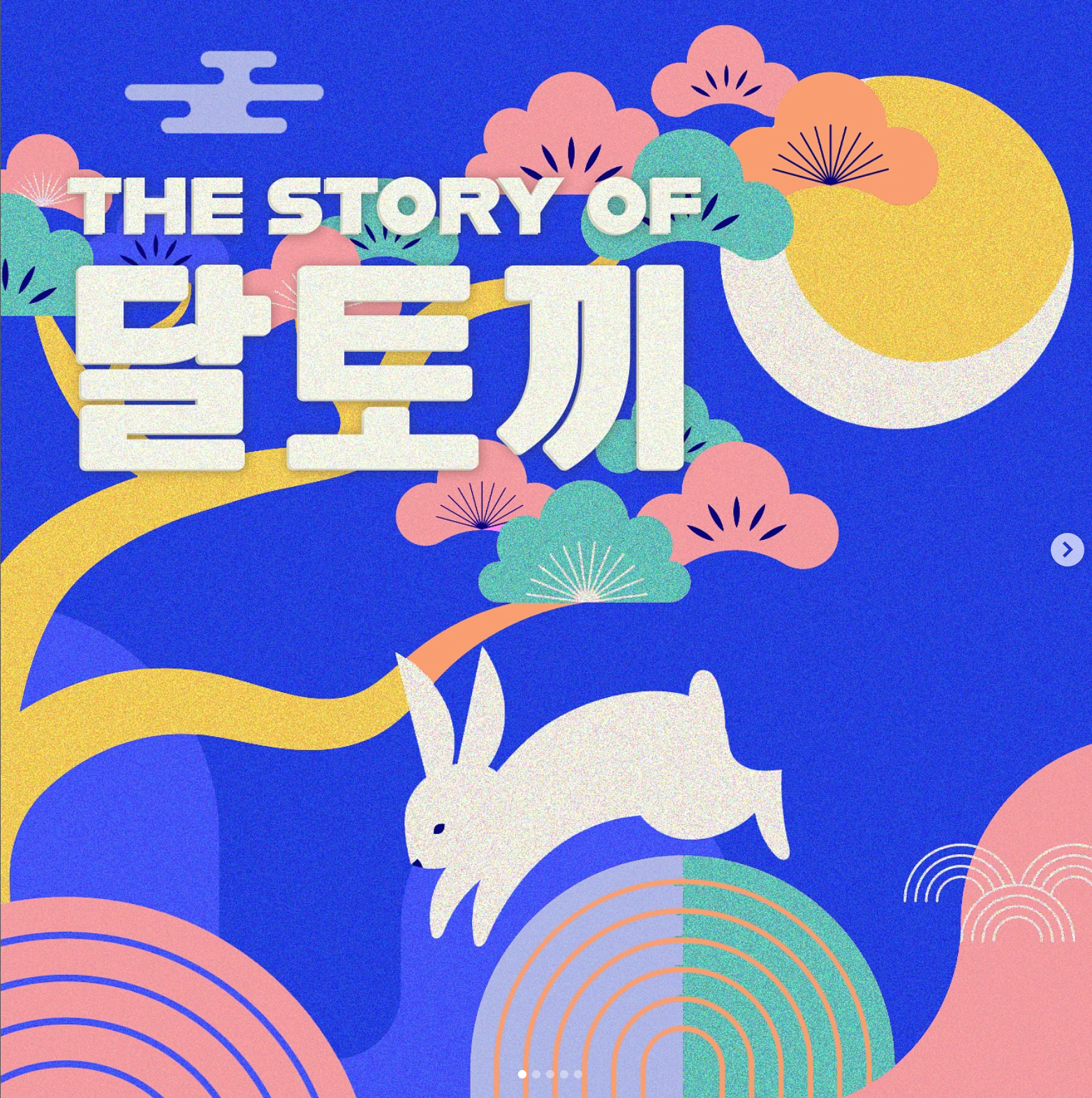
Illustration Credit to Crystal Arnette
Moon Rabbit – 달토끼
I’m filling in for Josh this month and as we move into Chuseok season, I thought it would be appropriate to tell the story of the Moon Rabbit. We touched on the symbolism briefly in the past, but the mythology is important to the celebration of Chuseok and is very prevalent in Korean culture.
As with a number of Korean myths, the roots of the Moon Rabbit story come from ancient Chinese Buddhist mythology, but versions of the myth are also present throughout Eastern Asia and in Native American cultures as well as in Aztec and Mayan stories. There are subtle differences in a number of versions of the myth. Read our instagram post about moon rabbit here.
Once there was a village where a rabbit, a fox and monkey played together. One full moon night, the Jade Emperor of Heaven decided to test the animal’s loyalty to him. He descended from Heaven, disguised as a beggar, and urged the three animals to bring him something to eat. All three animals were generous and they immediately went to look for something they could give the man to eat. The fox came back with a fish and offered it to the man. The monkey came back with some fruit it had gathered and offered it to the man.
The rabbit had nothing more than grass that it could offer and was ashamed because he knew that grass wouldn’t be enough to satisfy the man’s hunger, so he built a fire with the grass and threw himself on it in order to offer himself to the beggar. The Jade Emperor was deeply touched by the rabbit’s sacrifice and didn’t allow the fire to kill the rabbit. The Jade Emperor took the rabbit up to the moon, making him brilliantly white and placed him under a Gyesu tree as a guardian so that all could see him and be reminded of his sacrifice. He spends his time pounding tteok (rice cakes) to feed the world.
If you look at the full moon, you can see the outline of a rabbit with its mortar in the shadows of the moon
The rabbit is also referred to as the Jade Rabbit (coming from the Chinese - 玉兔 - or Oktokki - 옥토끼) because jade is perfectly smooth and shiny, which goes along with the brilliance of the rabbit’s white color
Daltokki or Oktokki is a story learned by all Korean children and cards, posters, advertising, as well as food packaging for Chuseok are decorated with daltokki.
The rabbit is a symbol of fertility and longevity, both of which are celebrated during Chuseok because the harvest has just been completed, showing the fertility of the land that helps us achieve longevity
The rice cakes that the rabbit is preparing are a staple Korean food and are the “essence of life”, which the harvest also celebrates. Songpyeon (송편) – half-moon rice cakes – are eaten during Chuseok
Tteok is also offered to the ancestors at the charye (차례) during Chuseok
The rabbit making tteok on the moon shows that all of nature participates in the cycles of planting and harvest
The rabbit’s self-sacrifice and compassion for the beggar are fundamental Buddhist concepts
An important Korean concept teaches that abundance is only meaningful when shared, which is a central theme for Chuseok
The botany of the gyesu (cassia) tree is a little debatable, because gyesu is not native to Korea – only China and Japan. It is thought that the reference might actually be to a cinnamon tree (somewhat similar to Ceylon cinnamon) and is another type of cassia tree, the fruit of which is used to season rice cakes, but is also used medicinally.