
BOOK CLUB REPORT - September 2026
The Investigation by J.M. Lee
By Sharon Stern
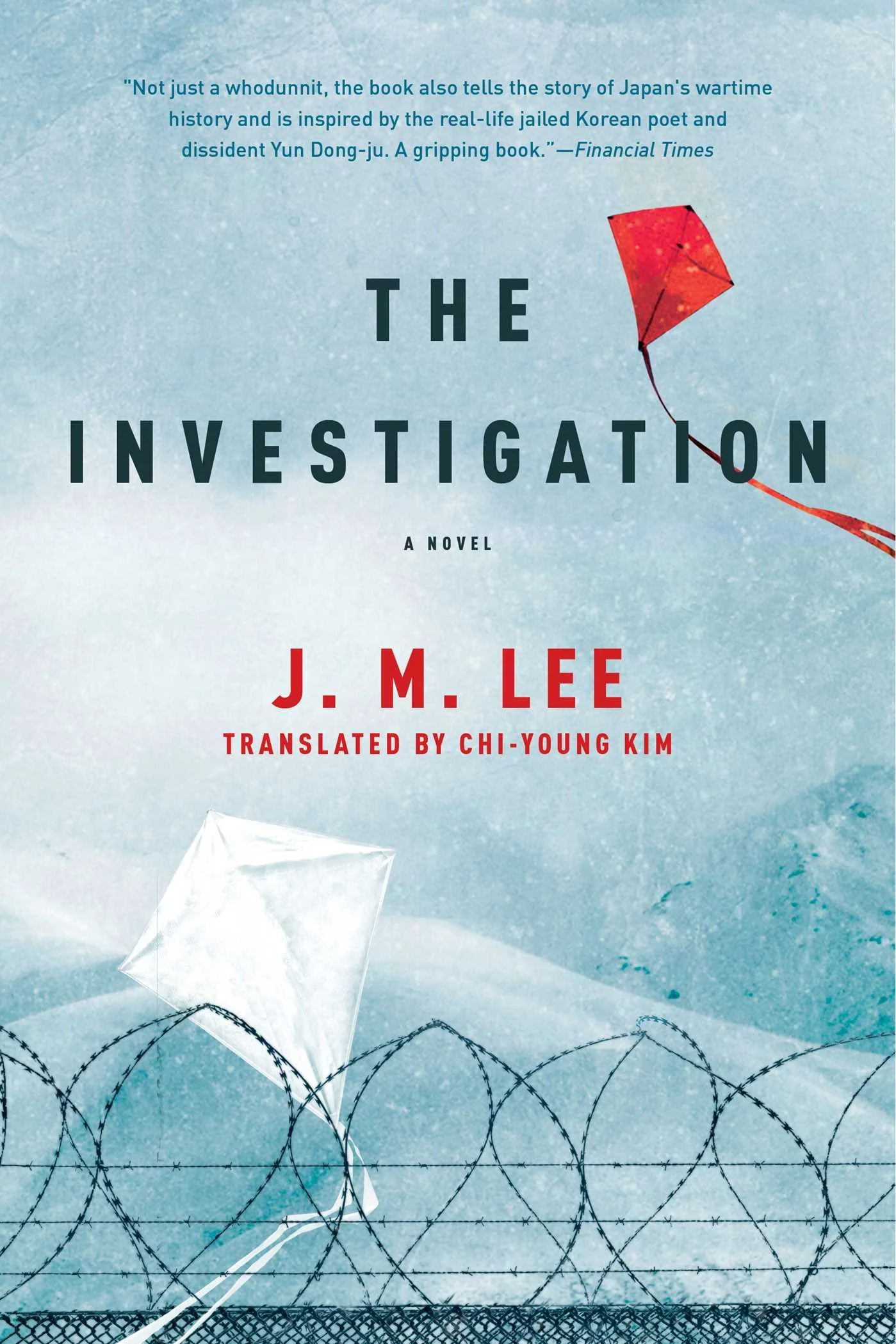
On August 30th, we gathered to discuss the book The Investigation by Jung-myung Lee and translated by Chi-young Kim. We had a small group, but the discussion was really nice. We know there were some regular readers who were away this month, but we also know that we might have intimidated some people when we talked about the setting the novel takes place in. The novel is set inside of the Fukuoka Prison during WWII. This prison was used by the Japanese during their occupation of Korea, before and during WWII. A large section of the prison was dedicated to foreign POWs and there are some infamous stories from that sector, but there was a separate section that held Korean prisoners involved in the resistance. Most Korean and other foreign prisoners at Fukuoka did not live to walk free. Torture and execution, as well as physical human experimentation were common throughout the entire prison.
The novel, though placed in this dark setting, explores some deep psychological and profound human thoughts. We really encourage everyone to pick it up and read it. It is so well written and uses poetry, poetic imagery and quotes from classical European literature throughout, making it intensely thought provoking. It is on a very short list of books that I know I will read again.
The story begins with the discovery of the body of a notoriously mean guard, Sugiyama Dozan’s, at the prison who has been murdered, hanging from a rope tied around his body, his lips stitched shut and blood dripping to the prison floor. Yeah, kind of a gruesome start. However, the majority of the novel is a keep-you-guessing whodunit to try to figure out the truth of who the murder was. Immediate assumptions presume, or course, that it was a prisoner. But this guard was not beloved by Japanese workers in and around the prison either.
As the mysteries are slowly revealed, we get to know the guard put in charge of finding the murderer, Watanabe Yuichi, a young man with a broad literary background. He was unhappily conscripted and though he tries to stay loyal to his training, is conflicted in a number of ways as he learns the paradoxical puzzle of the murdered guard’s life as an uneducated man deeply changed by poetry he discovers and is introduced to the writing of the Korean poet Yun Dong-ju. Yun Dong-ju is a real, historic Korean poet who was a prisoner at Fukuoka Prison and died there. His poetry is used in the novel. Though the details of Dong-ju’s life at the prison are mostly (but not all) fictionalized, it is easy to immediately understand his significance as a Korean historic figure just by reading his poetry.
As a group, we talked about the juxtaposition of good and evil, often within the same character, portrayed in the novel and the seemingly eternal optimism of Dong-ju. The individual thoughts of the three main characters were touchingly expressed both through strong imagery and through poetry, making their development as characters complex and sometimes paradoxical. It is easy to get stuck in the statistics of war and forget that there are individuals who represent every number and whose lives are complex and not easily defined as a single thing or aligned with a single idea.
There are two strong stories described in the book that touched all of us. One was of prisoners flying a kite along with a girl outside the prison walls flying a kite at the same time. The other was of a concert that was allowed to take place where prisoners sang a part of Verdi’s Nabucco, itself a complex piece, that told, in Italian, the Biblical story of the enslaved Hebrews longing for their homeland.
The book is so beautifully written that it was hard to sum up in a discussion and harder yet to summarize here. People and their relationships are complex. Social structures and rules and spaces like prisons that are intended to draw black and white lines of right and wrong don’t make much room for that truth.
September Dosan Hakdang: If We Cannot Go at the Speed of Light by Kim Cho Yeop
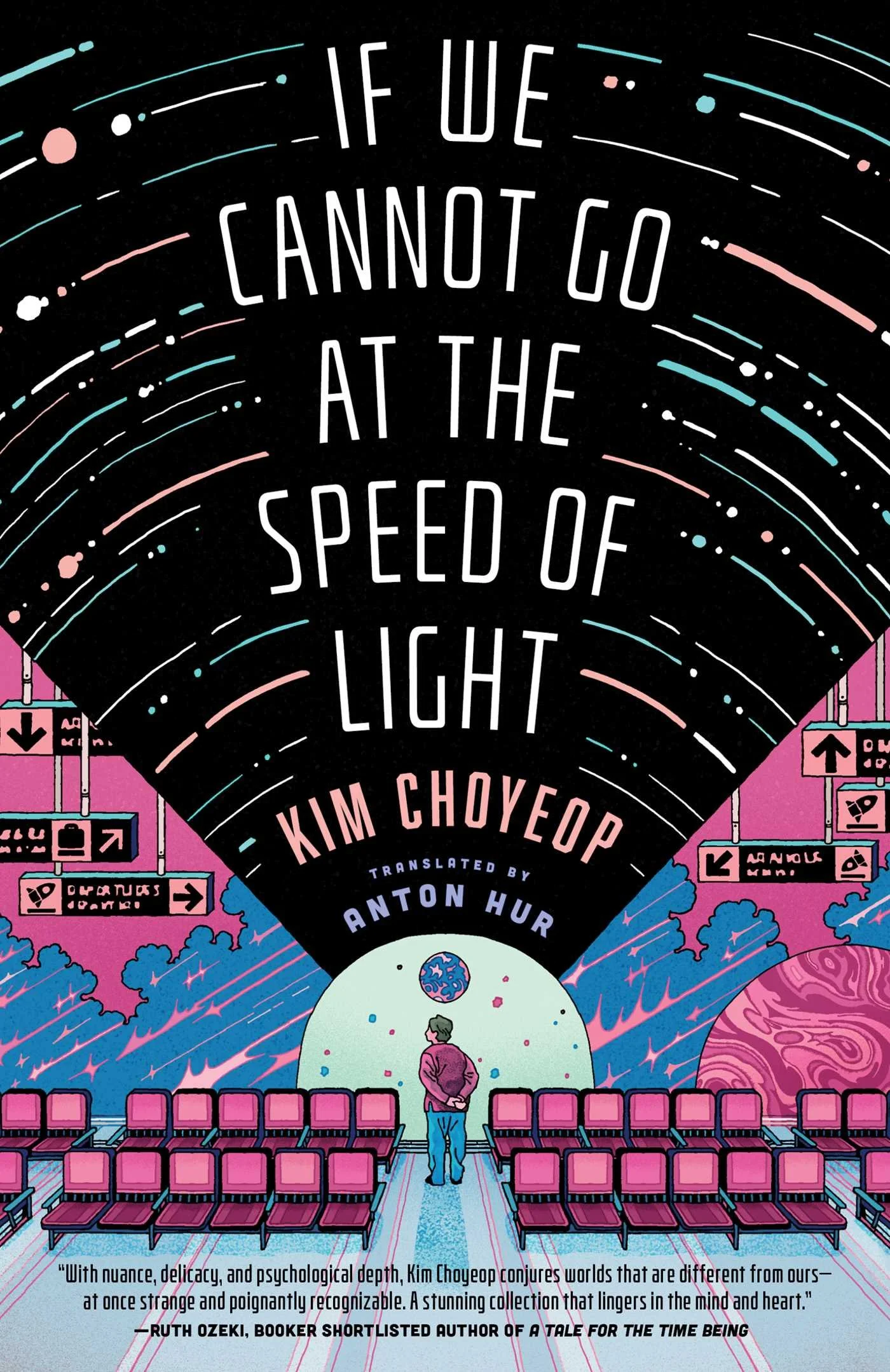
This month, we will be reading If We Cannot Go at the Speed of Light by Kim Cho-yeop and translated by Anton Hur
From The Korea Times:
In Korea, this book has sold more than 400,000 copies. In China, it won the Gold Award in the translated works category at the 14th China Nebula Awards, the most prestigious science fiction accolade in the country. Now, at long last, the short story collection that swept both Korean and Chinese readers off their feet has arrived in English, as Anton Hur’s translation of “If We Cannot Go at the Speed of Light” introduces the Anglosphere to science fiction superstar Kim Choyeop.”
From Goodreads:
“Kim Choyeop became an instant literary sensation in Korea with her debut short story collection. Each of these bitesize speculative masterpieces represents a journey into the unknown, guided by a writer blessed with a boundless imagination.
From alternative futures to distant alien planets, in the company of scientists, space explorers and ordinary citizens in extraordinary situations, Kim Choyeop revels in making the impossible seem not only possible but somehow inevitable.
Each story focuses on a specific issue of discrimination against women or other marginalized groups, adding a mind-bending twist to hold a mirror to modern society and its everyday iniquities.”
Please join us for a really fun read and what should be quite an impactful discussion. September 27 at 2 PM Eastern. You can RSVP here.
October Dosan Hakdang: Our Twisted Hero by Yi Mun Yol
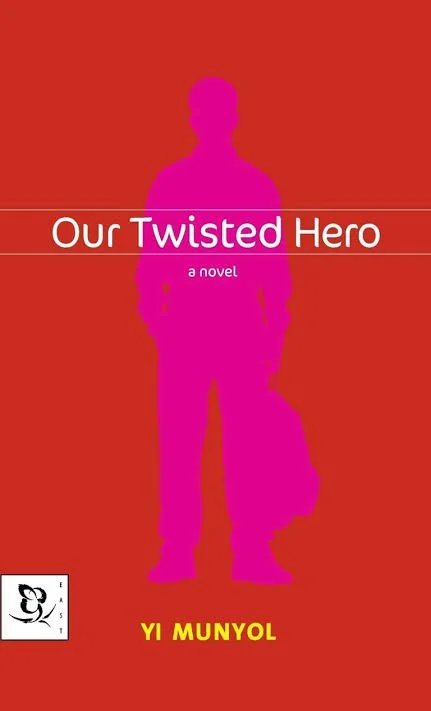
In October, we will be reading Our Twisted Hero by Yi Mun-Yol and translated by Kevin O’Rourke. The book was first published in 1987, at the very end of Korea’s military dictatorships. It is a reflection by the character Han Pyongtae, thirty years into his past, when he entered school in a small town as a 12-year-old boy. 12-year-old Pyongtae thinks the transition to this new school will be easy, but is surprised and disgusted to find out that it is not. Classmate Ok Sokdae is the classroom monitor and uses his position to bully other students, stealing their things, forcing them to write his papers and take his tests. Pyongtae stands up to Sokdae and is ostracized as a result. Finally, with relentless pressure from Sokdae and no support from students, teachers nor his parents, he caves. However, a new teacher to the school helps to reset order.
The book examines school bullying, which is an important subject in South Korea as well as the US, but it is also an analogy for the suffering of citizens under a dictatorship. Both of these subjects are equally relevant to the 1980s as they are to today.