THIS MONTH IN THE KOREAN ADOPTEE COMMUNITY - Feb 2026
By Jon Oaks
설날 (Seollal): Learning the Holiday While Living the Identity
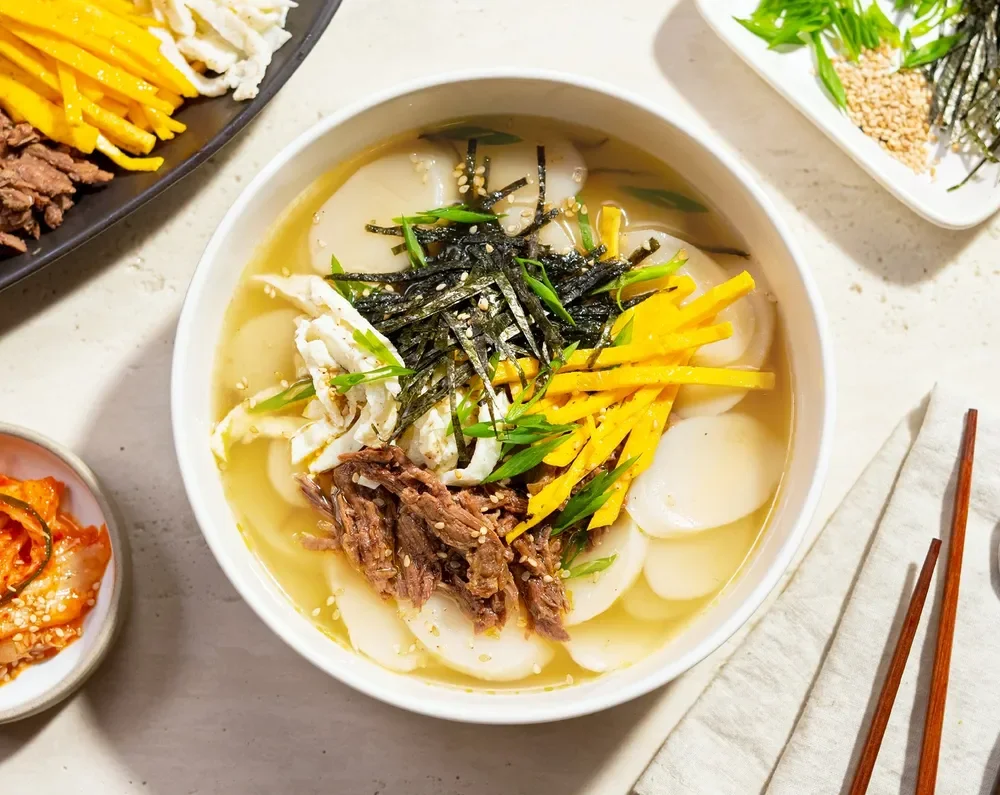
떡국 is a traditional soup that we eat in the morning of Lunar New Year.
For many Korean-American adoptees, 설날 (Seollal) is a holiday we encounter later in life, often while already in the middle of reclaiming or reexamining Korean identity. It is not uncommon to grow up knowing the name “Lunar New Year” without understanding how, or whether, it connects to Korean culture specifically. As adoptees, that gap in knowledge is not a failure of interest or effort. It reflects how our identities were shaped, with culture introduced piecemeal rather than inherited through family tradition.
설날 is the Korean Lunar New Year and is based on the lunar calendar. This is why the date changes each year, usually falling in late January or February. The term “Chinese New Year” is often used in the United States as a catch-all, but many cultures across East and Southeast Asia celebrate the Lunar New Year with their own names, customs, and meanings. 설날 is the Korean observance, with traditions that differ from those found in China, Vietnam, or elsewhere. Understanding this distinction can be an important step for adoptees who may have learned about the holiday in generalized or simplified ways.
In Korea, 설날 is one of the most significant holidays of the year. It typically spans several days and centers on family gatherings, travel to ancestral hometowns, and shared meals. One of the most recognizable customs is 세배 (sebae), a formal bow performed by younger family members to elders as a gesture of respect. Elders often offer 덕담 (deokdam), words of advice or well-wishes for the coming year, along with 새뱃돈 (sebaetdon), money given as a gift. These practices reflect Confucian values around age, respect, and family hierarchy that continue to influence Korean culture.
Food also plays a central role in 설날, especially 떡국 (tteokguk), a soup made with sliced rice cakes. Eating 떡국 is traditionally associated with gaining a year in age and symbolically marking a fresh start. Other common foods include 전 (savory pancakes), 갈비찜 (braised short ribs), and a variety of shared dishes prepared for family meals. For adoptees, these foods are often among the most accessible entry points into the holiday, even when other traditions feel less familiar.
For those of us without access to family-based celebrations, 설날 does not have to be approached as an all-or-nothing experience. Many adoptees find meaning in smaller, self-directed ways of observing the holiday. Cooking a Korean dish, learning the history of 떡국, watching a documentary or film connected to Korean culture, or taking time to reflect on the passing year can all be intentional acts of engagement. Building personal traditions does not diminish the holiday’s significance; it reshapes it to fit lived reality. Questions of ancestry and accountability are not only cultural. They are increasingly being addressed at the institutional level as well.
For adoptees who want a clear, accessible introduction to 설날 and its traditions, the Korea Tourism Organization’s Visit Korea website offers two helpful primers written for an international audience. One page outlines core Seollal traditions and practices, including family gatherings, holiday foods, and common customs, while a companion overview explains how Seollal fits into Korean culture more broadly. Together, these resources provide practical context without assuming prior knowledge of Korean holidays or family traditions. More information is available here and here.
Understanding these traditions also highlights how questions of family, ancestry, and belonging continue to shape adoptee experiences beyond cultural education alone.
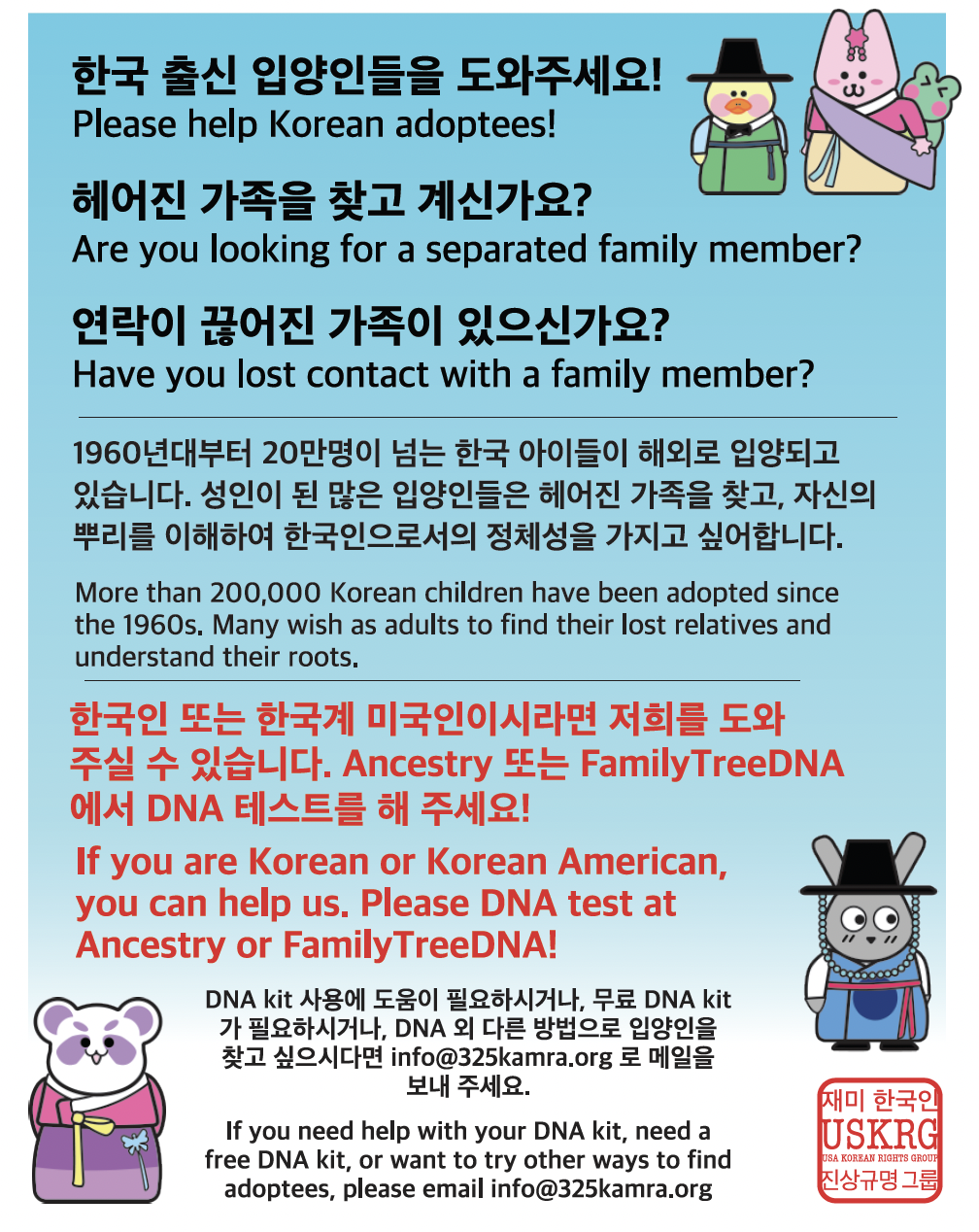
Included in this month’s column is an informational graphic from United States Korean Rights Group (USKRG) and 325KAMRA.
In late January, the Korean National Assembly passed the TRC3 bill, formally approving the creation of a third Truth and Reconciliation Commission. The revised law expands the scope of investigation into historical human rights violations, including those related to both intercountry and domestic adoption, as well as welfare facilities. Importantly for adoptees, the new framework reflects conclusions from the previous commission by removing the requirement that adoptees personally prove human rights violations as part of the application process. The legislation also allows descendants of Korean adoptees to apply on behalf of their adopted parents. While the law takes effect on February 26, 2026, enforcement rules and the official start of investigations are still being finalized. More information is available through a detailed post summarizing the legislation here.
While TRC3 represents a form of institutional recognition, many adoptee efforts continue to depend on community-driven participation and practical support. Included in this month’s column is an informational graphic from 325KAMRA, an organization focused on helping Korean adoptees locate biological family members through DNA matching and related search support. The graphic reflects a reality many adoptees recognize: reunification efforts depend not only on adoptees searching, but also on broader participation from Koreans and Korean Americans willing to submit DNA tests. While ancestry and family connections are often discussed abstractly, the graphic makes the process concrete by outlining how community involvement can directly support adoptees seeking answers about their origins. This kind of practical support highlights how engagement with Korean culture and community can move beyond learning into action.
Seollal & Community
Community is another important avenue. Observing 설날 alongside other adoptees or Korean Americans can shift the focus away from doing it right and toward shared understanding. Cultural centers, adoptee organizations, and informal gatherings often create spaces where questions are welcomed and partial knowledge is expected. These spaces allow adoptees to learn without pressure and to participate without needing a complete origin story.
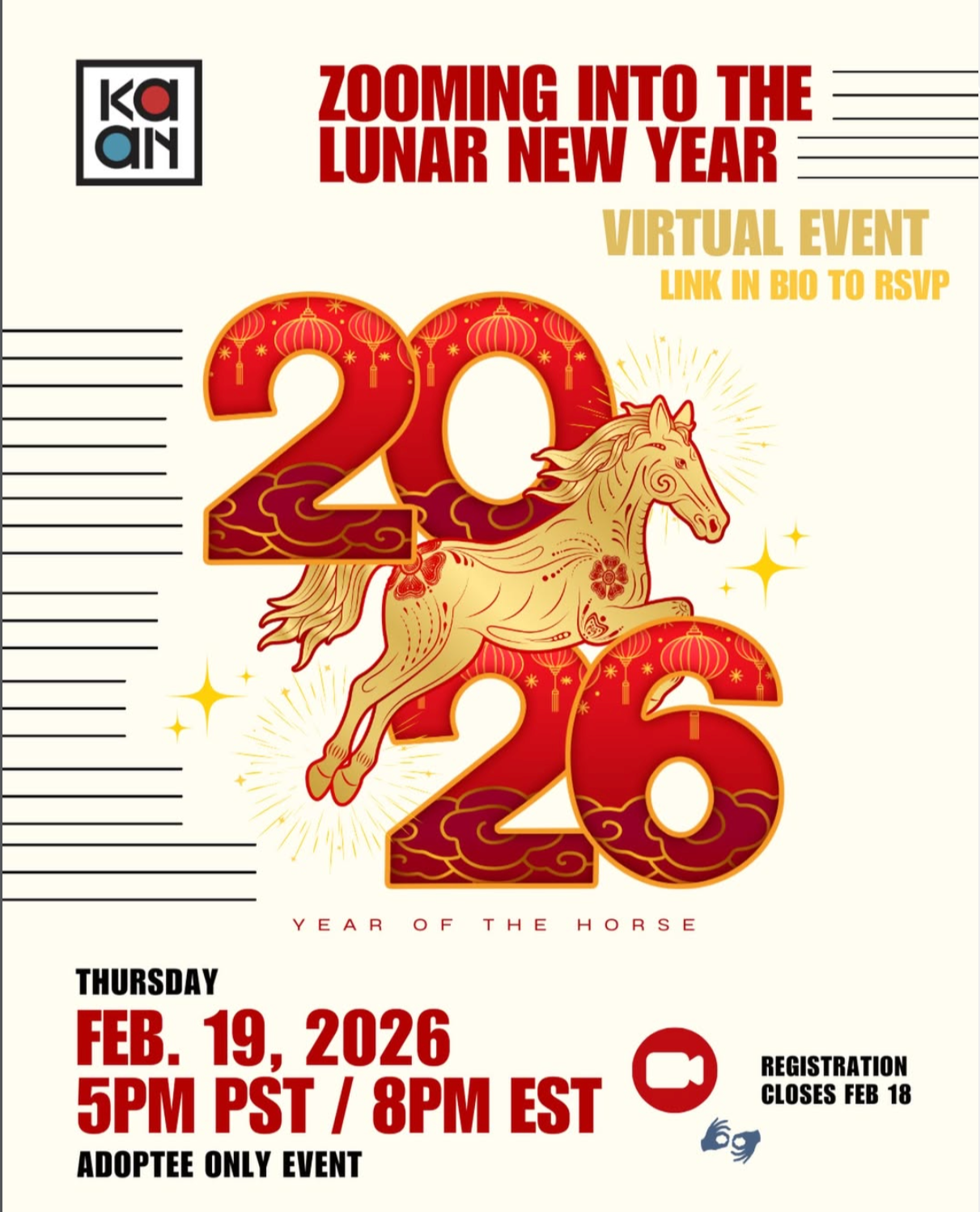
KAAN will host an adoptee-only Lunar New Year gathering online, offering space for connection that is not tied to geography. The virtual event will take place on Thursday, February 19, at 8:00 p.m. Eastern (5:00 p.m. Pacific) and is open to adoptees everywhere via Zoom. The gathering will include a brief reflection on 설날 (Seollal), followed by open conversation and shared community time. Participation is flexible, with no expectations around speaking or keeping cameras on, and ASL interpretation will be provided. Registration closes at 11:59 p.m. Eastern on Wednesday, February 18. Additional details and registration are available here.
Adoptees in the Chicago area may also be interested in two Lunar New Year community events taking place this February. On Saturday, February 14, 2026, at 2:00 p.m., the Korean Cultural Center of Chicago will host Seol 2026 at BISCO Hall in Wheeling (9600 Capitol Drive, Wheeling, IL 60090). This family-friendly celebration includes K-pop performances and dance activities, traditional customs such as 세배 (sebae), hands-on art projects, opportunities to try on 한복 (hanbok), traditional games, and Korean New Year foods including 떡국 (tteokguk). Pre-registration is required, and the participation fee is $20 per person. Registration details are available here, and inquiries can be directed to event@kccoc.org. One week later, on Saturday, February 21, 2026, from 11:00 a.m. to 2:00 p.m., the HANA Center will host a Lunar New Year Celebration (하나센터 설 잔치) at its Chicago location at 4300 North California Avenue. This event features Korean food, performances, and cultural activities in a welcoming community setting, with parking available on California Avenue or in the Horner Park parking lot. Additional information is available here.
As 설날 arrives this February, it offers adoptees a chance to learn without obligation and to participate without needing completeness. The holiday can be a point of education, reflection, and connection rather than a test of cultural authenticity. For adoptees, that approach is not a compromise. It is an honest and sustainable way of engaging with Korean culture while honoring the realities of our histories.
For some adoptees, that engagement may take the form of attending a community event, joining a virtual gathering, or learning more about traditions that were not part of childhood experience. For others, it may simply mean acknowledging the holiday, sharing a meal inspired by Korean food, or spending time in conversation with other adoptees. Whether engagement happens through education, advocacy, community participation, or quiet reflection, 설날 can serve as a reminder that identity is built over time. The ways adoptees choose to mark the holiday, publicly or privately and collectively or individually, are part of that ongoing work.