THIS MONTH IN KOREAN HISTORY - July 2026
Japanese Occupation, wwii, and korean war
By Sharon Stern
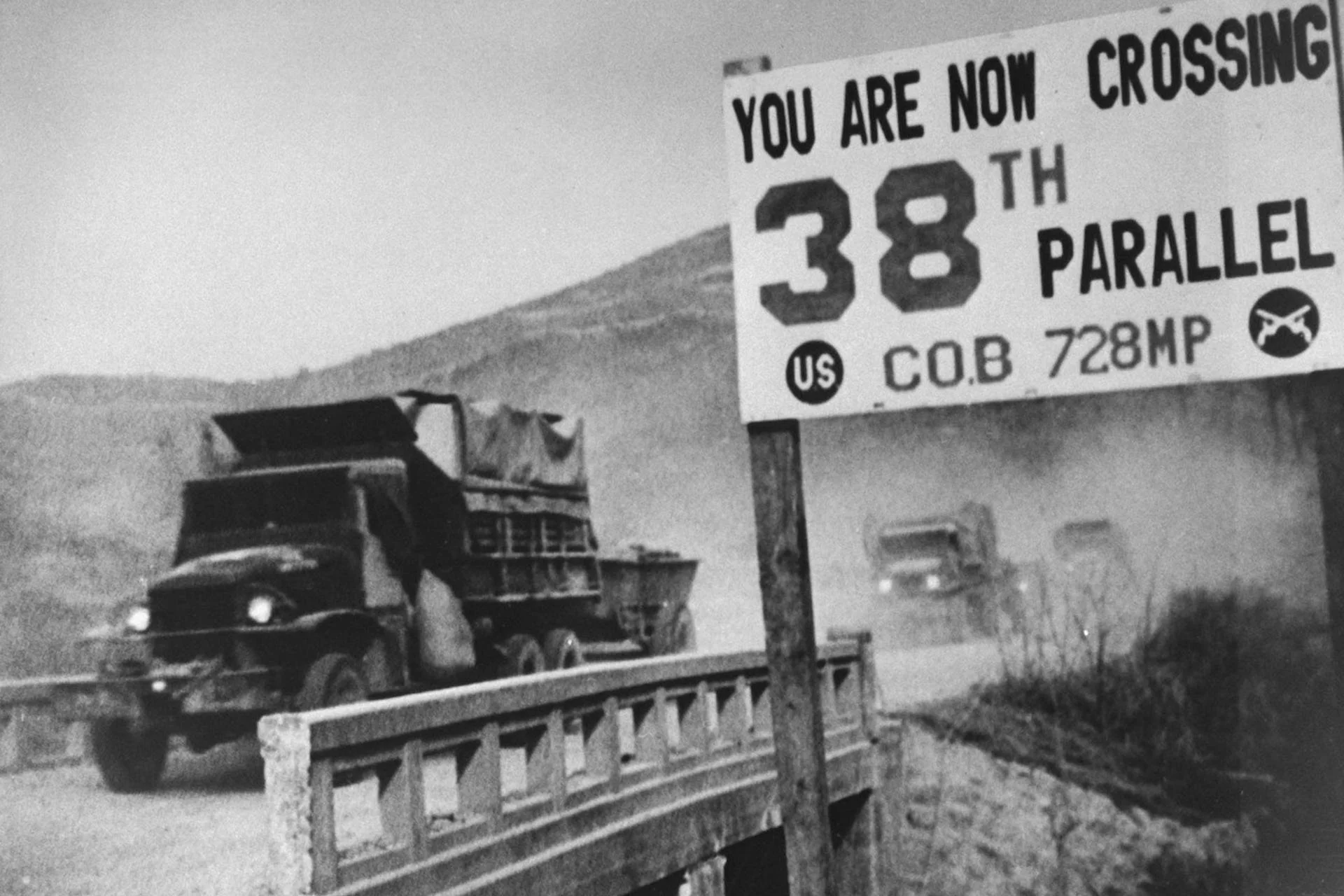
The 38th Parallel that divides South and North Korea.
The Korean War is a subject that Americans know more general details about than many of Korea’s important moments of history…or do we? The details of how Koreans themselves, from every corner of the peninsula, were impacted are not well known to everyone. The post-WWII events and the roles the US, China and the Soviet Union played before the war are not as well known by most either. Because the war was positioned by actions taken at the end of and immediately following WWII, it is important to understand how these actions created the environment for war, so we will look at this time preceding the war as well as the war itself.
Humans like to categorize events in tidy boxes, but war by its nature is brutally messy. One side is never completely “right” and the other completely “wrong”. When a war is over, people have differing and strong opinions about what happened, why it happened, if it was all for the best. Recorded history is often shaped by those biases. And the problem with this war is that it never ended. As time has passed and the war’s direct witnesses are disappearing, the narrative about the war has shifted in some scary ways. We will examine this at the end.
Because this war was very international in nature and relatively recent on the history timeline, volumes and volumes have been written about it. For all of the reasons stated above, this is a vast and difficult subject to condense into a few pages of information. We will do our best to give you a high-level overview of this truly painful history, without too many details, so that you can understand how it shapes Korea’s present.
Introduction

Japan surrendered on August 15, 1945 bringing WWII to an end and Korea was liberated.
The Korean War is known as The Forgotten War. There are several reasons for that label. The Korean War took place closely after the end of WWII and could be argued really began as soon as Japan surrendered. The US public did not really have the stomach for more war. The US government was promising to downsize the military and bring soldiers home. Despite it very obviously being a war and despite American losses, Congress never declared it a war.
Media coverage was limited. Television hadn’t emerged as a major news source – people often got filmed news updates in news reels shown before movies in movie theaters. War correspondents who had been in WWII came into Korea and began reporting on how badly Koreans were being treated by US/UN troops and by the South Korean leadership. Censorship about reporting began after six months and it meant that no war correspondent could say anything bad about the US or its ally of South Korea. And once the Vietnam War started, which featured nightly dinnertime news coverage, the Korean War was relegated to the dusty bookshelf of history.
The war began on June 25, 1950 and came to a final pause on July 27, 1953. We will look at both of those dates and what occurred, but by the end of the war, somewhere between three and five million people had died. This is a larger number than during Vietnam and yet we don’t often hear about those numbers. The Korean peninsula had been permanently (though this wasn’t completely foreseen at the time) divided. 128,000 families had been separated. All major cities on the peninsula were mostly or completely destroyed. No Korean was left unscathed. This was certainly not what Koreans had hoped for once Japanese occupation ended. Let’s look at what happened to create this nightmare.
Preceding Events
If we don’t back way up and look briefly at the history of Korea, the impact and tragedy of the war really don’t leave the same impression. The loss of culture, of human value, of what it means to be Korean are enormous things to contemplate and they need some context.
For several hundred years, Korea existed in relative isolation with a stable structure. It was not an ideal society nor even one that was enviable – there was a caste system and slavery, women had denigrated roles. But it was predictable. People knew their place in society and what was expected of them. For some of that time, Korea was a tributary state of China under the Ming and Qing Dynasties and subordinate to them, but was allowed a great deal of autonomy (most of the time). The Joseon Dynasty lasted over 500 years.
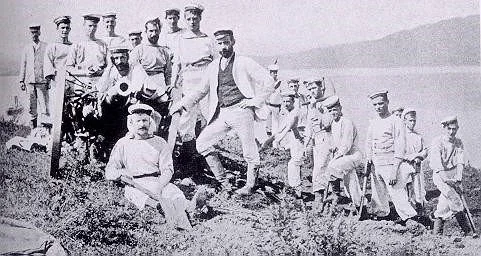
UK Navy occupying Port Geomundo
In the 19th century, Korea was known by the outside as a Hermit Kingdom because if its isolation. In the middle of the 19th century, outside influences and pressures began moving in. Catholicism was introduced via China, which provoked Korean persecution and subsequent retaliation by France. An attempt by the US to send a warship to open up trade ended in a clash with the US military. Both Japan and Russia saw Korea basically as a stepping stone for greater access into Manchuria and Korea was caught in the middle of conflicts between the two. As Westernization took hold in Japan and they received Western military technology, Japan was able to pressure Korea into opening up ports on the east coast as extraterritorial Japanese locations. Even the UK briefly occupied Port Geomundo on an island in the Jeju Straight when Russia intended to set up a station for ships to take on coal there.

Japan–Korea Annexation Treaty of 1910. General power of attorney to Yi Wan-yong signed and sealed by the last emperor, Sunjong of the Korean Empire (Yi Cheok, 이척 李坧). The last emperor's first name '坧' used as signature.
With growing encroachment and pressure from the outside world, Korea felt the need to establish itself as independent. Resentment against Japanese encroachments and Western influence led to a peasant uprising in 1894. The Sino-Japanese War of 1894-1895 was largely fought on Korean soil and Empress Myeongseong turned to China and Russia for support against Japan. As a result, she was assassinated by Japanese agents.
Japan and Russia continued to push back and forth for control of Manchuria and Korea and at the end of the Russo-Japanese War of 1904-1905, the Treaty of Portsmouth, mediated by Theodore Roosevelt, recognized Japan’s “claim” to Korea, after which the Eulsa Treaty was signed, making Korea a protectorate of Japan. Korea had already negotiated several times with Japan, signing various treaties and from 1876-1905 Japan acquired more and more control over the peninsula. In 1910, the Japan-Korea Treaty was signed, annexing Korea to Japan. This wasn’t a choice given to Korea – it was an order imposed on them.
You can read this history of a long list of treaties signed as a progressive movement toward an inevitable conclusion, but you can also read it as the slow theft of independence, culture and self-determination. By the time of annexation and occupation, Korean’s were angry. One Korean professor said it this way:
“It wasn’t a negotiation – it was a takeover.
It wasn’t diplomacy – it was an imperial mugging.”
Japanese Occupation, WWI and WWII

Marching near the village of Chemulpo, Korea, during the Russo-Japanese War in September 1904
With Korea fully under Japan’s control, land was expropriated and given to Japanese. Tenant Korean farmers were forced to give over their crops to Japanese officials. Koreans were treated as very much lesser than Japanese.
As occupation became entrenched, erasure of Korean culture became more prominent. Tens of thousands of artifacts were moved to Japan. Gyeongbokgung and Deoksugung Palaces were mostly destroyed.
As Japan committed to expanding the Japanese Empire, Koreans were conscripted into the Japanese army. Koreans, as a labor force, were sent all over the Japanese Empire to work in mines and factories. Hundreds of thousands of women and young girls were also sent all over the Japanese Empire as sex slaves for Japanese soldiers. At the same time, it became more and more illegal to distinguish oneself as Korean. Koreans were forced to take Japanese names and the Korean language became illegal, both spoken and in print. Japan used ancient mythology to justify its divine rule over Korea and Koreans were not allowed freedom of speech, movement, assembly, press. They were treated as lesser than the Japanese and were reminded of this daily in their lives on the streets, at school, at work.
Korean’s response was indignation. Of course, many had to concede when faced with danger and the fear it created or merely for survival, but Koreans were angry organized resistance formed.
Korean Resistance
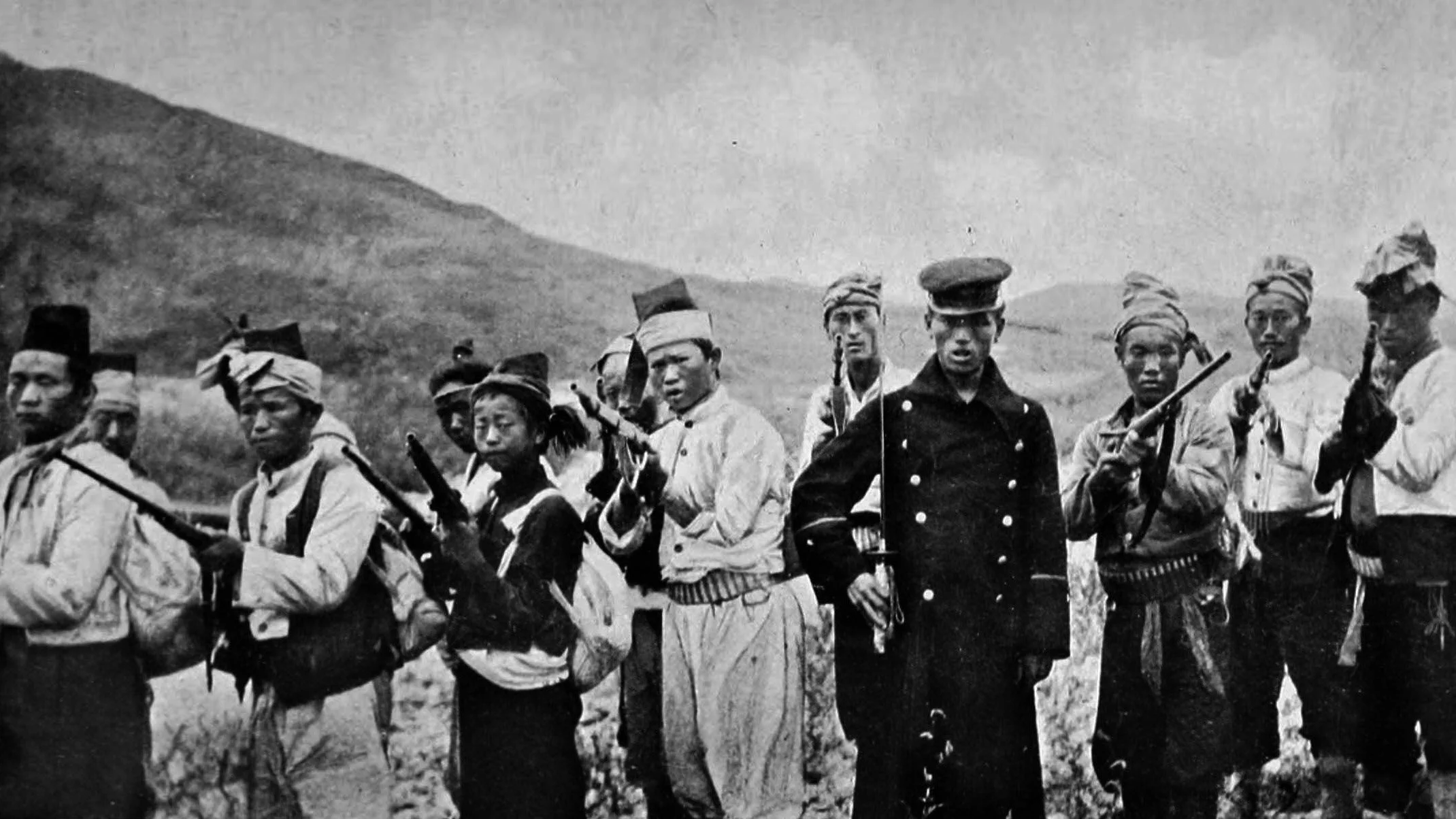
A picture taken in 1907, guerilla soldiers who resisted against Japanese occupation.
We have covered different aspects of the Korean Resistance Movement or Korean Independence Movement n several articles in this newsletter and we will link to those below, but will just take a moment to say that Korea set up a Provisional Government in Shanghai from where they planned resistance activities against Japanese occupation and to try to recover their independence. Many, many groups were involved in many different ways. There were militant groups, Christian groups, school groups, social groups and groups of Koreans abroad who all sought to restore Korea’s independence after the occupation. A number of groups were gathered in China, both in Manchuria and Shanghai. This is very significant because the connection to China plays heavily into both Korea helping the Chinese Communist Party in their civil war as well as in standing up against the new occupation of the Korean peninsula by particularly the US and UN after the end of WWII.
Here are links to past articles that touch on the subject:
Kim Il-sung
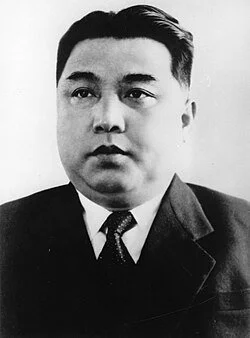
Kim Il Sung in 1950. He is the grandfather of Kim Jong Un, the current leader of North Korea.
Kim Il-sung, first leader of North Korea, was active in the resistance movement from 1929. He went to middle school in China, where he became interested in communist ideology. He was active in youth groups in Manchuria and joined various anti-Japanese guerilla groups doing resistance work. Kim joined the Chinese Communist Party (CCP) in 1931. He worked his way up to leadership roles in armed groups. In 1940 he escaped across China into the Soviet Union with guerillas and Chinese soldiers being chased by the Japanese. He was sent to a military training camp in Vyatskoye and in 1942 was assigned to a brigade of the Soviet Red Army, where he served until the end of WWII and his return to Korea. His beginnings in the resistance movement and his military training set him up with both the strong desire to see his country free, but also the connections with China and the Soviet Union to eventually isolate him and the portion of Korea that he led.
Pre-War Period – Post WWII Developments
All of the above is background that creating the setting for the war. The period from the end of WWII to the beginning of the Korean War could really be called the Pre-War Period and because this is when all of the details creating the environment for the war happened, they need to be understood. The incidents preceding the war included the US, Russia, China and the UN, which included Britain at its founding, as well as Korea and, in some ways, Japan. We need to understand how decisions in all of those places converge.
The Beginning of the Cold War
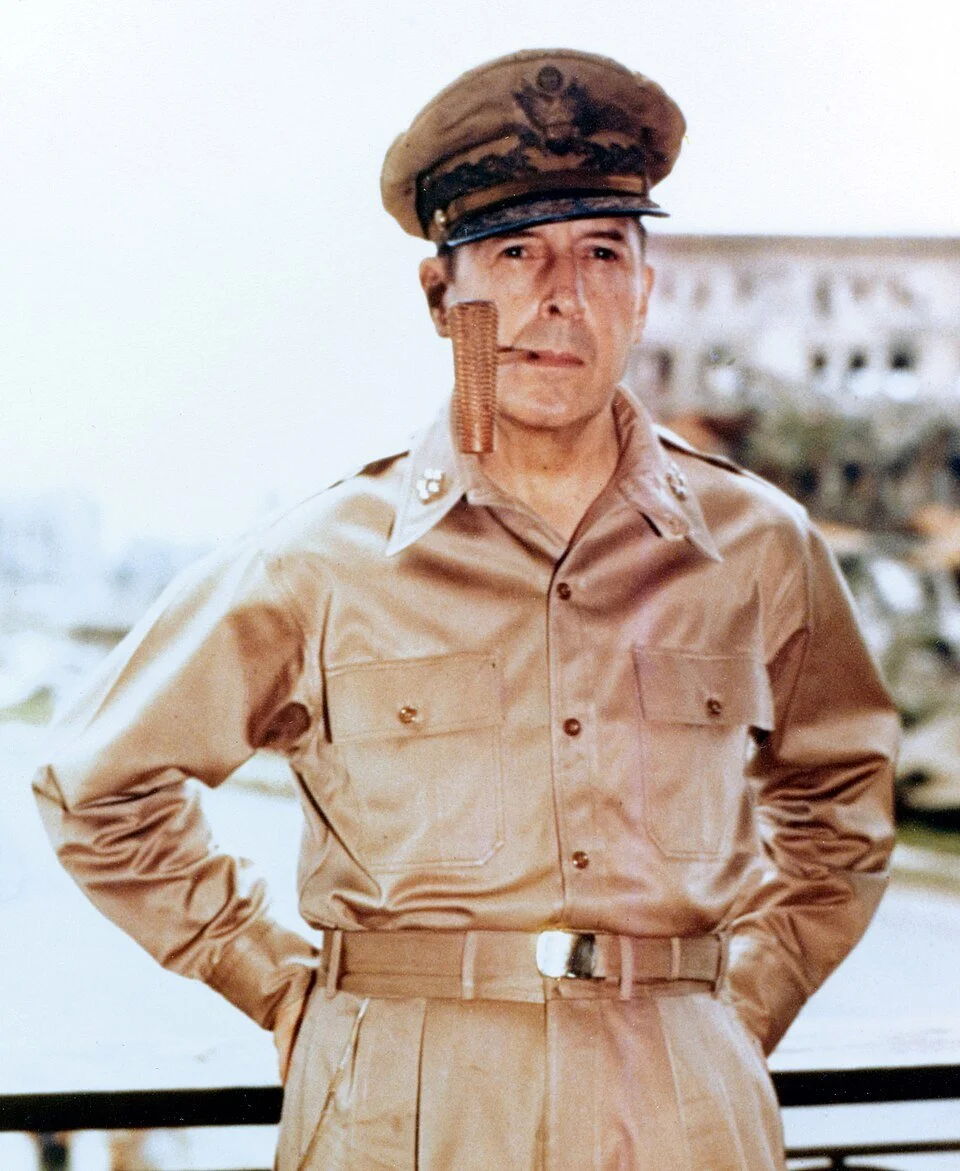
General Douglas MacAurthur, 1945
The British and the US had a plan to disassemble the Japanese Empire before WWII was over. The Japanese had predicted this and believed they could make the Allies suffer and called for the entire population of Japan to resist invasion. A conventional bombing and firebombing campaign of major Japanese cities by the Allies preceded the nuclear bombs that were dropped on Hiroshima and Nagasaki, which killed close to 250,000 people, almost half of whom were ethnic Koreans working in those cities. Japan surrendered to the Allies, who occupied the countries Japan had occupied, under the command of General Douglas MacAurthur. The Soviet Union did not participate because they did not want to put troops under MacArthur’s command. However, the Allied Command did not control Japan’s civil administration and left Emperor Hirohito in place – a complicated history for another time.
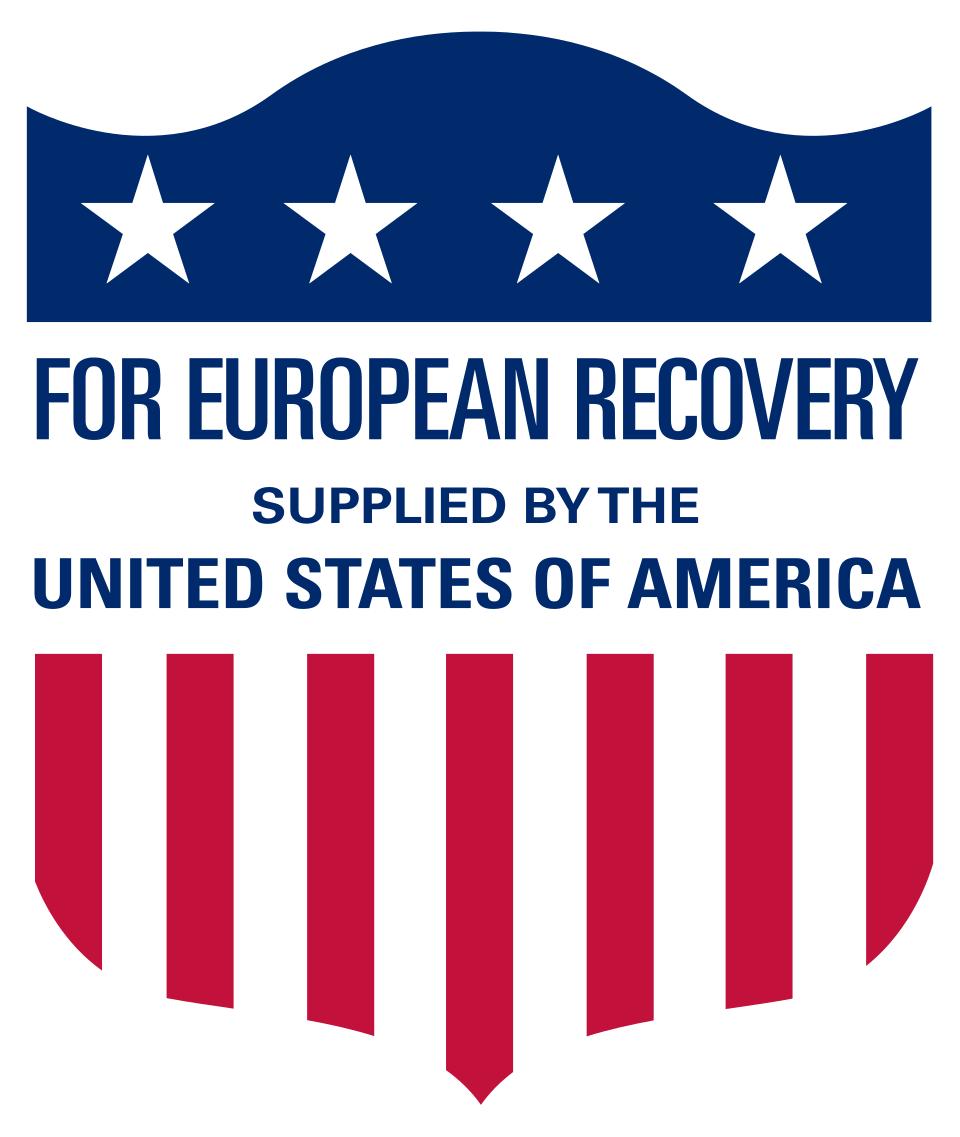
The labeling used on aid packages created and sent under the Marshall Plan.
The US had supported the government in Soviet Union, after the early revolutionary movements that unseated the tsars, believing that the revolutions would eventually see the Soviet Union evolve into a democratic state. The US sent aid to the Soviet Union during their 1921 famine and the US sent military equipment and weapons to the Soviet Union throughout WWII. Although relations between the two countries were not perfect, they fought as Allies to defeat Germany. The Soviet Union’s invasions of Finland and Poland during WWII increased tensions between the two countries. Cooperation continued, however.
When WWII ended, the Soviet Union put extended effort into controlling Eastern European countries, which worried the US – this was a move away from forming democracies, which the US had hoped for. The US put billions of dollars into rebuilding Europe through the Marshall Plan in 1947 – a plan that the Soviet Union rejected, because they believed (correctly so) that it would lead to an anti-Soviet bloc. The Soviet Union put pressure on the Eastern European countries to also reject the plan.
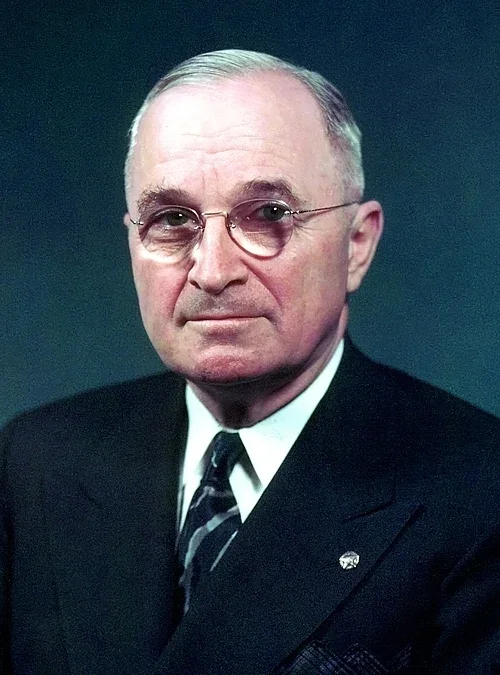
President Harry Truman, 1947
At this point, the US and the Soviet Union had opposing political and economic ideologies and the tensions came to a formal head when President Harry Truman gave a speech and announced what is called the Truman Doctrine, in which he said, “it must be the policy of the United States to support free peoples who are resisting attempted subjugation by armed minorities or by outside pressures.” This ultimately led to the formation of NATO, offering US support to nations threatened by the Soviet Union. The later Soviet response and bloc was the Warsaw Pact.
These opposing views and political maneuvering between the US and the Soviet Union ended up beginning the Cold War that lasted until two years after the fall of the Soviet Union in 1989. The Cold War was essentially a rivalry for power between the US and the Soviet Union. Each country supported and conducted many proxy wars in smaller and weaker countries. The term cold war was used because there weren’t direct conflicts between the two superpowers, but they fought against each other in regional conflicts. The Korean War was not the first of these proxy wars, but was the biggest. Existing tensions on the Korean peninsula, as we will see, made exploiting the situation for a superpower proxy conflict an easy decision
The UN
Insignia displayed on the cover of the United Nations Charter, from 26 June 1945, predating the official adoption of a flag of the United Nations.
As early as 1941, Theodore Roosevelt and Winston Churchill were meeting to discuss the idea of the Four Powers – the US, Britain, the Soviet Union and China – as a treaty between the Allies of WWII, to take the place of the League of Nations that was formed at the end of WWI, but to which the US never belonged. The concept was to seek a negotiated way to maintain world peace. On June 26, 1945, the charter of the United Nations was created and 50 countries signed on. The UN officially came into being on October 24, 1945. The tensions between the US and Soviet Union often paralyzed actions and the effectiveness of the organization. The UN played a key role in the Korean War. The primary mandate of the UN was peacekeeping, but when it came to Korea, the countries in the UN were very involved in combat, as we will see below.
US Attitudes Toward Asia
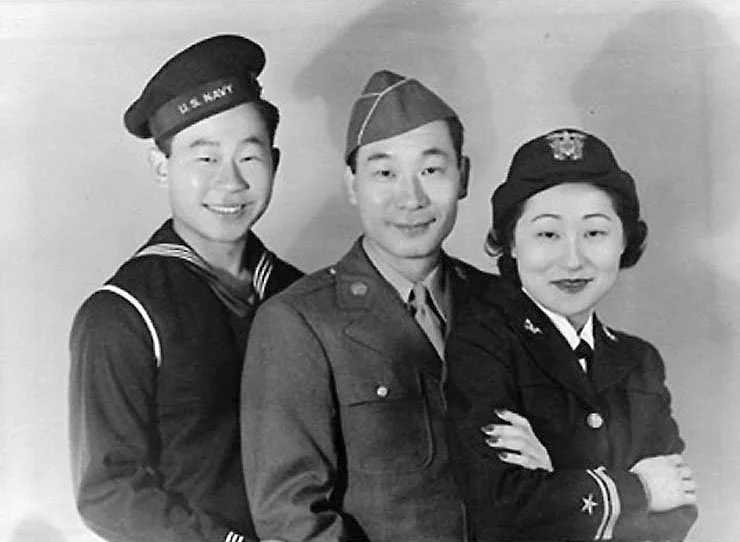
Ahn Chang Ho’s children. In 1942, like many Korean Americans, the three Ahn siblings, Ralph, Philip, and Susan, children from California's first Korean immigrant family, enlisted in the U.S. military. The Ahn sister, Susan Ahn Cuddy, was the first Korean American woman in the U.S. military and the first female Navy gunnery officer. For her service in the WAVES, she reached the rank of Lieutenant.
It is uncomfortable, but truly important to understand the US’s attitudes towards non-white people during this time period. The US was racially segregated until 1964. Asians were not able to become citizens or own land until almost the end of WWII and American women who married Asians lost their citizenship during this time. There were quotas on how many Asians could enter the country. Asians couldn’t marry Caucasians in 15 states, mostly in the South. They had to drink from “colored” drinking fountains in Virginia.
Japanese-Americans were interred in internment camps from 1942-1945, but most Americans viewed all Asians as the same. These racist attitudes colored the US views of Koreans and their value as humans. Anti-Asian attitudes were prevalent from early colonial times and the view that an Asian person was not as fully human as a White person were strong through at least the 1960s.
After the Korean War had begun, the US implemented forced racial integration of US military units, complicating racial issues and tensions into multiple layers.
But racial prejudice by the Americans led to indifference of the suffering of Koreans during the war and the viewing of Koreans as less than fully human and therefore less than fully deserving of humane treatment. The bad treatment of ordinary Koreans from both the North and the South by US military personnel is, unfortunately, very well documented.
After the Korean War had begun, the US implemented forced racial integration of US military units, complicating racial issues and tensions into multiple layers.
But racial prejudice by the Americans led to indifference of the suffering of Koreans during the war and the viewing of Koreans as less than fully human and therefore less than fully deserving of humane treatment. The bad treatment of ordinary Koreans from both the North and the South by US military personnel is, unfortunately, very well documented.
Japanese Reconstruction

Harry S. Truman and Winston Churchill at "Little White House", Potsdam, Germany in July 1945
After WWII ended, the US led command, under General Douglas MacArthur, occupied Japan. The occupation continued until April of 1952. As outlined in the Postdam Declaration which detailed the conditions of Japan’s surrender, the constitution was re-written, Emperor Hirohito was left in place, but forced to renounce his own divinity and the country had to forever renounce war and completely disarm.
In 1947, heightening tensions between the US and the Soviet Union and the civil war in China caused post-war reconstruction goals for Japan to change emphasis from democratization and demilitarization to economic reconstruction and re-militarization in order to support the US’s Cold War efforts and to fight against possible communist exploitation. The US wanted a stronghold in Asia to fight against the potential expansion of communism and they originally saw Japan as this stronghold. This would later give them the impetus to go to war in Korea, since Japan and Korea were so physically close and the threat of communism in Korea meant a threat to Japan. This change in policies in Japan is called the Reverse Course. The Reverse Course allowed Japanese wartime leaders to not only avoid conviction and punishment, but saw them reinstated. With the help of MacArthur as the Supreme Command of the Allied Powers, the Red Purge was enacted, purging anyone alleged to be left-wing or communist-aligned (including school and labor leaders) from government jobs, universities, schools and major companies. This policy would be repeated in South Korea.
Chinese Civil War
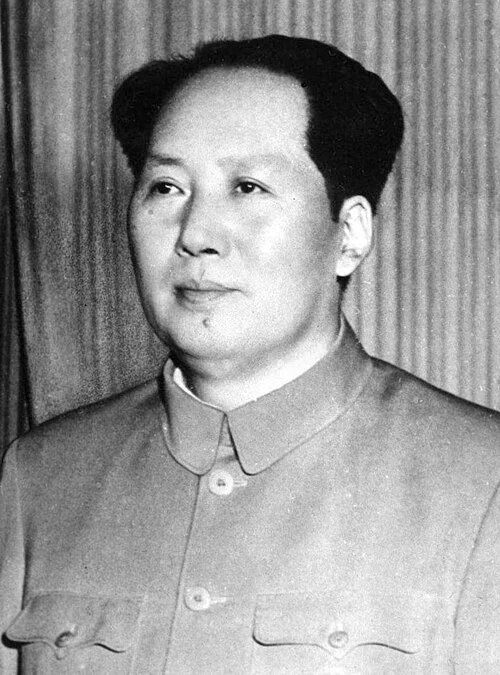
Mao Zedong in 1950
The Chinese Civil War, which lasted from 1927-1949, could easily fill up many articles on its own, but its ties to Korea are strong and key to the the Korean War. We can barely touch on this subject, but will provide a couple of highlights relevant to Korea.
The war had three phases: initial conflict in 1926-1927; the Second Revolutionary War from 1927-1937; and the post-WWII phase which was the Chinese Communist Revolution. The first phase was about ending the rule of warlords in China. The second phase was a pause between civil conflicts and concentrated on pushing back on the invasion of Japan into Manchuria and well further into China and its establishment of a puppet government there during the Second Sino-Japanese War, which is often referred to as the beginning of WWII in Asia. The third phase brought control of China to the Chinese Communist Party (CCP), led by Mao Zedong.
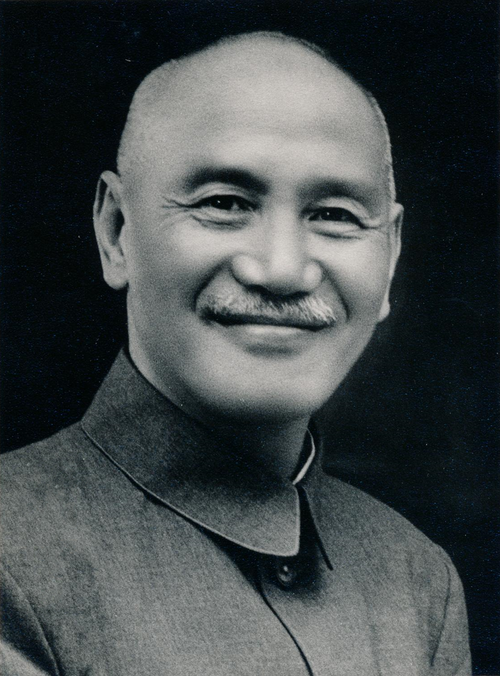
Chiang Kai-shek, 1955
Remember that armed resistance to Japanese occupation had existed among Koreans from the beginning of the occupation. Koreans had set up a government in exile in Shanghai – the Korean Provisional Government (KPG). After the KPG attempted to assassinate Emperor Hirohito, resistance Koreans in Manchuria fled and were chased across China by the Japanese. They received help from the Kuomintang – the Nationalist Government of China – led by Chiang Kai-shek. Korean guerillas trained alongside the Chinese Nationalists and helped fight during the Second Sino-Japanese War. However, the Nationalists (KMT) and the CCP had been fighting since the first phase of the civil war – that was the central issue of the civil war. At the end of WWII, The US was backing the KMT and helping them plan their movements into North and Northeastern China.
As the KMT moved into Northeastern China, the CCP settled into Manchuria, just north of Korea. At the end of WWII, which also ended the Second Sino-Japanese War, the Soviet Union turned over their captured Japanese weapons to the CCP. The CCP worked to form strong bonds with the Koreans. The CCP helped supply the Koreans with food and the Koreans helped back up the CCP’s efforts to take control of China, giving access for transport through Korea and by sending increasing numbers of troops to fight with the CCP. There were a number of different guerilla armies of Koreans that participated in fighting with the CCP. Somewhere between 70,000-80,000 Korean troops fought in the Chinese Civil War. At the end of the civil war, Chian Kai-shek and the Nationalists fled to Taiwan. The CCP formed the People’s Republic of China, which supported North Korea during the Korean War.
Recap
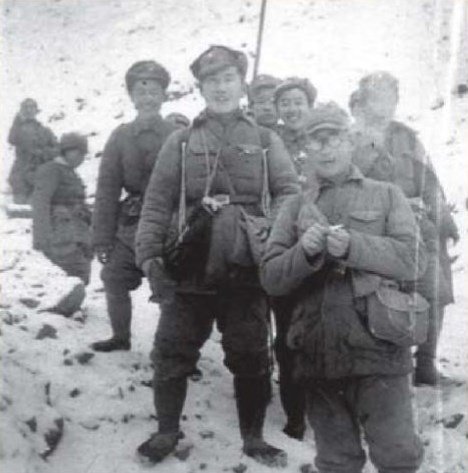
Korean troops fighting in China in 1947.
Whew! That’s a lot to absorb. Let’s recap really quickly:
Japan occupied Korea in 1910 and controlled it until the end of WWII, forcefully stripping Korea of much of its identity
Korean resistance formed to fight back and the resistance included Kim Il-sung
WWII ended and the Cold War started – pitting the US and the Soviet Union against each other
The Cold War was fought in proxy wars
The UN was created, but immediately struggled because it included both the US and the Soviet Union, who were at odds with each other (Cold War)
The Chinese Civil War saw communists gain control of China and Koreans greatly aided the communists in their fight for control of the country
1945-1950 – Beginnings of the War
Tensions on the Korean Peninsula
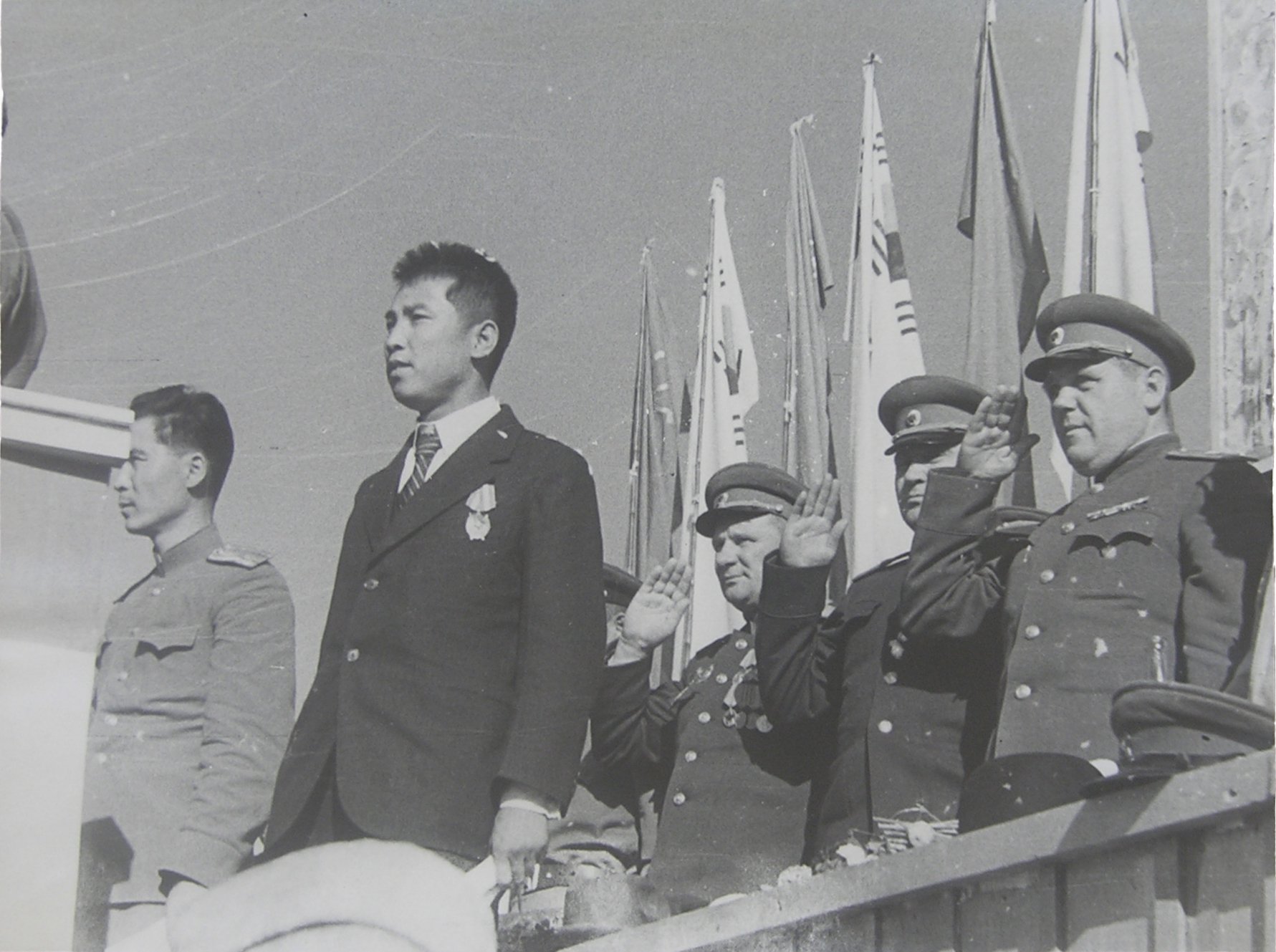
Kim Il Sung’s first public appearance, at a mass rally held at a Pyongyang public sportsground to welcome the Soviet army, October 14, 1945. Standing behind Kim Il Sung are three Soviet generals.
Between the dropping of the two atomic bombs on Japan by the US the Soviet Union declared war on Japan and invaded Manchuria, defeating Japan’s army there. Both the dropping of the atomic bombs and the invasion of Manchuria helped lead to Japan’s unconditional surrender on August 15, 1945. The Soviet Union’s invasion and defeat of Japan also took them into northern Korea. The northern Koreans looked favorably on the Soviet Union for defeating the Japanese on their land and helping to free them. When the Soviet Union came into Korea, they brought with them Korean fighters that had been living in the Soviet Union, including Kim Il-sung.
The US Secretary of State and an American military commander met on August 10, 1945, with no preparation and a National Geographic map and decided on the division at the 38th parallel. The US would have authority over the South and the Soviet Union was already present in the North. No Koreans were consulted on this decision. No other kind of experts on Korea were consulted. The US wanted to make sure that the capital, Seoul, what had been the center of the country for centuries, was under US control. Neither of the men that made the decision about the 38th parallel knew that 40 years earlier, Japan and Russia had discussed dividing Korea at the same place.
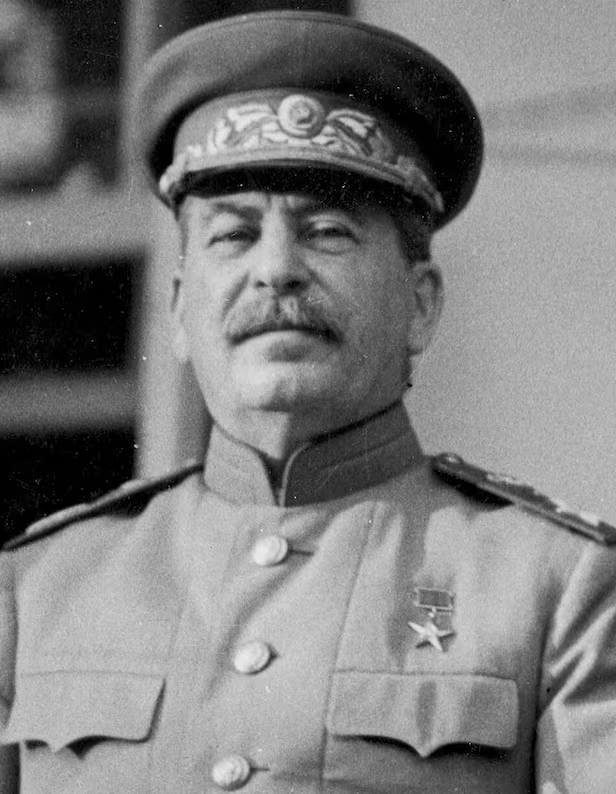
Joseph Stalin
The supposed temporary division of Korea was agreed upon August 17, as part of the surrender agreement with Japan, but from August to September 1945 there was some temporary chaos in Korea, as the handover of power by the Japanese and rumors about who would take control of Korea circulated. In the middle of WWII, the US, Britain, Chiang Kai-shek in China and the Soviet Union more or less agreed that Korea should eventually become free and independent, but would be put under temporary trusteeship, until they could determine that Koreans were ready for self-rule.
The Soviet Union wasn’t included in the decision to divide the country at the 38th parallel, but went along with it. Joseph Stalin pulled his troops back to the 38th parallel and waited for US troops to arrive, as had been agreed upon. Three weeks after the division, 25,000 US troops arrived in Southern Korea. The US saw controlling part of Korea as a benefit to reconstruction of Japan. But the US had not cared about Korea before 1945 and before the Soviet Union moved into the North. According to historian Bruce Cumings, the US mistakenly believed that the Soviet Union was organizing and calling the shots of the Korean resistance. That couldn’t be further from the truth.
Kim Il-sung
August 8, 1945, Kim Il-sung arrived back in Korea when the Red Army entered Pyongyang. He was recommended for leadership in Pyongyang and was approved by the Soviet Union. In December of 1945, he was installed as the head of the Communist Party of North Korea.
Syngman Rhee
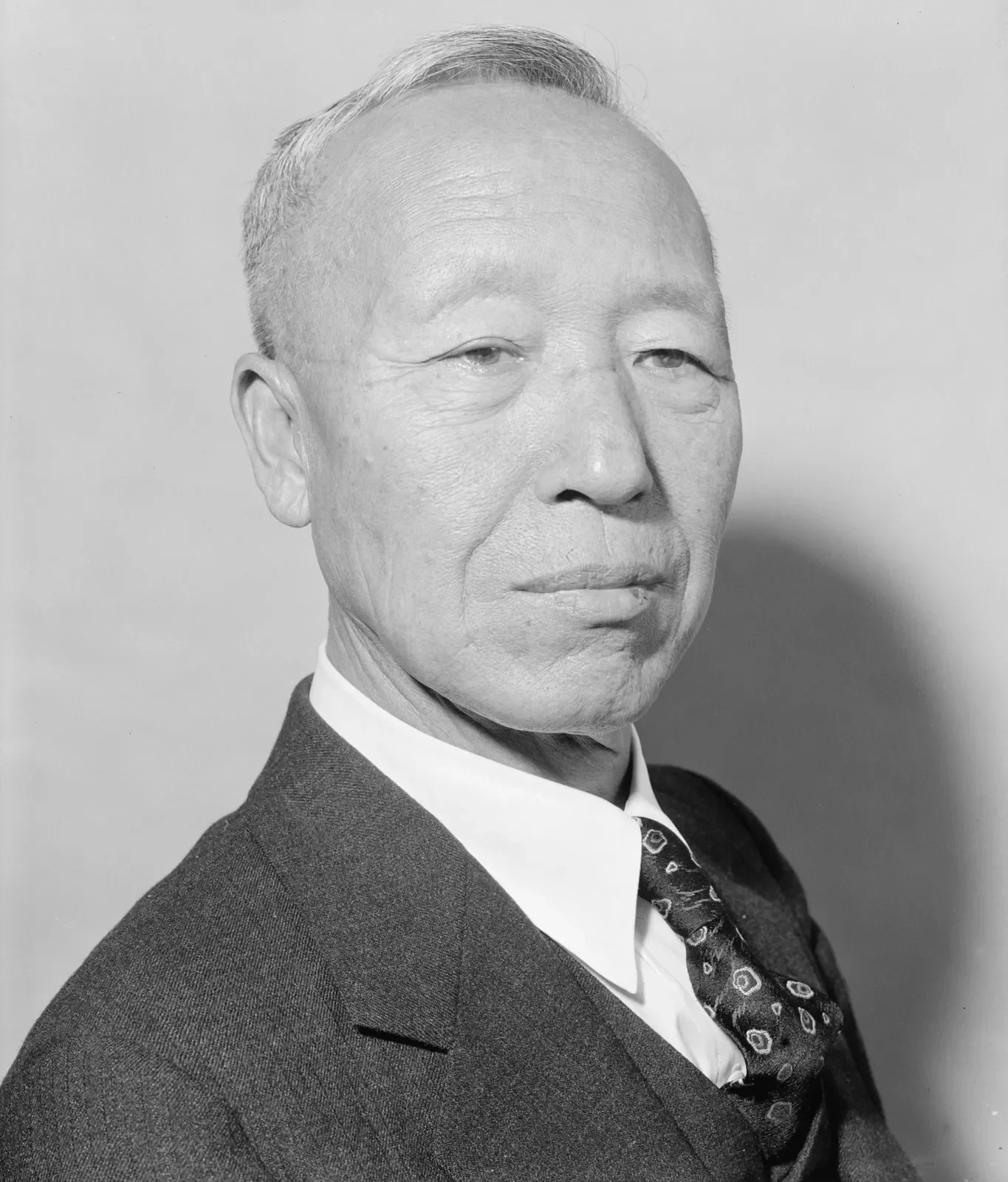
Syngman Rhee, 1939
Syngman Rhee became a very important and, one could easily argue, despicable figure in South Korea, but had an interesting beginning. He became involved in anti-Japanese groups after the First Sino-Japanese War in 1895. He spent time in prison and moved to the US when he was released. He received a prestigious education, culminating in a PhD from Princeton. He tried several times to convince people in the US government to advocate for independence for Korea, but failed each time. He served in the Provisional Government in Shanghai, but was impeached for abuse of power – something that, in retrospect, should have been a huge warning sign. When Japan surrendered at the end of WWII, he was flown in a US military airplane by MacArthur to Seoul. He was considered by the US a potential troublemaker, but his mastery of English and willingness to lead overshadowed US hesitations to use him.
Continued Tensions
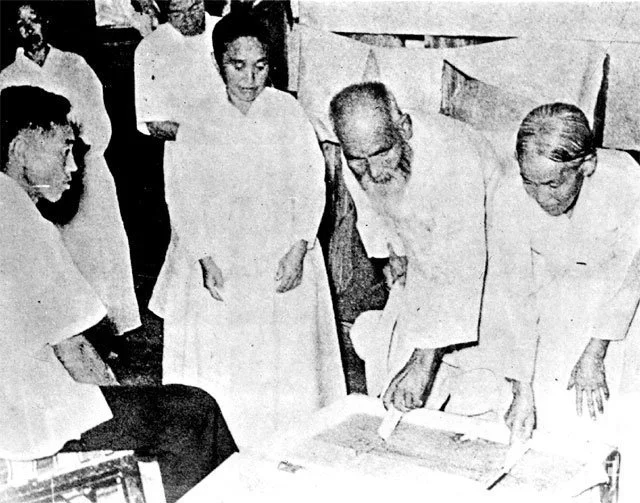
May 10, 1948 first South Korean general election.
In December of 1945, the US and Soviet Union agreed on a five-year trusteeship of Korea. Koreans in the south didn’t want to wait five years for independence and riots broke out, supported by Syngman Rhee. The US responded by declaring martial law.
By 1948, the UN didn’t see enough progress in the joint trusteeship of the peninsula and called for general elections. The Soviet Union and the North Koreans refused to participate and many South Korean politicians boycotted as well. However, the election was held in May and Syngman Rhee was elected president and the Republic of Korea was created. In July, the North established the Democratic People’s Republic of Korea and Kim Il-sung was its leader. Rhee established a military training academy immediately and actively sought Koreans who had served in the Japanese army – against Koreans – to promote within the new South Korean government. The first graduating class of this academy included Park Chung-hee, who later became a dictator in South Korea.
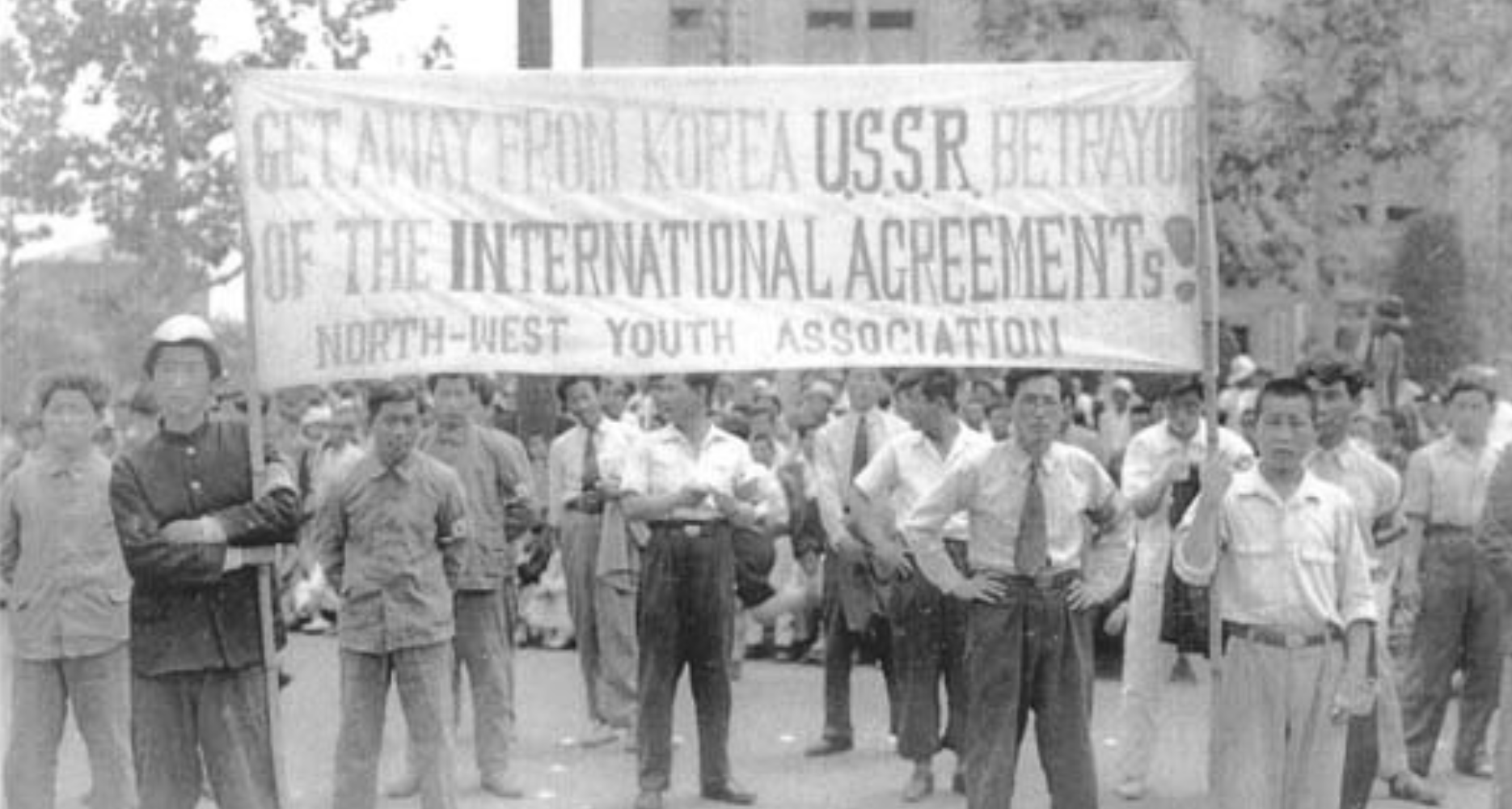
Right Wing North West Youth Association in Jeju, 1948.
In March of 1948, the Workers’ Party of South Korea on Jeju Island held a general strike to protest to elections scheduled by the UN and US. On April 3, an armed guerilla group attacked police stations and right-wing civilians. Syngman Rhee declared martial law and began a suppression of the uprising and an eradication against insurgents. A scorched earth campaign killed an estimated 30,000 civilians – 10% of the island’s population. The incident is known as the Jeju Uprising and we have written about it in a past newsletter. You can read about it here. The US command was present when this happened, though they were supposedly only there in an advisory capacity. The National Committee for the Investigation of the Truth about Jeju April 3 Incident concluded that the US was complicit and shared responsibility.
Both Kim and Rhee believed they were the legitimate leaders of the entire Korean peninsula. They were both hot-headed and constantly wanted to invade the other’s side. The US and the Soviet Union had to continuously hold them both back. Skirmishes across the 38th parallel from both sides happened continuously in 1947, 1948 and 1949 and hundreds of soldiers on both sides were dying. The war had really already begun.
Kim began asking Stalin for permission to fully invade the South and reunify the peninsula by force in 1949, but he still had 70,000-80,000 troops in China involved in the Chinese Civil War. When the CCP won control of China and those troops returned to Korea in May 1950 with seasoned battle experience, the time was right. Kim spent a month in Moscow planning an attack, but Stalin only agreed to it if Mao Zedong would send reinforcements from China, as needed. Mao said that if the Americans got involved, they would support Kim. Kim believed he could take South Korea in less than a month and, had American troops not arrived quickly, this might have happened.
At this juncture, the US believed there was no real threat from the North. The head of the US Military Advisory Group is quoted as saying that any invasion from the North would only serve as target practice for the US. The US had also decided not to do anything if the North decided to take the South by force. They were averse to a physical conflict and Korea didn’t mean that much to them, militarily. As late as June 23, 1950, the UN troops had inspected the 38th parallel and concluded there was no imminent threat of conflict.
Incursion from the North
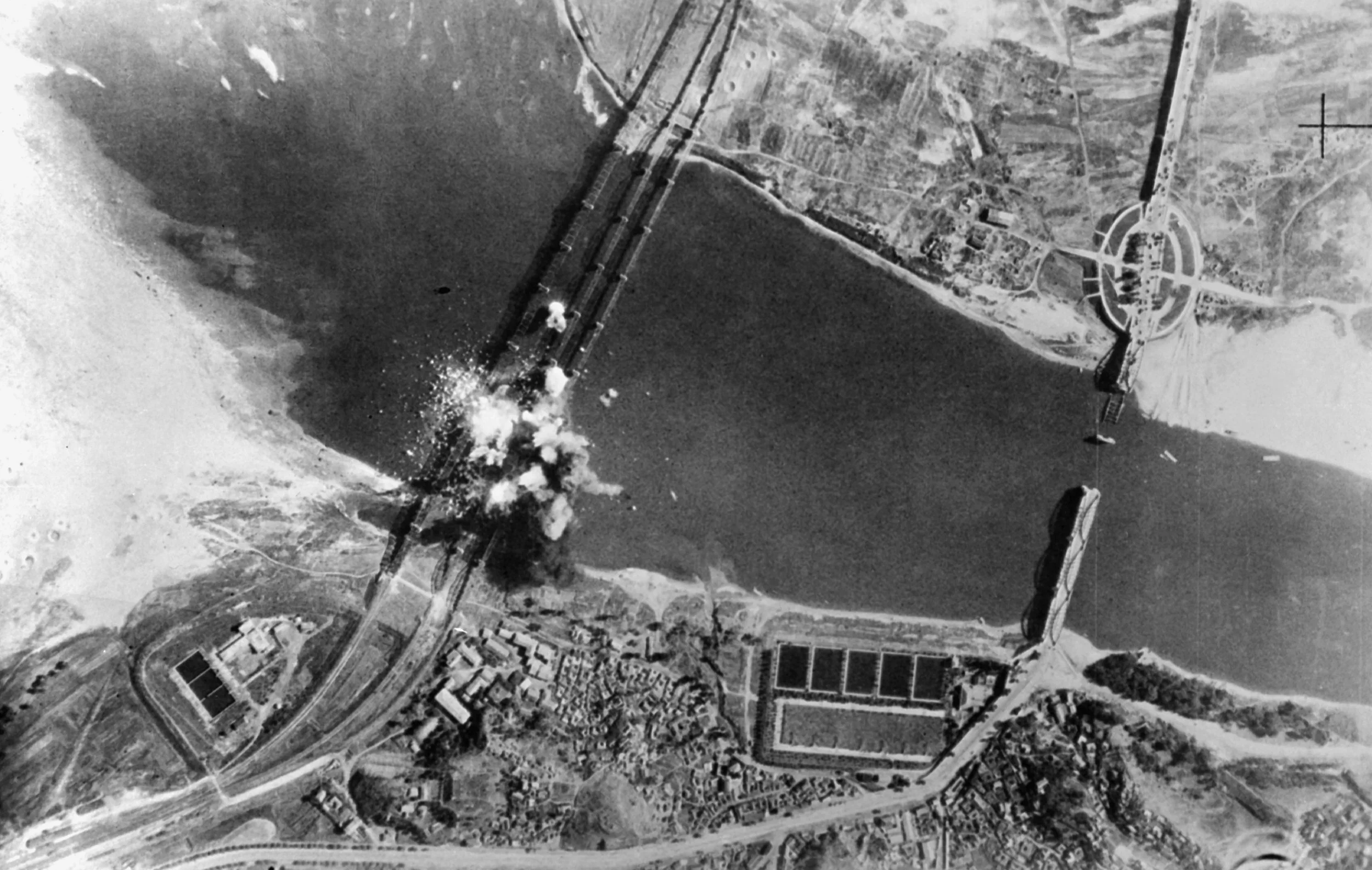
Airview of bombing of Hangang Bridge.
On June 25, 1950, at 4:40am, the Korean People’s Army (KPA) from the North crossed the 38th parallel and rushed to encircle and capture Seoul. By June 27, Syngman Rhee had disappeared from Seoul and was out of sight. On June 28, the South Korean army blew up the Hangang Bridge over the Han River while 4,000 refugees were trying to evacuate over it, killing at least 800 of them and trapping South Korean troops on the other side. Soldiers from inside the South retreated, some defecting to the KPA. Within 48 hours, the KPA had moved down the southeast coast and were heading towards Busan.
1950 – The Heart of the War
The UN Security Council met immediately and found North Korea in breach of peace, according to the UN charter. The Soviet Union had been boycotting the Security Council and weren’t present at the vote. On June 27, the UN Security Council voted that member states should assist South Korea and restore peace. The Soviet Union challenged the legitimacy of the vote and said it was beyond the scope of the UN charter and was void in the absence of them voting.
President Truman ordered troops immediately to Korea without Congressional approval, believing there was a legitimate comparison to be made between the spread of communism on the Korean peninsula and what Hitler, Mussolini and Japan had done during WWII. Congress did give their approval in August. Truman believed that if the US didn’t intervene, the war could escalate to a war in Europe again.
The US was unprepared for the invasion from the North and were surprised at their preparedness – ignoring the fact that tens of thousands of troops from the North had been fighting in China. There was a true belief by Americans that “Orientals can’t fight.” Within the first couple of weeks of the invasion from the North, South Korean and American troops were overwhelmed. The UN and the US didn’t want the fragile South Korean government to collapse. Within a month, MacArthur had all of the troops from the US either in South Korea or on their way. Truman wanted a naval blockade of the North, but was told there weren’t enough ships after WWII to implement it.
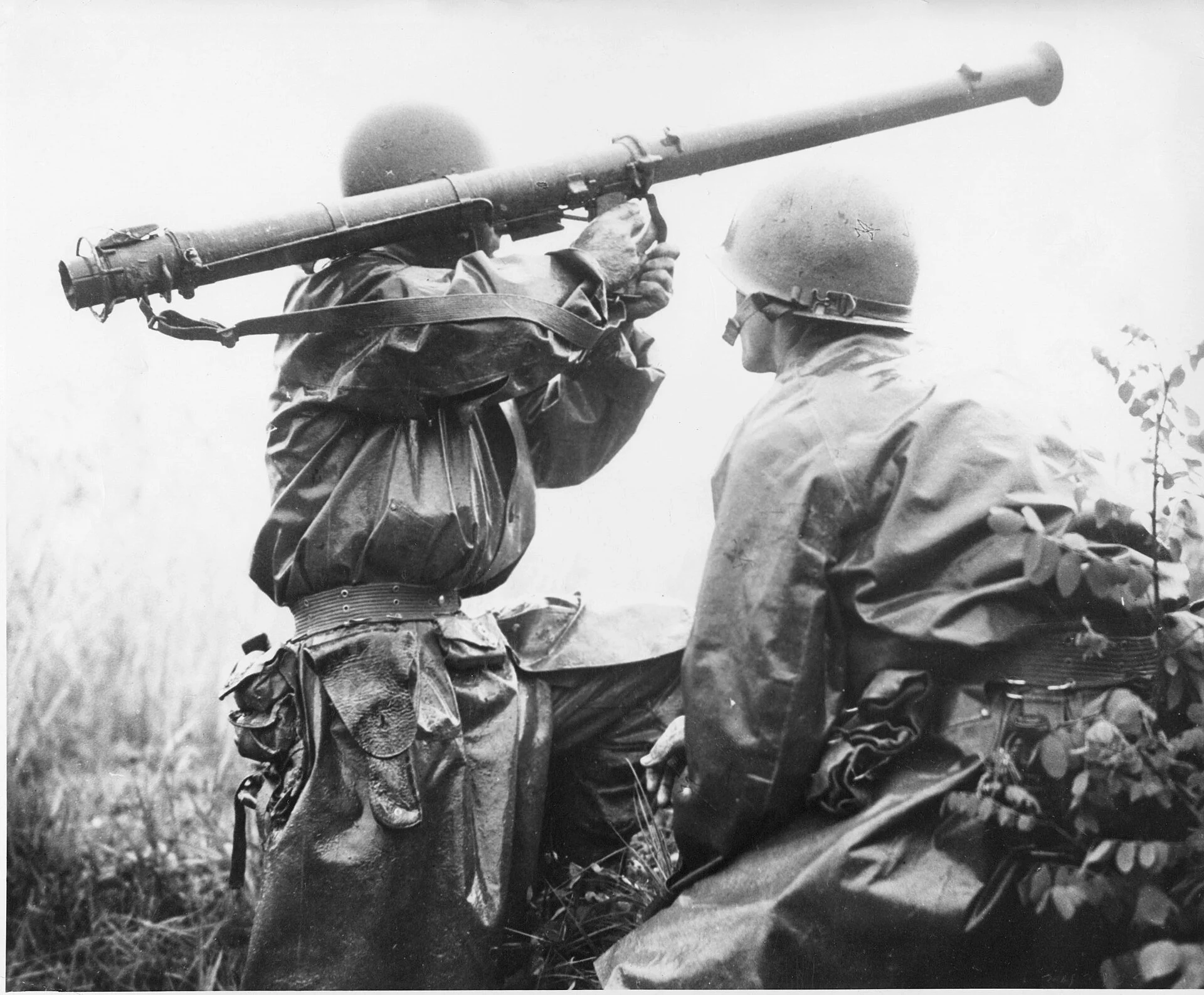
A team mans a Bazooka at the Battle of Osan. At right is Private First Class Kenneth Shadrick, who was the first American soldier to be killed.
The initial months of the war were very bloody and the highest tolls of human life happened at this time. Truman ordered four atomic bombs moved to Beale Air Force Base in California to be ready to use against Korean and Chinese targets. Fortunately, the order to use them never came.
The initial battles were bad for the South and the US because they were underequipped after WWII and with Truman’s orders to downsize the military and they had inadequate defense against the KPA’s tanks. The first major battle between the KPA and US troops was the Battle of Osan, south of Seoul, starting July 5, 1950. Faced with columns of tanks from the North, the US troops were overwhelmed and had to retreat.
Because of early successes after first crossing into the south, Kim Il-sung believed he could finish the war by the end of August. However, UN troops were able to hold off the KPA around Busan in September of 1950. In the Battle of the Naktong River Defense Line, between August 4 and September 18, the UN troops pushed back in one of the first major engagements of the War.
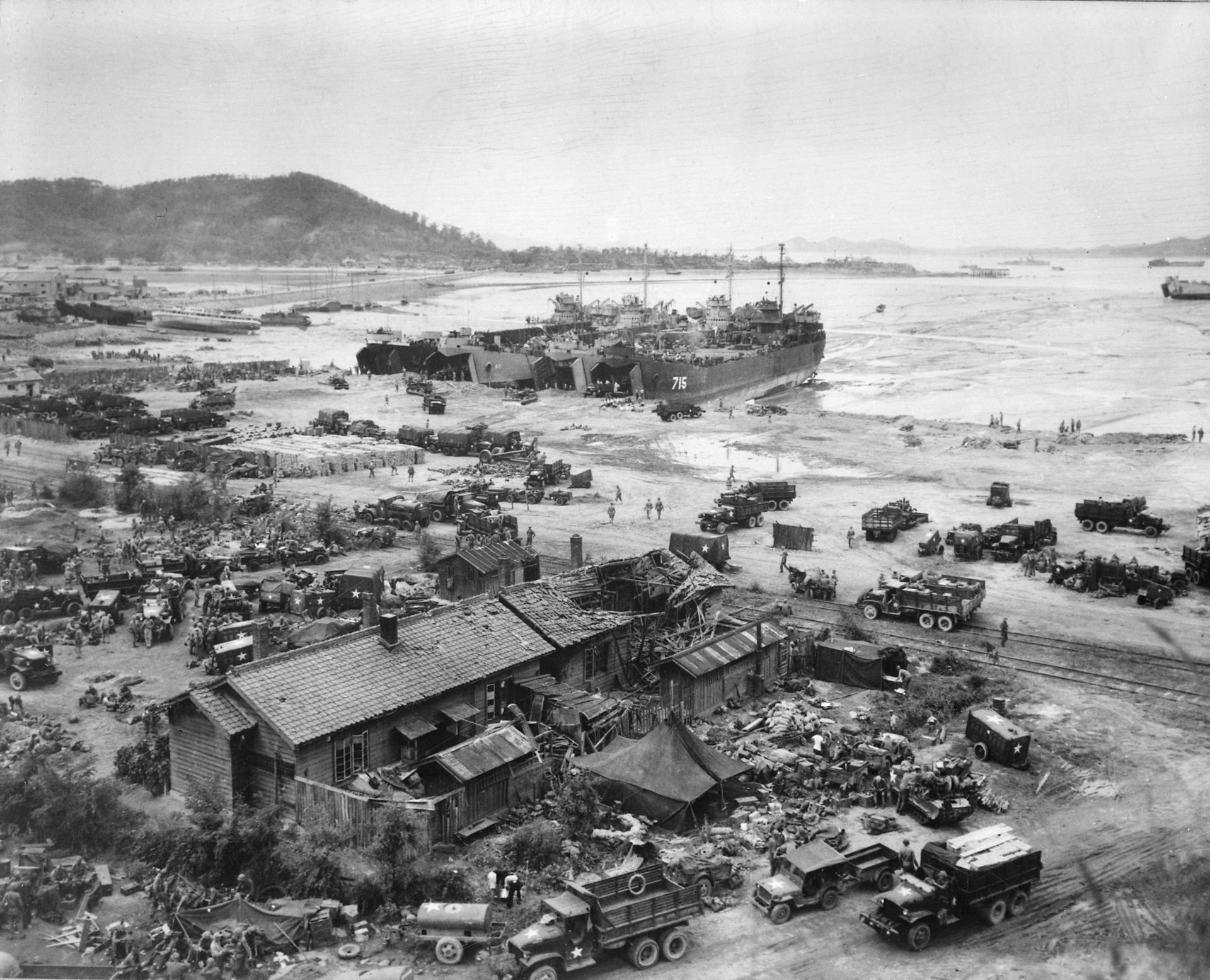
A day after the start of Battle of Incheon.
On September 25, Seoul was recaptured in the Battle of Incheon by the South and UN troops. This gave the UN and US a success that they desperately were seeking. Washington sent orders to MacArthur to completely destroy the KPA and then, secondarily, unify the peninsula under Rhee, “if possible”, but that wasn’t a primary concern. This particular battle has been studied endlessly by militaries globally and is considered one of the most decisive battles in modern warfare. The surprise attack at Incheon, when diversionary tactics had the North focused on Busan, led to a quick success. KPA troops were outnumbered six to one and initial success in Incheon came within 48 hours. The battle for Seoul took longer – three months from the date the KPA first crossed into the South – and was much bloodier. By October 1, the KPA had been chased back over the 38th parallel.
September 29, 1950, MacArthur restored Syngman Rhee as leader in Seoul. He had received a memo from the Joint Chiefs of Staff reminding him that entering the North was only allowed if there were major build ups of Soviet and Chinese Communist forces into the North. China’s Premier, Zhou Enlai, warned MacArthur that China would intervene if the US crossed into the North.
On October 7, with UN approval, the US and UN troops pushed into the North anyway. On October 13, 200,000 Chinese soldiers crossed into North Korea to support the North. Historian Bruce Cumings argues that they were essentially defending their own border by assuring the South didn’t overtake the North and sit on the border with China or cross over into China. By October 19, US troops had captured Pyongyang. MacArthur wanted to cut off roads north to China, prevent North Korean troops from escaping into China and rescue US POWs. He thought it was necessary to extend the war into China to cut off North Korean supplies. President Truman disagreed.
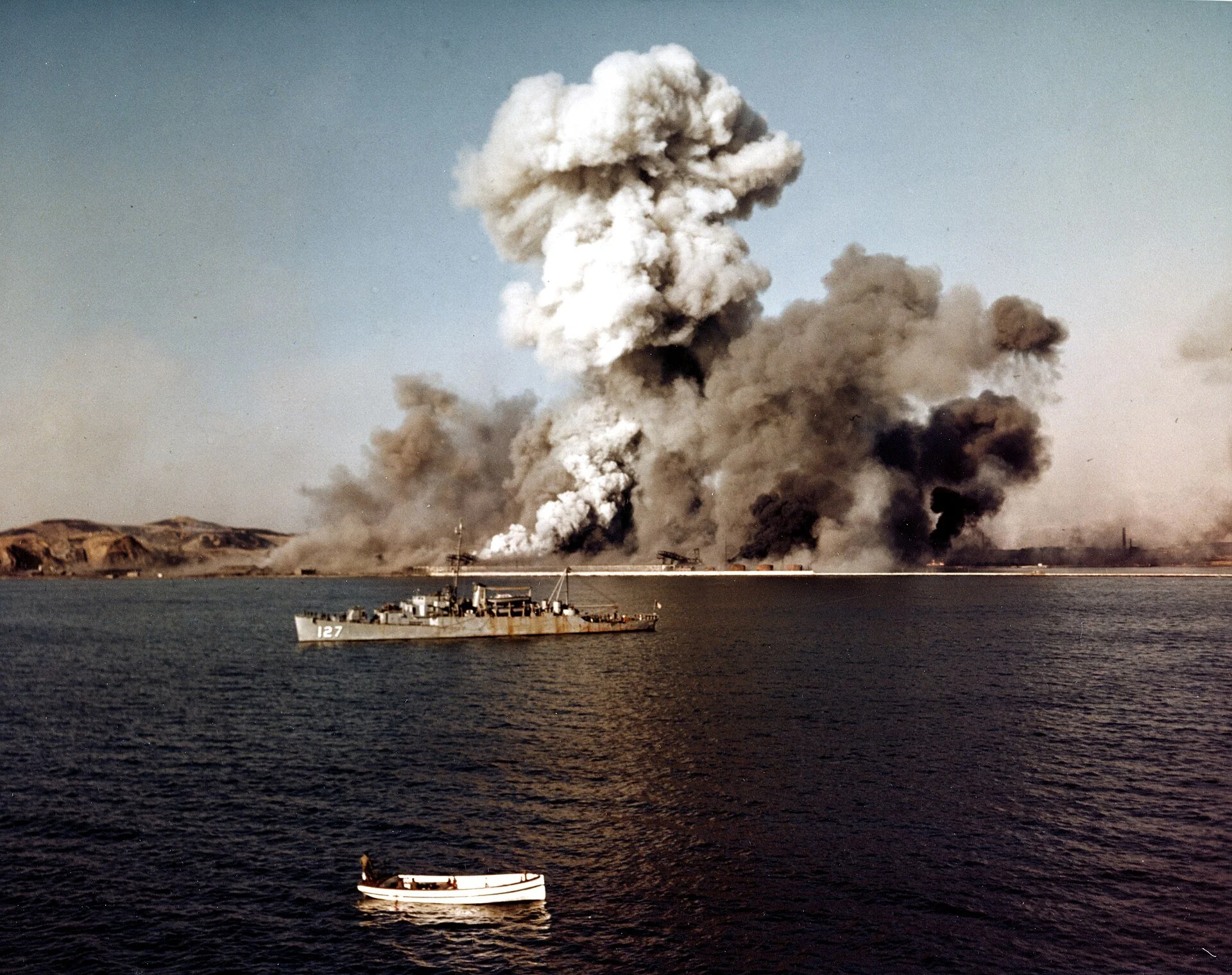
Demolition of Hungman Port. December 24, 1950. Korea’s Former President Moon Jae In’s parents were refugees who escaped during the operation.
Chinese troops attacked UN forces on October 25 near the Chinese border. Stalin allowed the Soviet Air Force to provide air cover and support. The North attacked the US troops in three prolonged battles near the border. Coordinated attacks by the Chinese led to heavy losses for the US and UN. The US and UN ended up retreating back across the 38th parallel.
Late in November, the Chinese initiated the Battle of Chosin Reservoir. The US and UN, despite initial surprise attacks, were able to escape being encircled by Chinese troops and set up a defense around the North Korean city of Hungman. Between December 15-24, the US and UN evacuated troops, weapons and civilians from the North to Busan. The operation was called the Hungman Evacuation and is considered the largest wartime evacuation ever. Approximately 105,000 soldiers, 98,000 civilians, 17,500 vehicles, and 350,000 tons of supplies were evacuated. A single ship, the SS Meridith Victory, evacuated 14,000 refugees, even though it was designed to hold only 12 passengers. Before leaving Hungman, the UN troops completely razed the city. This was the first northern city totally destroyed and set an ugly model for what followed.
1951-1953 Bombings
Before the war, the northern part of Korea had been its industrial heart. South Korea had mostly light industry and agriculture, but Japan had built a tremendous industrial complex in the northern cities. After the evacuation and razing of Hungman, the US reconsidered its strategy because of China’s intervention to accompany the North. The US began a strategy of urban fire bombing. Early in the war, a US general had wanted to use this strategy because he saw it as successful in Japan, but MacArthur had said no. He changed his mind.
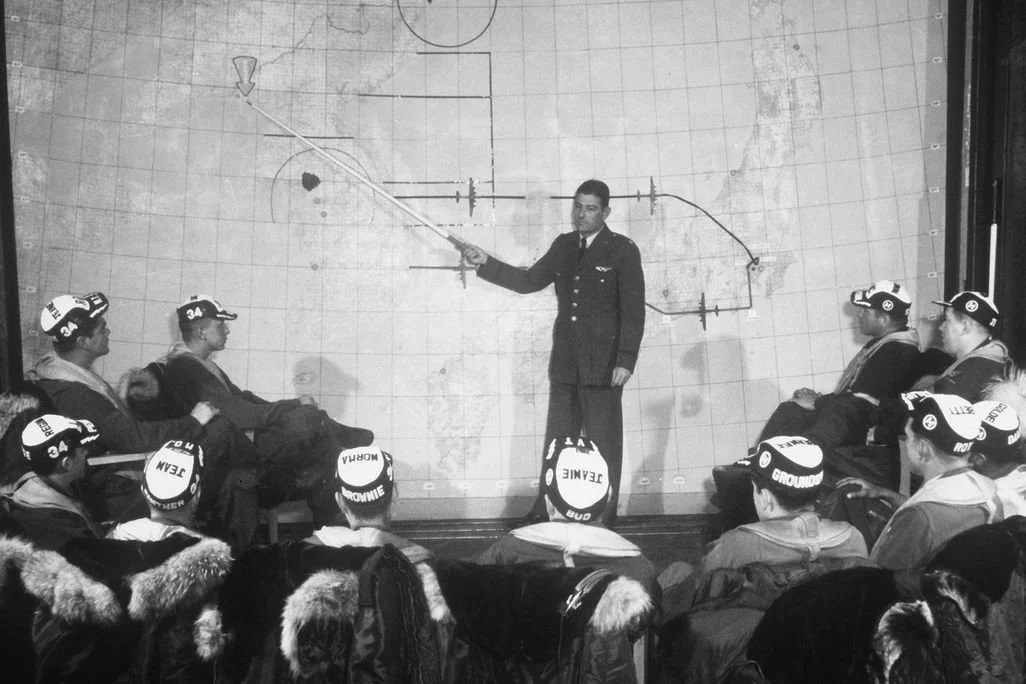
Major Harry B. Bailey, an intelligence officer for the 98th Bomb Group, briefs a B-29 crew on hitting a target in Sinuiju, North Korea.
Firebombing can destroy an entire city in minutes to hours. 22 Northern cities were bombed and burned into oblivion. From 65-100% of these cities were bombed using incendiary bombing techniques that the US had perfected with Britain at the end of WWII. Manpochin, Sakchu, Kanggye, Huichon, Chosan, Hoeyrong, Namsi, Nampo, Chongju, Haeju, Hamhung, Hungnam, Hwangju County, Kangdong, Kunuri (Kunu-dong), Songnim, Pyongyang, Sariwon, Sinanju, Kimchaek, Sunan-guyok, and Wonsan were all nearly completely destroyed with partial damage at Anju, Musan, Rashin, Unggi (Sonbong County). In November 1950, MacArthur told the US Ambassador to South Korea, “Unfortunately, this area will be left a desert.” By “this area”, he was referring to the entire northern part of Korea.
MacArthur was removed as the Supreme Commander of the Allied Powers in April of 1951 for going against Truman’s orders one too many times, but his successors continued the strategy of firebombing. The US dropped 635,000 tons of bombs in Korea, not including another 32,500+ tons of napalm – more than in the entire Pacific campaign of WWII.
In addition to the bombing of cities, the US command also bombed five major dams that the Japanese had built, flooding vast areas and bringing starvation to millions of North Koreans. Only emergency help from China and Soviet Union helped people in these areas survive. The scope of all of the bombings, the fact that they targeted civilian infrastructure and especially the targeting of dams were considered war crimes by many.
In January of 1951, the KPA captured Seoul for the second time, prompting MacArthur to reconsider using nuclear bombs. The battle for Seoul went back and forth until March 14, when the US and UN retook Seoul for the fourth and final time. By the end of this final battle for Seoul, the population had been reduced from 1.5 million to just 200,000.
In April of 1951, China sent another 700,000 men to fight in the Battle of the Imjin River, the beginning of the Chinese Spring Offensive, which lasted through May. This offensive was the last large-scale operation of the Chinese army. Neither side was able to dispel the other and the fighting found itself at a stalemate. After this, battles continued to take place, but little territory was gained or lost. The incendiary bombing campaigns continued, however. At the same time, talks seeking an armistice began.
Messy Non-Ending
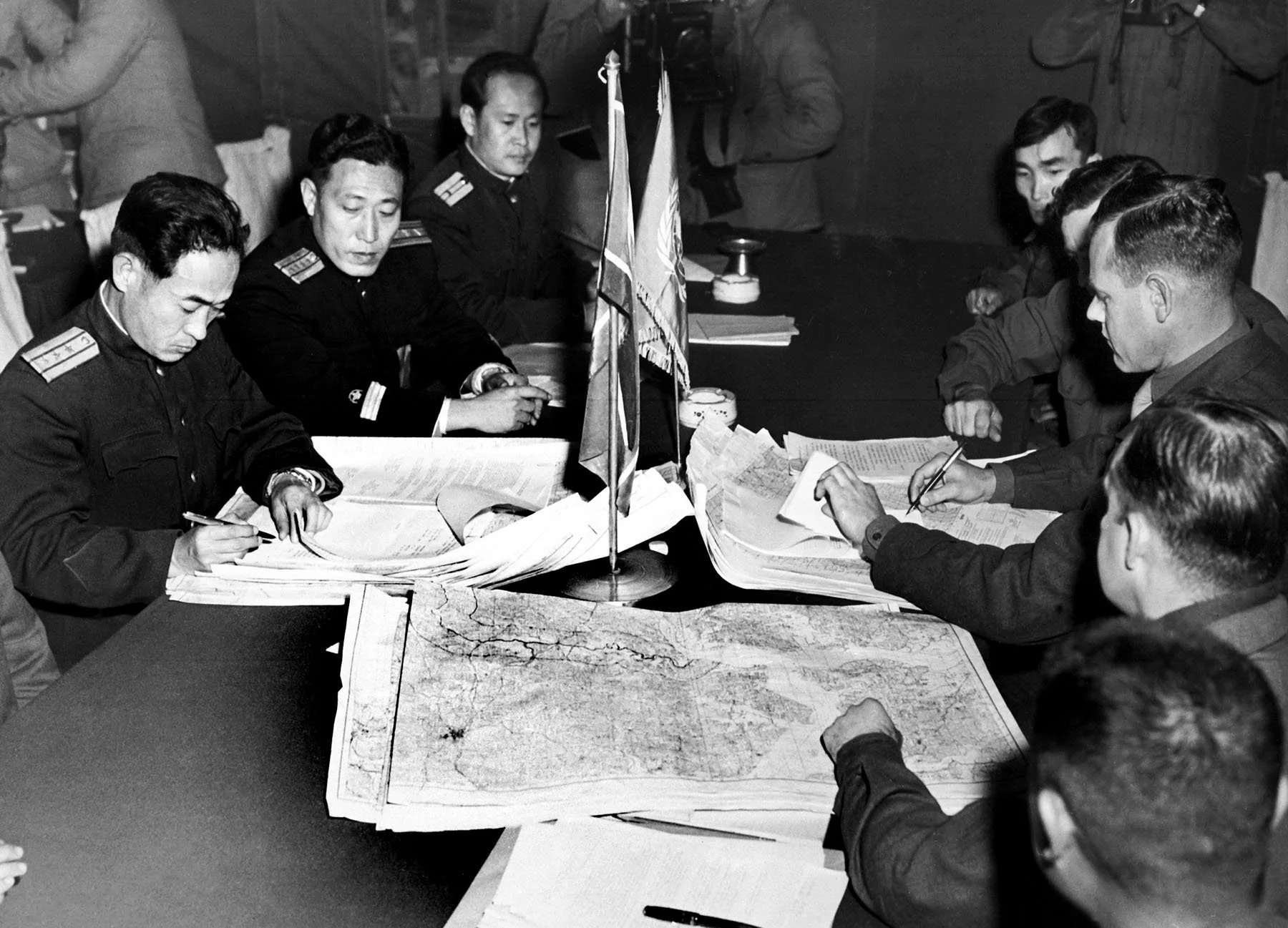
North Korean Army officers and U.S. military representatives initial maps defining the future Demilitarized Zone or DMZ at Panmunjom, October 1951. (U.S. Air Force photo)
On again, off again negotiations for peace continued for two years. Stalin was ill during the war’s stalemate. When he died in March 5, 1953, his successors were not interested in continuing to support China or the North Koreans in their fight and wanted the war to end. China knew it couldn’t continue on its own. On July 27, 1953, China, the KPA, the US command and the UN gathered to sign an armistice agreement. Syngman Rhee refused to sign, however, having failed to reunite the peninsula by force. Kim Il-sung was slow to support the armistice, also wanting to unite the peninsula by force, but it became obvious that China and the Soviet Union would no longer support the war and he agreed to sign.
It took two years just to very slowly agree on terms for the armistice. A lot of the disagreement had to do with the exchange of POWs and not forcing KPA and Chinese soldiers that did not want to return north to do so. Within POW camps, there were divisions of those that supported the North and those that ended up supporting the South. There were conflicts that constantly broke out between the factions. This issue was very difficult to negotiate for the armistice because China and North Korea wanted all of their personnel back. Syngman Rhee decided to sabotage the armistice and let 25,000 prisoners go free. This infuriated the US.
The armistice was ultimately signed by all but South Korea and the war stopped, but there was no peace treaty and no official closure. Even though hopeful efforts at reunification continued for decades, no ultimate resolution was found and the conflict continues to fester, not as just a disagreement between governments, but as a war that is still, in many ways, active.
The Toll on Koreans
It is easy to look at a list of battles and decisions and think of a war as a strategy game. War effects normal people in devastating ways. In the case of the Korean War, the entire country was changed forever. 128,000 families were split apart between the North and South and separated during the war. An estimated almost three million civilians were killed and those that survived were left with psychological trauma. More civilians died than in WWII or the Vietnam war. The percentage of civilian casualties in the war was between 50-70% of all casualties. Every person’s life in Korea was turned upside down. Gendered violence against women by soldiers left permanent scars. Sometimes unwanted, sometimes wanted mixed-race babies from soldiers were not accepted into a society that had existed in isolation for so long.
Many atrocities and massacres were committed by both sides, but the South Korean Truth and Reconciliation Commission found that 82% of the massacres were perpetrated by the South Korean forces. The massacres perpetrated by the North were often done as public executions. The Commission also found over 200 large-scale killings of civilians committed by US military forces.
The firebombings on North Korean cities make it one of the most heavily bombed countries in history. North Korea moved as many schools and hospitals underground as they could to avoid bombing,
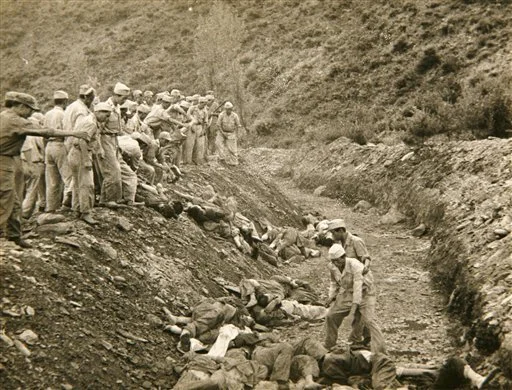
Part of Bodo League Massacre in Taejeon.
The Bodo League Massacre happened on June 27, 1950, killing an estimated 200,000 civilians who had belonged to the Bodo League or Southern Korean Workers’ Party. Syngman Rhee ordered the massacre to kill “communists and suspected communists” without trial. American officers witnessed and photographed the massacre. Another execution of 3,400 civilians in Busan took place under the same excuse later in the summer.
In the Battle of Taejon, which took place early in the war, declassified US documents show that that the South Korean army slaughtered 7,000 civilians as US officials watched. The incident is called the Taejon Massacre. The incident was classified and buried and history re-written to say that the massacre was committed by the North Koreans until the child of murdered man requested information through the Freedom of Information Act and found photographs that US officials had taken during the incident, clearly showing both American soldiers and South Korean military.
Also early in the war, the small town of No Gun Ri was the location of a massacre of civilians by US forces. US troops rounded up women, children and the elderly under a railroad trestle and killed approximately 400 of them
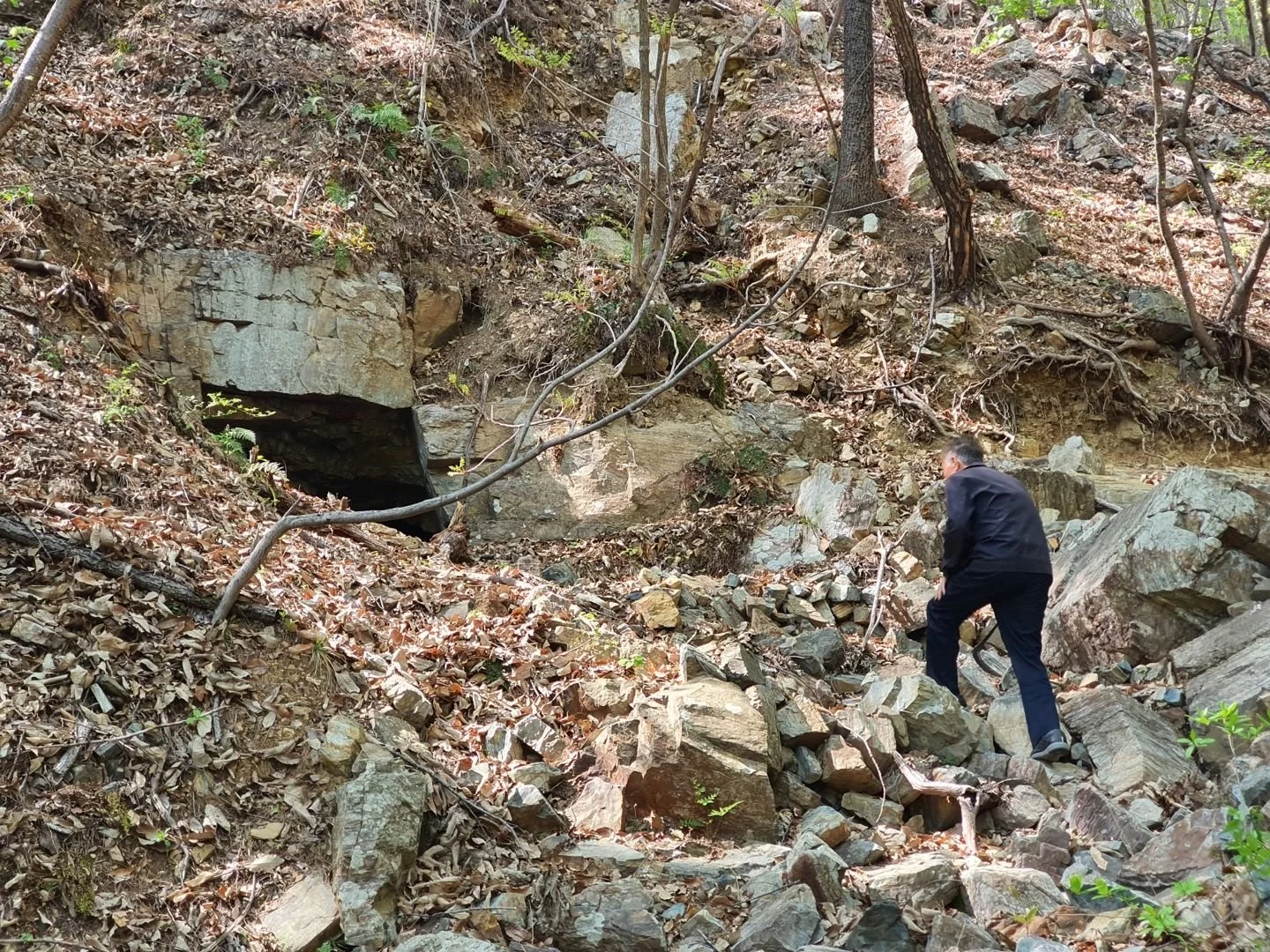
The remains of the victims of Bodo League incident are yet to be fully identified.
Other massacres included Sinchon (30,000-35,000 killed), Seoul National University Hospital (900 killed), Ganghwa (up to 1,300 killed), Sancheong and Hamyang (705 killed), Geochang (719 killed). These aren’t just numbers, they’re people. People with families and lives and futures they hope for.
Chinese POWs experienced anti-communist and Christian indoctrination and proselytization, as well as torture, cutting off of limbs and execution. Those that survived experienced ill treatment, whether they decided to return home or go to Taiwan, where the Nationalist government had gone.
UN and US prisoners were also mistreated – subjected to torture, hard labor, starvation and summary execution. 43% of US POWs died in captivity from 1950-1951. Historian Bruce Cumings notes that UN POWs didn’t die at the same rate and that the reason was that they knew how to keep their morale up in a much stronger way – the US soldiers, after facing abuse, just gave up in greater numbers.
Most major cities were mostly or completely destroyed during the war. Both the North and the South had to completely start over, rebuilding infrastructure of roads, bridges, schools, hospitals, apartment blocks. And because the country had been occupied for 35 years, the entire structure of institutions had to be created.
Environmental destruction was significant, especially from the extended bombing campaigns and use of napalm, but also from overforresting.
And on top of all of this, the Korean people were not free. People in the North became subject to the personality cult and control of Kim Il-sung. And people in the South had to live with brutal dictatorships for another 34 years.
Aftermath
The war was a disaster for Truman and the end to a presidency filled with controversies. The biggest change for the US was that the defense budget quadrupled. It wasn’t until 2007 that military spending matched what it was just after the Korean War. The US set up 750 military bases around the world. The largest base in South Korea is just south of Seoul. This number is significantly higher than any other country in the world.
The US put nuclear weapons in South Korea in 1958 and left them there until 1991. Not bringing in new types of weapons was a principle point in the armistice agreement, but that was ignored. This action helped initiate the North’s desire to obtain nuclear weapons as well.
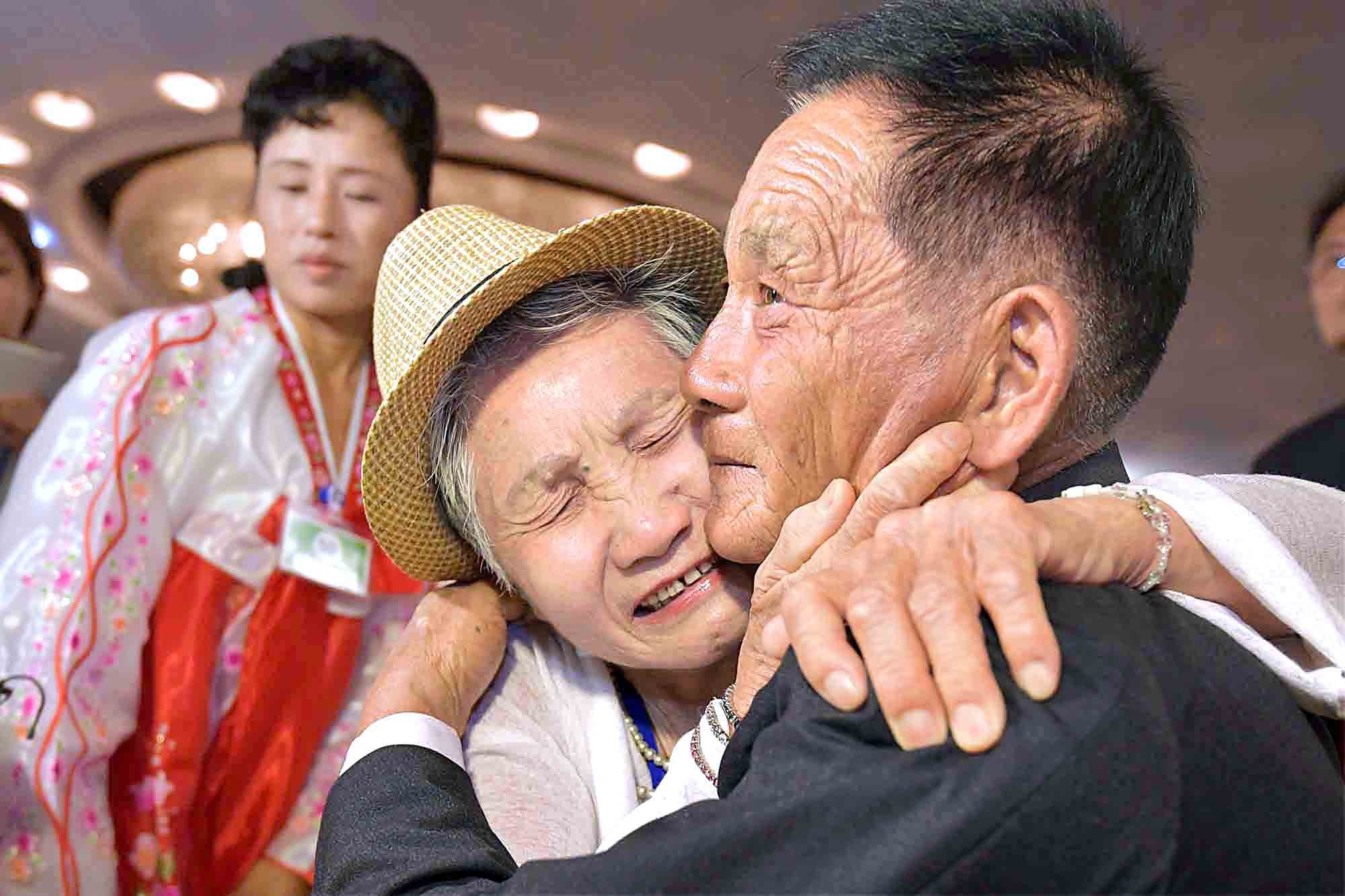
Separated families had chances for brief reunifications over the years. However, the program came to halt completely since 2018.
In the first decade after the war, the South was quite far behind the North, industrially. South Korea started further behind in its industrialization than North Korea was. By the 1970s, North Korea, with help from the Soviet Union and South Korea, with help from the US were pretty much at the same place economically, but South Korea was able to grow very quickly from the 1960s through the 1990s.
Anti-Americanism was strong immediately after the war because of how American military personnel had behaved. The mix-raced children that were a result of interactions with soldiers, violent and not, were undoubtedly seen as reminders of atrocities, but their very existence was also contrary to traditional social norms that put heavy emphasis on parentage and lineage and they were put into orphanages. The international adoption program started in 1954 was partially an attempt to purge the country of these children.
In 1983, from June 30th to November 14th, in a moment of hope, a marathon broadcast on KBS helped families from the North and South find each other and reunite. 10,000 families were reunited, although for a fleeting moment in time, as a result of this broadcast. We covered the Finding Dispersed Families broadcast in a past newsletter.
Conclusion
War is hideous.
Logic lets us think it isn’t the way civilized humans should behave and yet we don’t seem to be truly civilized by our nature. The cost of military conflicts on those that live through them and on the generations that come after sink into our DNA and cause us to continue the conflict, either as trauma that changes who we are or as a fire of rage that continues to consume us. Maybe this literally prevents us from learning.
Very few years after the Korean War, the US, the Soviet Union, China and yes, Korea, were pulled into the Vietnam War. South Korea sent nearly 350,000 to the Vietnam War.
In recent years, as time has passed, the narrative of what happened during occupation, WWII and the Korean War has shifted. As Eun-Byoul pointed out in the Editor’s Note, very recent events show us that young people are learning to make painfully ignorant jokes of the tragedies of the past. The reason we need to learn about history is to work very hard to not repeat those tragedies and not allow the stories of those tragedies to become disconnected from the people they destroyed.
The tragedy of the Korean War continues as no end to the war was finalized. The situation has been likened to living on a knife edge. Trust is illusive. True peace is a dream, but a dream we hold onto.
Further Reading:
We usually present a long list of articles here that you can read for more in-depth information. Because there is so much material available on the Korean War, we will recommend a single book as a starting place and let you explore from there. This book is older, but still has extremely valuable information.
The Korean War: A History – by Bruce Cumings
In Film and Television: As with the Further Reading list, the number of movies and televisions shows that are set during the Korean War is very, very long. We will create a special list soon and present it as a separate article.