BOOK CLUB REPORT - July 2026
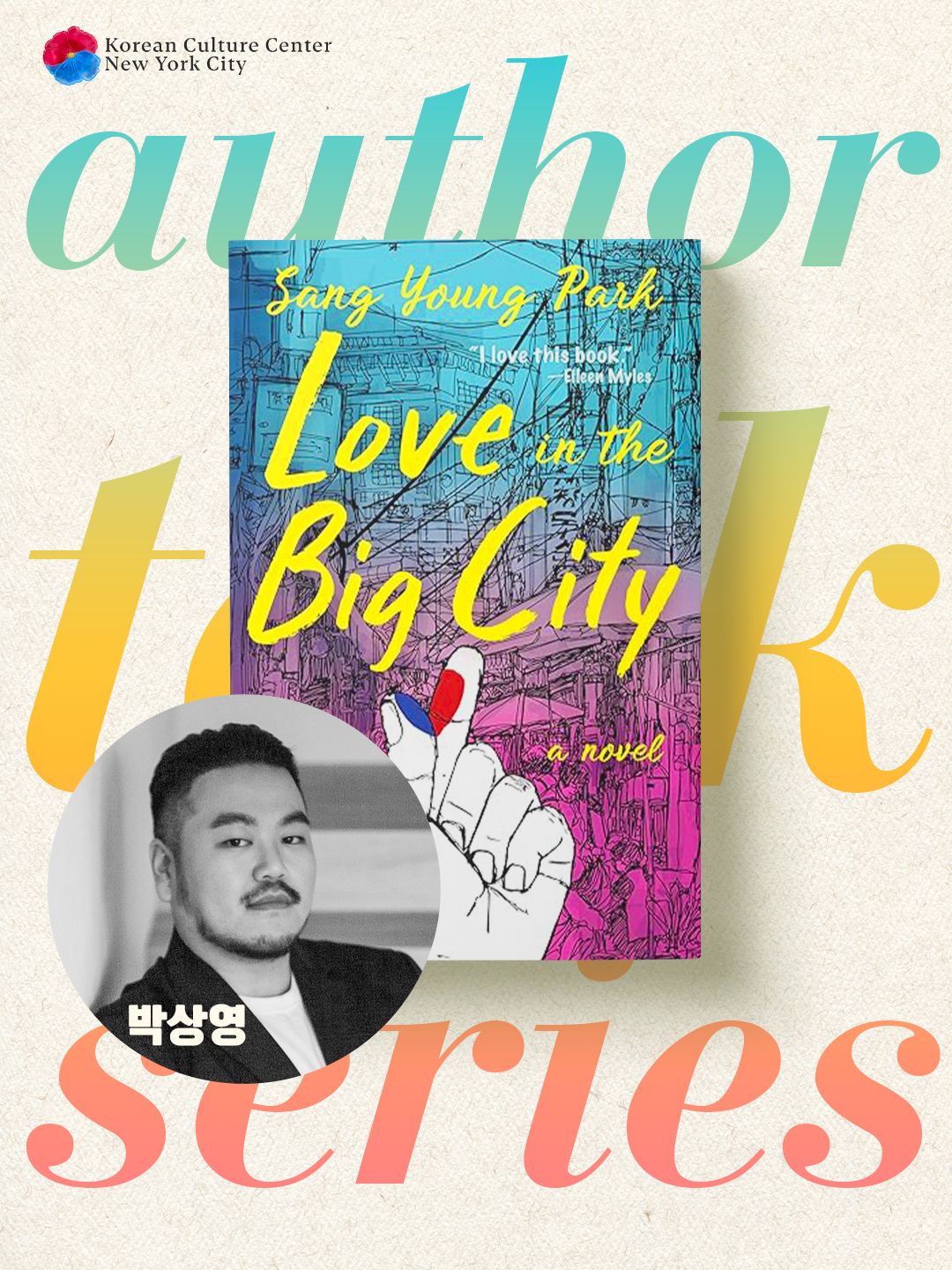
Love in the Big City by Park Sang Young
By Sharon Stern
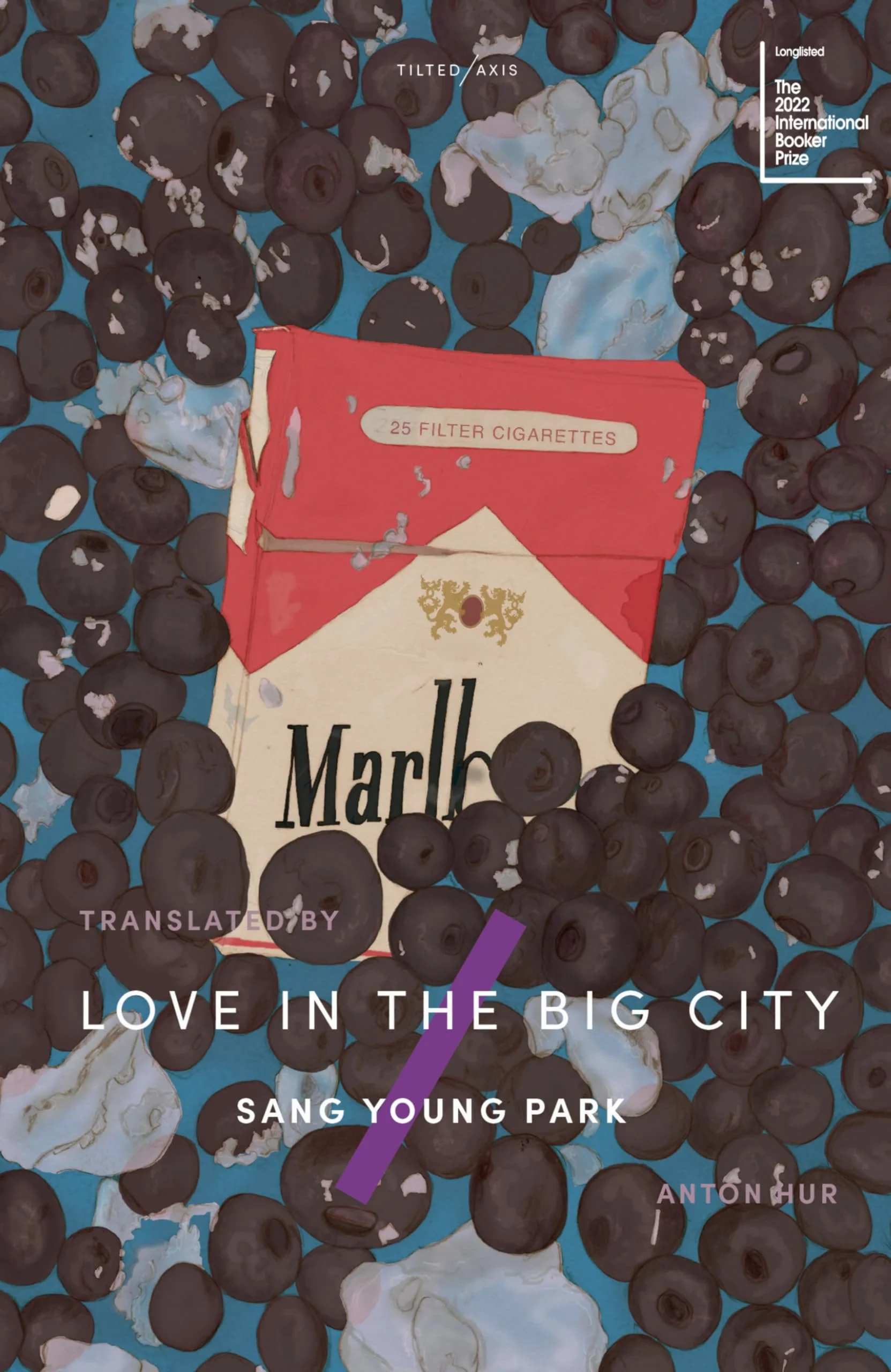
We were extremely privileged to have author Park Sang Young join us on June 21st for a discussion about his best-selling book Love in the Big City. We were joined by a large crowd of friends, both in the US and abroad, some of whom had sent in questions for Mr. Park to answer. Our lovely teacher, Eun Byoul Oh, helped translate for Mr. Park, when the thoughts became too complex, but Mr. Park did a wonderful job answering a lot of our questions in English. It was a relaxed and lovely atmosphere. Below is a list of the questions we asked and a summary of the answers Mr. Park gave us.
How long did it take to write this novel?
Basically, one year, but it was a story about topics in my 20s, so literally 8-10 years. It was a book that I wanted to write, so it wasn’t hard to write. I wanted to explore the question of what is love.
In the US, we talk about how much things have and have not changed for queer culture in the last 20-30 years. Since the book was written, has queer culture in Korea changed? If so, how?
Things have changed a lot. 10 years ago, no one in Korea knew the word queer. 10 years ago, no one knew what LGTBQIA+ meant. Queer partners are now covered by insurance, even though same-sex couples are not yet allowed to marry. Abortion is now legal. Social media has enlightened people.
Are things different for queer people in the big city versus smaller towns?
Of course it is different. In a small town, your mom knows everything that goes on. Your next-door neighbor mom knows everything that goes on. You can’t be anonymous. People go to the big city to become anonymous. It’s called “In Seouling”.
If our students travel to South Korea, do some of the places in the book still exist that they could visit?
Most of the places in the book still exist. A fan made a Google list of places mentioned in the book that you can visit. I recommend Namsan Park. I also recommend the places mentioned in Thailand.
A question got asked spontaneously about why Gyu-yo goes to China and not Thailand.
Because if you go to China, you have to go through the health screenings, which is what sends Gyu-ho by himself, since Young can’t pass the health tests.
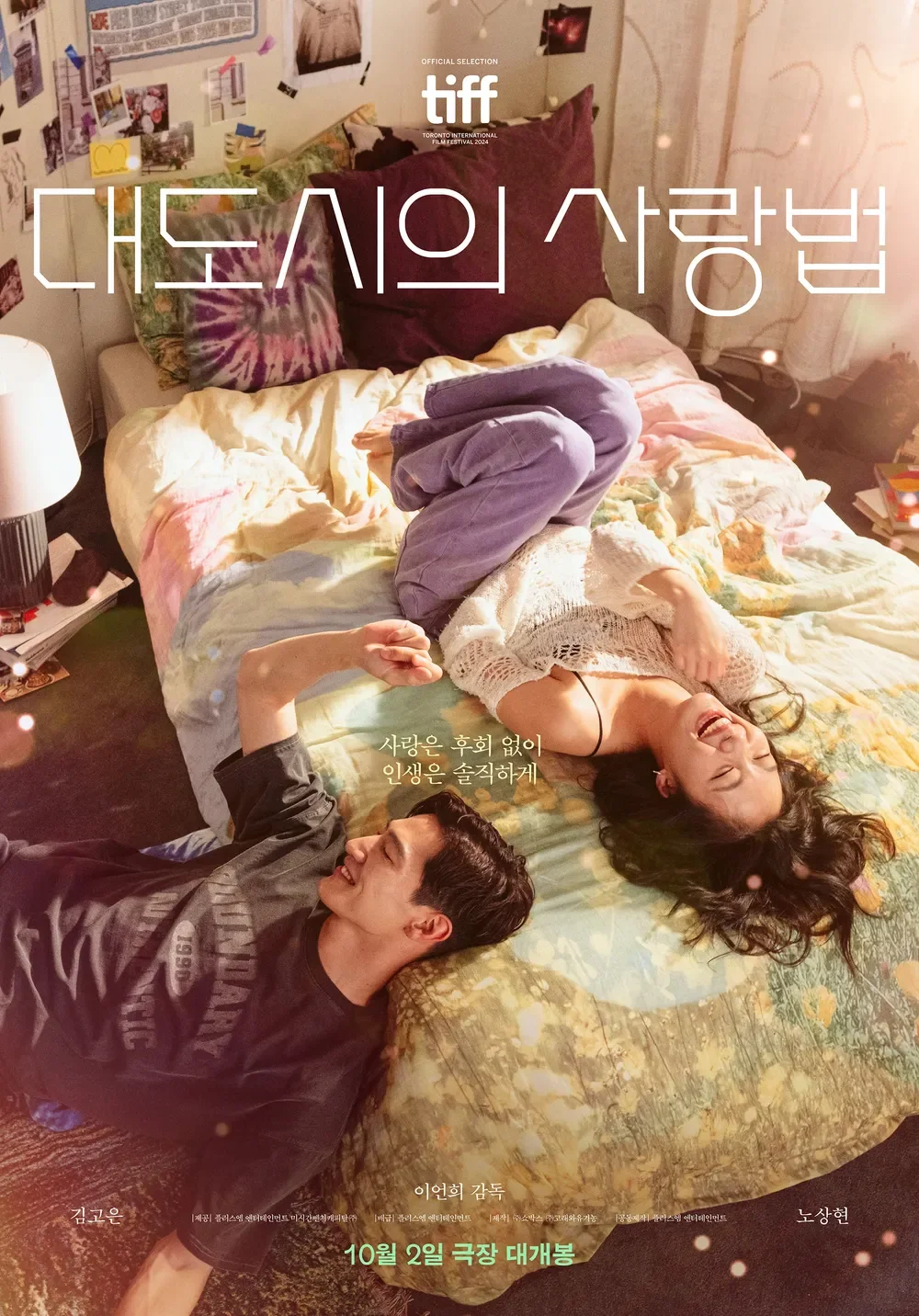
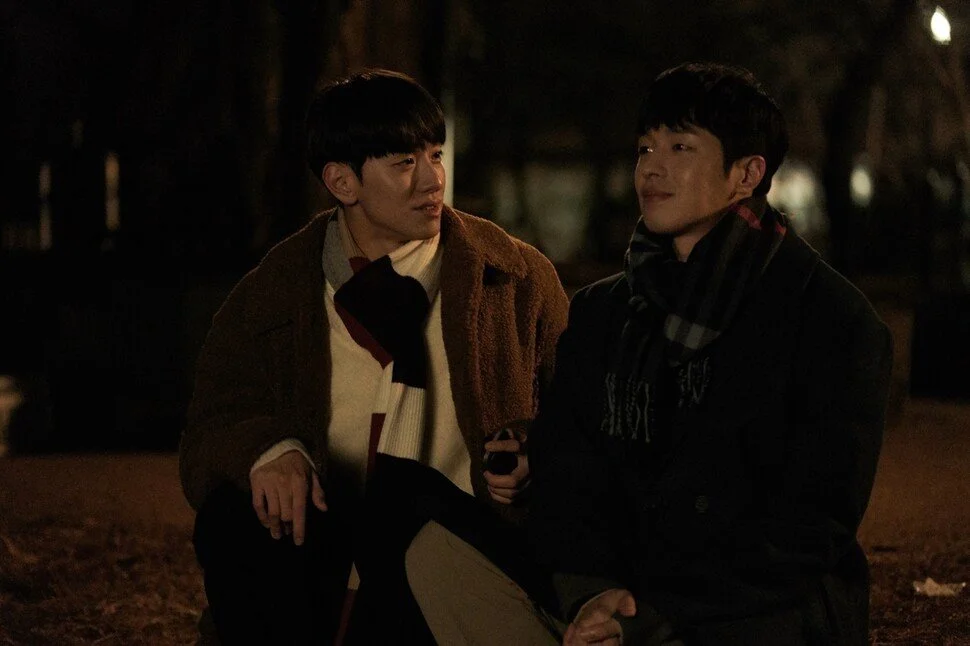
We want to know more about how both a movie and a drama happened almost simultaneously, focusing on different aspects of the book and you having written the adaptation for one, but not the other.
Two women adapted the part of the book made into the movie. I thought women might be better at showing the female narrative. Even though a big-name female actress signed up for the movie, we were having trouble getting a star male actor, so that delayed the movie. Noh Sang-hyun ended up stepping in – he wanted the part. While the movie was delayed, I decided to go ahead with the drama. I ended up not entirely liking the simplification of the story in the movie, nor the way Jaehee was portrayed nor the name change for that character. The Young character was portrayed as a gay stereotype and I wanted to communicate real queer life in the ROK. I think the drama is better, because I wrote it! There was a change of directors throughout the episodes and that ended up creating some chaos. It was also chaotic that both the movie and the drama ended up coming out at the same time.
Did you envision this as being adapted to film or television while you wrote it?
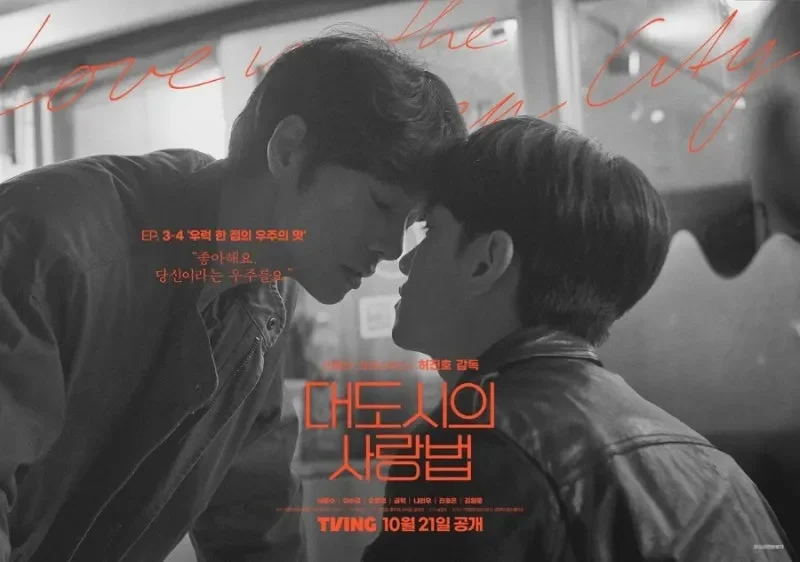
The Drama Love in the Big City is available on Viki!
No, I didn’t, but maybe it is just the way I see things when I write. I take the question as a compliment.
We have read a number of books translated by Anton Hur and really respect and trust his translation, but there are cultural and other aspects of any writing that are impossible to translate. Is there anything from this book that you think might be lost in translation?
No, Anton did a perfect job. Anton was the one that came to me to translate the book because he wanted to be involved. The tone of Young comes across a little differently than the Korean version, but I think that was Anton’s intent and the strategy was right.
Was there a specific message that you wanted readers to walk away with? There is so much heartbreak in the book – what did you want the audience to be left with?
I wanted readers to walk away with the beauty and tragedy of love – every aspect of love.
There is a lot of story and storytelling happening through the four parts of the book. At the end, the main character was still not completely fulfilled as a person to love and be loved. Why was that important to portray?
It’s really hard to be fully loved. Even if we have great parents and a perfect partner, we can’t be completely fulfilled.
If you could say one thing to each of your characters, what would you tell them?
Eat healthy food.
Take vitamins.
Stop smoking.
Get enough sleep.
Take care of yourself.
We have read a number of Korean books by women authors. They are all so hard on themselves. Jaehee seems to be in such a different place. Why is that?
This is the first time I’ve gotten this question. Korean women are pressured by conservative and male-centered culture. This is why female authors are writing about those pressures. No idols, actresses ever talk about sex. Jaehee is my ideal woman. She loves herself. Maybe that’s fantasy, but Gen Z loves this character.
What role do you think Kylie played in the progression and deterioration of Young's relationship with Gyu Ho?
What I focused on portraying is that while Young and Gyu-ho can be a beautiful couple, a disease will ultimately break down a relationship. It’s partly about how society treats people with disease, especially HIV.
It seemed that the 4th section of the book that introduced Habibi was an ode to Young's lost love with Gyu Ho. Was that your intent?
Yes. It was about my concept of writing. I wanted to define my 20s.
You have said that you find inspiration in the works of Marguerite Doras and Annie Ernaux. Can you tell us what it is about their work that has influenced your writing style?
They’re very cold writers. They’re very honest about themselves. They’re accurate about portraying emotions – so accurate that it comes across as cold.
What is it like to write this kind of book in a Korean climate?
At first, it was hard because it was new for a queer book to make it to the best seller list. It was a little tormenting, because I didn’t expect it. It was hard then, but it brought growth for me and helped me heal. Queer people and writers said they didn’t feel lonely anymore. Curing others helped cure me. For new writers coming up, it is a more mainstream concept.
We finished our discussion with everyone thanking Mr. Park and saying how much we loved the book.
We ended by asking if another of his books is going to be translated into English soon. He said that was up to his agent, but hoped another one would be translated soon.
July DOSAN HAKDANG:
Welcome to the Hyunam-Dong Bookshop by Hwang Bo-reum
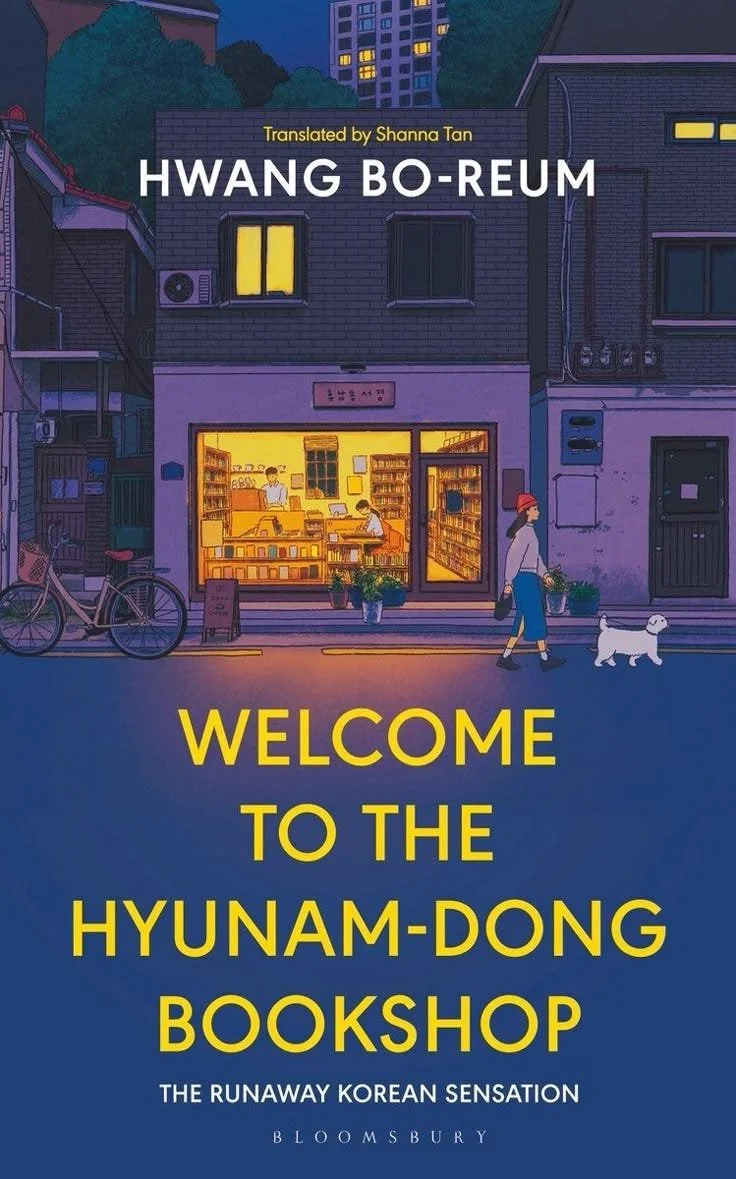
For July, we will be reading the book Welcome to the Hyunam-Dong Bookshop by Hwang Bo-reum. This novel is a favorite of many of our community members.
This best-selling book gives us a hopeful story. Yeongiu has done everything she is supposed to in order to feel successful, but she feels burned out. She went to school, got married, had a great career and a busy life in Seoul. On a leap of faith and nostalgia for an abandoned dream, she quits her job, gets a divorce and opens a bookshop. Both she and her customers take refuge in the shop. She has a rocky start, but when she focuses on what makes a successful bookshop, she finds her footing. She throws herself into reading, starts a book club with author talks and forms her philosophy of bookselling.
This book explores the healing power of books and gives hope to the idea that it is never too late to begin again.
RSVP here to join us for the July Book Club discussion on July 26th at 2:00 pm EST.
August Dosan Hakdang: The Investigation by J.M. Lee
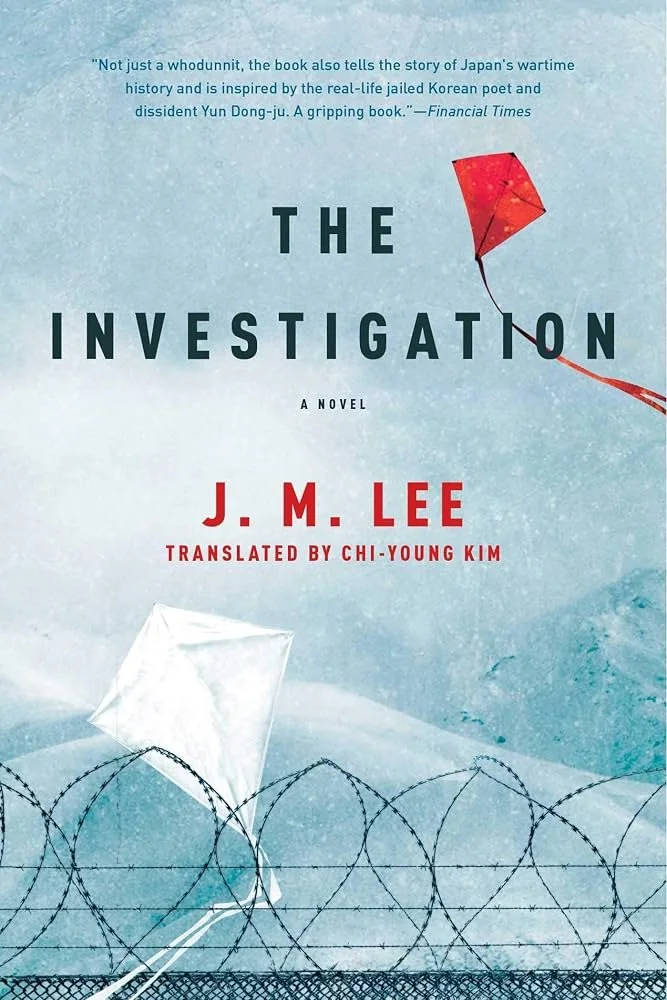
For August, we will be reading the book The Investigation by J.M. Lee.
Fukuoka Prison, 1944. Beyond the prison walls, the war rages. Inside, a man is found brutally murdered. What follows is a searing portrait of Korea before their civil war, and a testimony to the redemptive power of poetry.
Watanabe Yuichi, a young guard with a passion for reading, is ordered to investigate a murder. The victim, Sugiyama, also a guard, was feared and despised throughout the prison and inquiries have barely begun when a powerful inmate confesses. But Watanabe is unconvinced; and as he interrogates both the suspect and Yun Dong-ju, a talented Korean poet, he starts to realize that the fearsome guard was not all he appeared to be...
As Watanabe unravels Sugiyama's final months, he begins to discover what is really going on inside this dark and violent institution, which few inmates survive: a man who will stop at nothing to dig his way to freedom; a governor whose greed knows no bounds; a little girl whose kite finds an unlikely friend. And Yun Dong-ju—the poet whose works hold such beauty the can break the hardest of hearts.
As the war moves towards its devastating close and bombs rain down upon the prison, Watanabe realizes that he must find a way to protect Yun Dong-ju, no matter what it takes. As he digs further and further in to his investigation, the young guard discovers a devastating truth.
At once a captivating mystery and an epic lament for lost freedom and humanity, The Investigation, inspired by a true story, is a sweeping and gripping tale by an international literary star.
Join us August 30th at 2pm Eastern for our discussion about this important work. RSVP here.