
KOREAN LITERATURE CORNER - Mar 2026
By Eun Byoul Oh
Myth of Mago Halmeoni (마고 할머니 이야기)
March 8th is International Women’s Day and this month we will celebrate Korea’s female deity Mago.
Mago, known as Mago the grandmother (마고 할머니), is a female deity celebrated in Korea as a goddess of creation. Mago is also known throughout East Asia with variations in her name. In Chinese tradition, Mago is referred to as Magu, and in Japanese she is known as Maku.
In the Chinese tradition, the Magu deity is a Taoist legendary transcendent who was known for her beauty and her long fingernails, which were like that of birds. The Japanese tradition understands the legendary figure in the similar way to the Chinese tradition. According to the Chinese tradition, Magu’s name is associated with Hemp seed and cannabis. The logographic understanding of Magu’s name can be understood with the early Taoist usage of cannabis in religious rituals – it was believed that using cannabis would give one knowledge about the future.
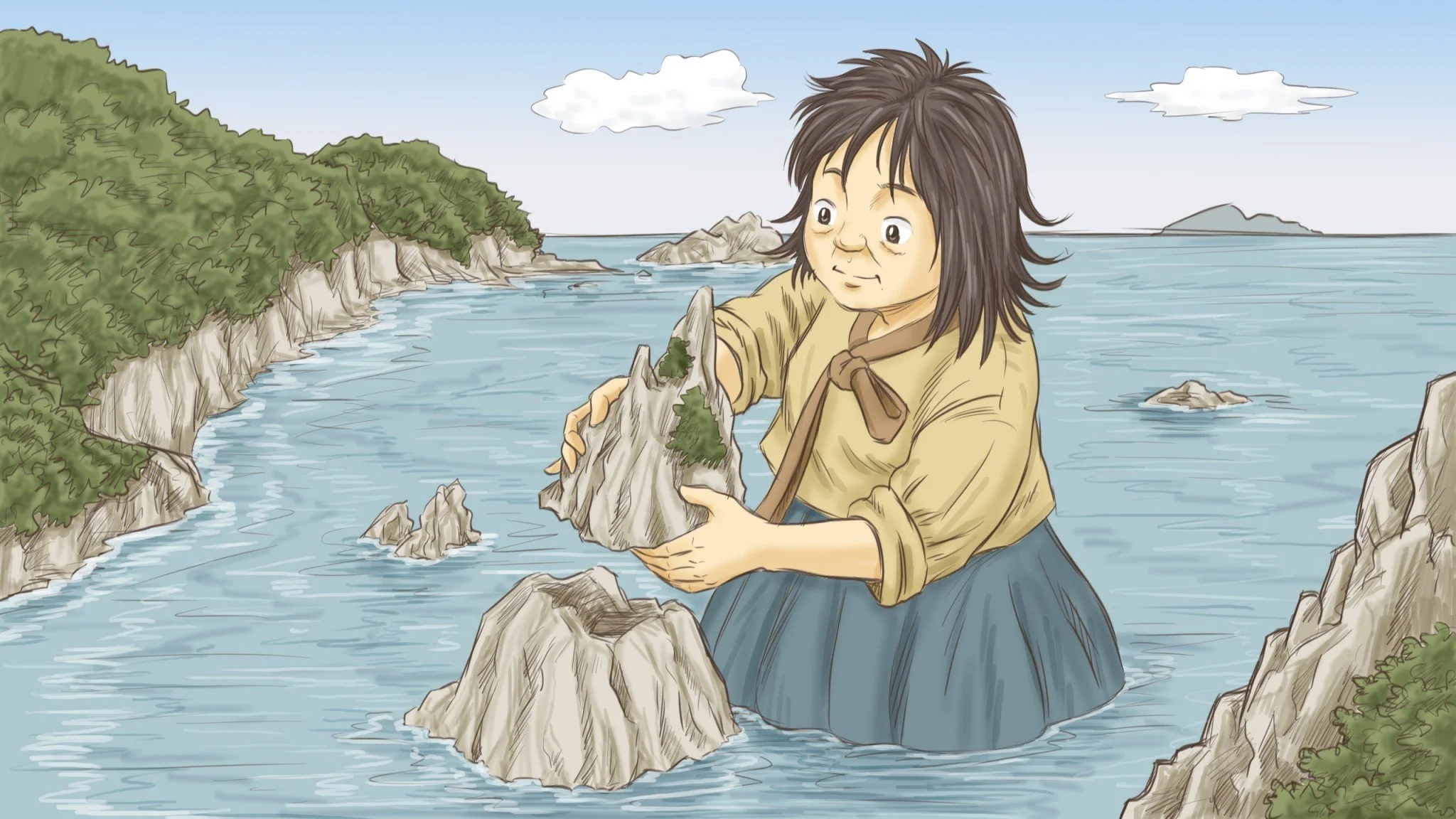
In Korea, however, the Mago goddess is associated with a giant, female goddess who was responsible for the creation of the world. In fact, although she is referred to as a Grandmother, as Mago Halmeoni, the notion of Halmeoni does not necessarily mean that she was an old lady, but it is a sign of respect for people to know her as the great mother of the land.
Records of Mago in Korean history show that Korea was aware of the Chinese interpretation of the goddess. Jocheonhanghaerok (written in 1624), a travel log by Hong Ik Han, states that Hong had seen a painting of Mago in China during the Ming dynasty. The Joseon Dynasty novel Tale of Sookhyang notes a Chinese goddess Mago that helps the main character.
Although it is disputed for its authenticity as a historical record, Budoji from the Silla dynasty, is the first known record of the Korean Mago interpretation. The earliest trusted record of Mago appears in Pyohaerok written by Jang Han Cheol in 1771. The text says the following:
“There is a legend that eons ago, Mago waded across the West Sea and spent her time in Mt. Halla”
Mt. Halla is a mountain in Jeju island.
In the Korean tradition, Mago is known to have the appearance of a poor and shaggy old lady, but she has a gigantic physical stature. Her body is so colossal that she would not be able to cover her body in 1,312,335 yards of fabric. With her strength and power, she is capable of moving land and stones to build mountains or islands. She is so tall that she was able to wade in the sea near Wando, Korea.
The legend says that the mountains and islands were built with the soil that Mago carried in her skirt, and that mountains and rivers were Mago’s feces and urine.
It is believed that the variation of the Mago Halmeoni myth is present throughout the Korean peninsula, and was regionalized into goddesses with different names. The myths of Seolmoondae Halmang of Jeju, Gaeyang Halmi of the West Coast, Seogu Halmi of Samcheok, Angadak Halmi of Gyeongsang province are all rooted in the Mago legend.
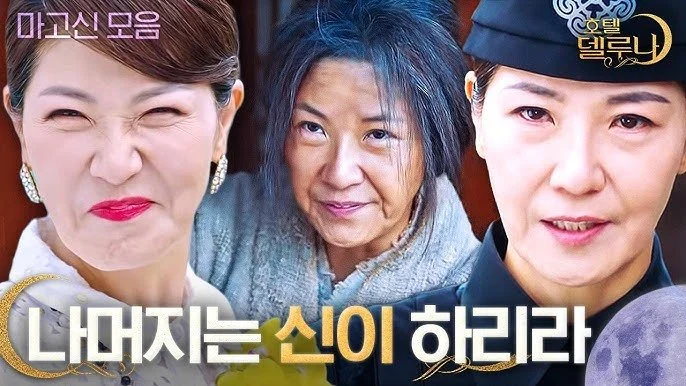
Mago Halmeoni portrayed in Hotel Del Luna
Mago is also believed to be an evil goddess of punishments according to a minor interpretation of the same legend. Nevertheless, she is also celebrated as a goddess that helps to treat contagious illnesses, such as measles or smallpox.
The Mago deity in Korea often appears in Korean dramas as a supernatural figure. In Hotel De Luna, Mago Halmeonies appeared as central figures of the plot line, and the Mago Halmeonies in the show were portrayed as multiple sets of identical twins, but who had different powers. The show effectively reflected how there were so many interpretations and understandings of Mago in Korean folktales and legends as the goddess of creation and of punishments.