BOOK CLUB REPORT - April 2026
KCCNYC Dosan Hakdang March Meeting - We Do Not Part & Jeju 4.3 Massacre
By Sharon Stern
On Sunday, March 29, 2026, we met for a very special Dosan Hakdang Book Club. This month we read Han Kang’s book We Do Not Part, which explores the tragedy of the Jeju 4.3 massacre, that began on April 3, 1948 and continued for more than a year, but really lasted over seven years total. We have written about this terrible period of history and you can read more about it here. Han Kang was just named the winner of the US National Book Critics Circle Awardfor fiction for this novel – just the third time in its 51-year history that a translated book has won the award. We strongly encourage everyone to read this power book to better understand this truly painful part of Korea’s history.
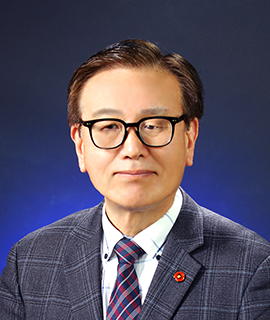
Professor Hur Sang Soo joined us from Korea. He shared his expertise on Jeju dialect and Jeju 4.3 Masscre with us.
Joining us from Korea was Professor Hur Sang Soo, Commissioner of the Truth and Reconciliation Commission and Co-representative of the Association for the Bereaved Families of the April 3 Victims. He is an expert on the Jeju 4.3 massacre, the suppression of facts regarding the massacre, its reconciliation process as well as the Jeju dialect, which a portion of the book is written in. We were honored to have Professor Hur join us for our discussion and his insights helped us better understand this tragedy which wasn’t even legal to talk about in South Korea until the year 2000.
We talked about the rich, emotional, metaphoric, poetic, but brutal language Han Kang uses in the book. It was mentioned that there was, like in so many instances of brutality in history, a failure to recognize the sovereignty of people, driven by fear. A meaningful line that was quoted was “Love is a terrible agony” – the agony of loving your people, your country. We talked about the inherited and metabolized pain of culturally shared, but also distinctly individual trauma, but also how far the country has moved forward, despite this shared pain.
Professor Hur said that he, himself, had difficulty reading the book. He told us that Han Kang came and lived in Jeju, learned the Jeju dialect and talked to victims that had survived in order to absorb the tragedy. She concentrated on oral accounts as her foundation for understanding. There are major passages in the book written in the Jeju dialect in ways that mainland South Koreans would not understand.
Professor Hur was asked if there were aspects of the massacre that he felt were critical that Han Kang did not cover completely. His response was that the US involvement is not dealt with in depth. He believes that all parties, including the US, need to continue to apologize. He explained the US’s oversight, provision of uniforms and arms, but also direct orders to action. He noted that over the weekend, South Korean President Lee had lifted the statute of limitations for investigation and charges relating to crimes committed during the massacre. He also shared that UNESCO has committed to protecting the historic materials from the Jeju 4.3 massacre and that, to date, over 1,000 interviews have been conducted with victims and victim’s families.
You can read more on Professor Hur’s article on U.S. involvement in the Jeju Massacre. Human Rights Law and Social Healing Through Justice for Cheju Massacres (1947-1954): The United States’ Unlawful Acts and Omissions.
APRIL DOSAN HAKDANG:
The Second Chance Convenience Store
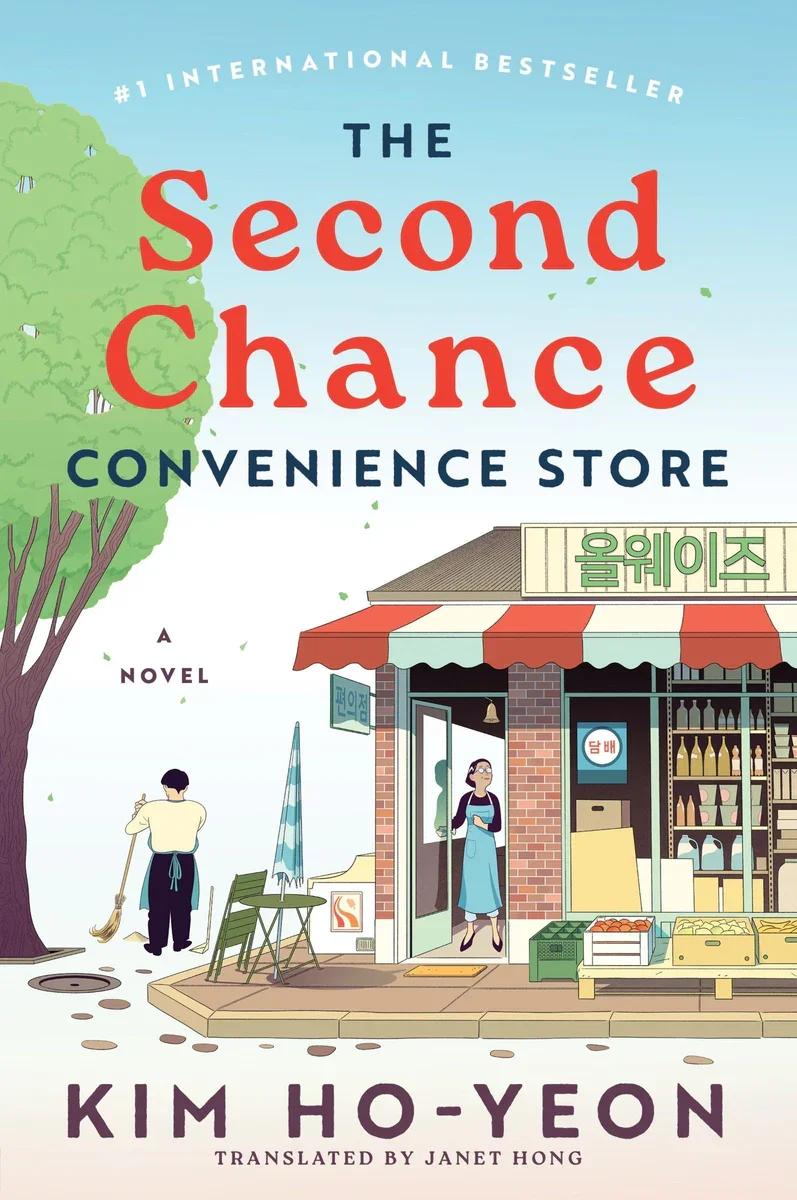
Our April book club is on April 26, 2026 at 2PM,
For April’s book club, we will be reading Second Chance Convenience Store by Ho-Yeon Kim, a novel that explores second chances, the meaning of community, overcoming life’s struggles and redemption. The novel follows Yeom Yeong-sook, who owns a corner convenience store who helps a homeless man with a good heart because of his good deed towards her and who ends up transforming an entire neighborhood. RSVP form is here.
We look forward to seeing you for both of these upcoming Dosan Hakang book club meetings!