VOICES OF KCCNYC: Bryan’s Story
Voices of KCCNYC : Bryan Hong’s Story
By Bryan Hong
I didn't learn about Taemong until I was in my thirties. We were eating at Xian Famous Foods in lower Manhattan — me, my mom, my aunt (mom’s twin) — on a sweaty summer afternoon. It was thirteen years after I came out to her. The conversation that day was different. She was apologizing for thinking it was her fault. I was reassuring her that it wasn't anyone's fault, that I was born this way, that I was happy. We were both in tears, in the middle of a busy Chinatown restaurant, eating hand-pulled noodles.
That's when she told me about the dream.
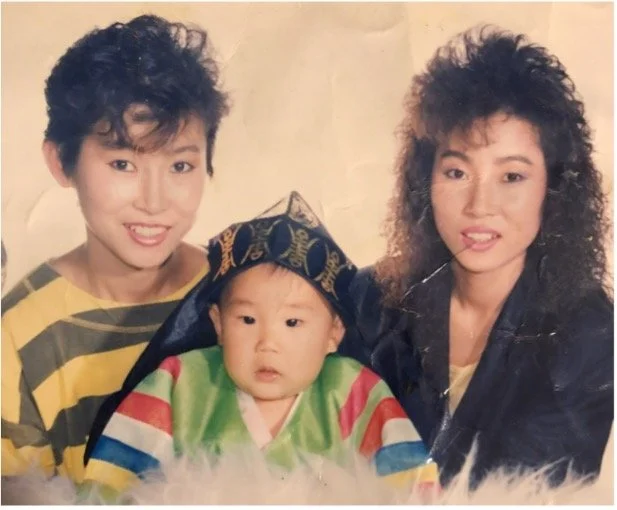
Taemong, she explained, are Korean dreams about pregnancy — dreams believed to predict a baby's gender, or sometimes their future. The objects in them are symbolic. Flowers, fruit, jewelry, small, beautiful creatures like goldfish usually mean a daughter is coming.
When my mother was pregnant with me, she dreamed of an emerald ring.
She said when I was born a boy, she was confused — the emerald ring had told her otherwise. She made light of it, the way mothers do. But what I heard underneath was: now this dream makes sense. What I heard was: I see you. I've always seen you, even before I knew what I was seeing.
It was one of the first moments I felt fully accepted — for being both gay and Korean. Not one or the other. Both.
To understand why that moment cracked something open in me, I have to go back.
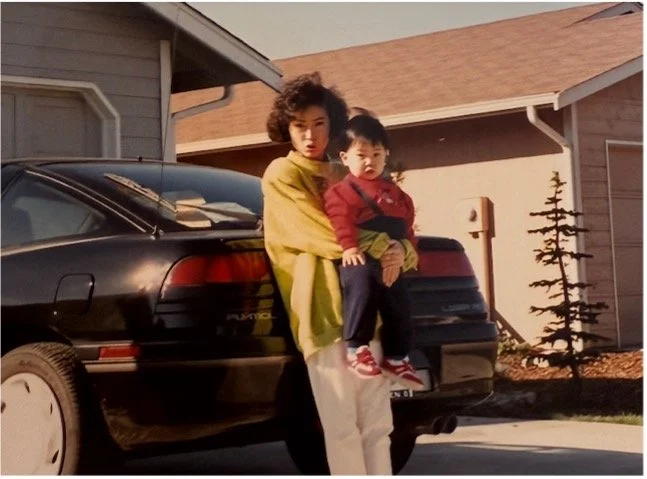
I was born in 1988 in Tacoma, Washington. My parents opened a Korean-Chinese restaurant within weeks of my birth, so I was raised in rotation — by a circle of about five emos (이모, aunts) who took turns watching me, and by my halmoni (친할머니, paternal grandmother) — my father's mother — in Korea during summers. I loved those summers. The heat was miserable, but I loved being pampered by my grandmother, the food, being surrounded by people who looked like me.
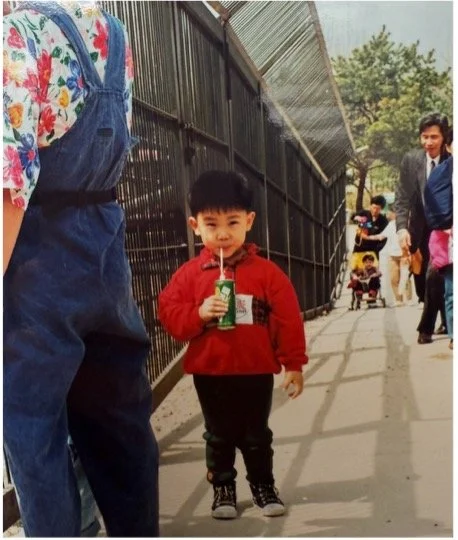
I also knew, very early, that I was different.
In elementary school, I was made fun of for being Korean and not knowing English. At the same time, I was drawn to things that weren't considered boyish — Barbies, Sanrio, K-pop girl groups. (I was deeply, religiously devoted to F.I.N.KL and S.E.S. I will not be taking questions.)
By the time I got to high school, I'd learned to be a chameleon. In Korea, I leaned into my Korean-ness. In America, my American-ness. Around men, I performed masculinity. Around women, I let my femininity breathe. I'd already learned what it cost to be seen as feminine — I remember my father catching me with my Barbies, and the shame that look gave me. I was shape-shifting constantly, depending on the room. Looking back, it was exhausting — but at the time, it was just survival.
I came out my first year of college. I told my mother that summer. I'd grown up assuming she saw the world more or less the way I did — naive thinking, I know, but it was what I had. She did not. The coming out did not go well. There were fights, tears, long stretches of silence. After that, the topic became something we didn't talk about — like a minefield neither of us wanted to step into.
So I did what I'd already been doing. I moved. I chased my career. I looked for acceptance in places I wasn't going to find it. I eventually burned out.
The turn came during the pandemic. The world slowed down, and so did I. I started therapy. I started yoga teacher training. And somewhere in there, I got curious — not about myself, for once, but about her.
I realized I'd spent my whole life inside my own story, and I didn't actually know much about my mother's. So I started asking.
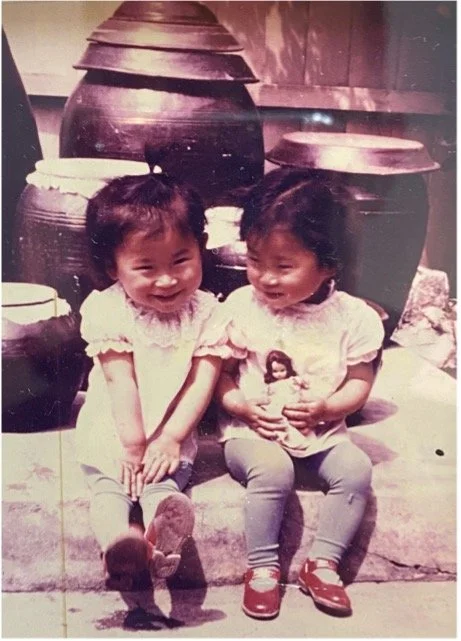
I learned that my mom and aunt were born in Samcheok (삼척), a beach town on the east coast. I learned that my grandmother — my mom's mom — was a single mother of three in postwar South Korea. She sold American products on the black market to save enough money to bring her three kids to the US. It was incredibly difficult for women to earn a living back then. My mom and aunt were teenagers when they immigrated. Once they arrived in the US, my grandmother worked four jobs to keep the family afloat. I also learned my grandmother passed away unexpectedly just before my first birthday — my mother lost her own mother in her twenties, in a country that wasn't hers yet, with a child of her own to raise.
I learned what my mother carried after that. She juggled jobs to make ends meet. Eventually, she opened her own restaurant — where she worked every single day, no days off, for years. She went through a divorce. She carried her own grief and her own struggles, in a language she was still learning, in a country she was still building a life in. And she raised me, mostly alone, through all of it.
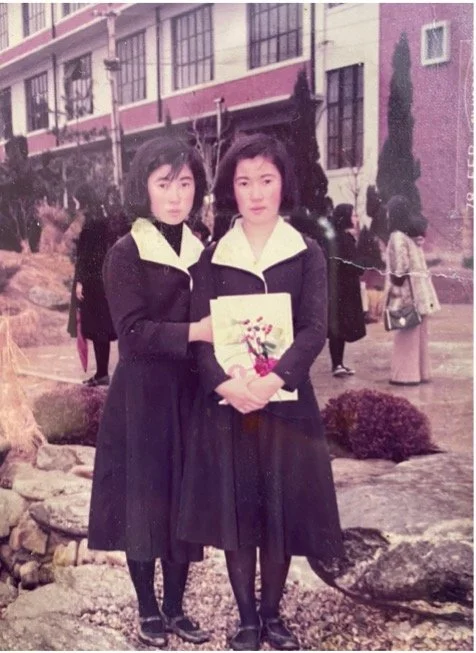
For most of my life, I'd held my mother to a standard I never named out loud — that she'd be the kind of parent who understood, who could meet me in the emotional places I needed her to meet me. What I started to see, slowly, was that she had been in survival mode for so long that emotional fluency was a language she'd never had room to learn. She wasn't withholding it from me. She'd been pouring everything she had into keeping us alive.
That's what made the Chinatown lunch possible. By the time we got to that table, I wasn't asking her to understand me. I was already understanding her. And somewhere in the middle of that, she met me where I was.
Thirteen years had passed between the fight when I came out and the lunch in Chinatown. Years of processing — mine, hers, separately and slowly — before we could find our way back to each other. Sitting at that table, watching her cry, I felt like the younger version of me — the one who had felt so alone after coming out, who had moved across the country looking for somewhere to belong — was finally being met. Finally being held. There was a peace I hadn't known I was waiting for. A part of me, healed — and for the first time, I felt truly proud of who I was becoming. Proud, too, of where I came from. The hustle, the grit, the love it takes to keep going — these are inheritances. Passed down to me by women who never stopped.
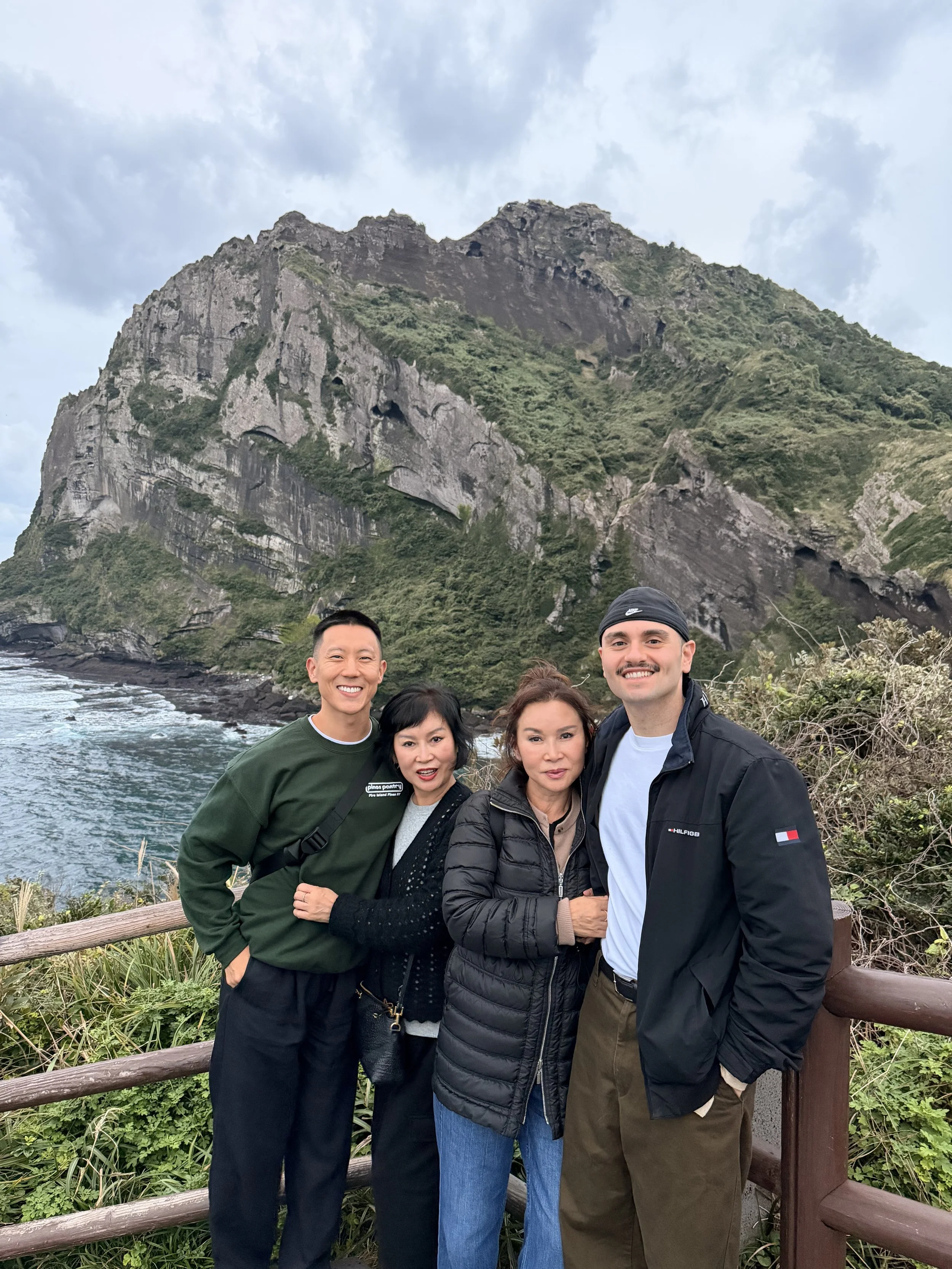
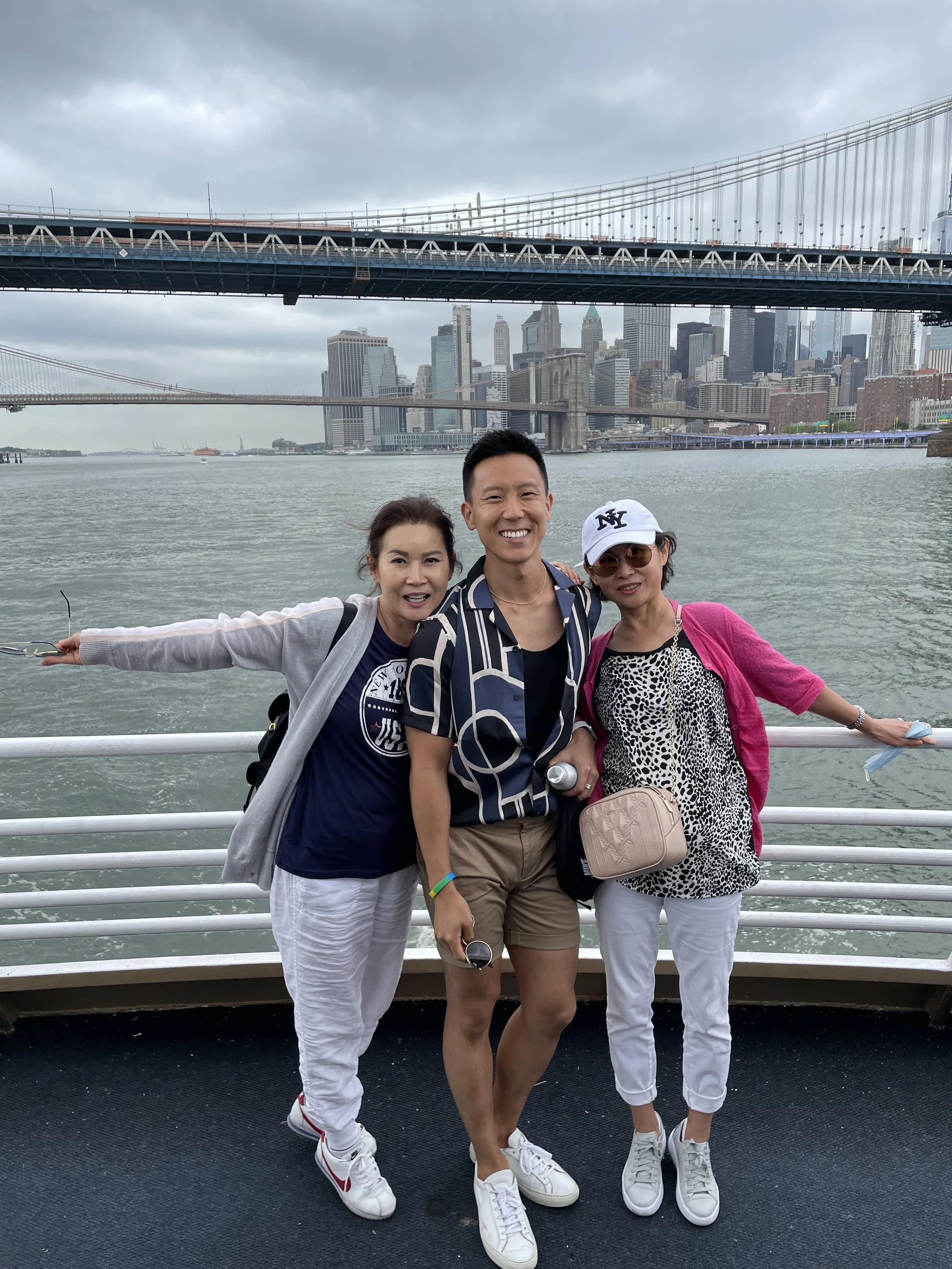
Pride looks different to me now than it used to.
When I first moved to New York, I got caught up in what Pride was supposed to look like — curating my Instagram, going to the right parties, trying to feel "seen." No shade. Everyone is on their own journey, and that was part of mine.
Today, Pride is quieter. Some of my best Pride moments have been with my partner and my closest friends — dancing, eating, relaxing at the beach. Just being. Living my best gay Korean-American life.
What I've learned is that I am not one thing. I'm Korean and American and gay. I'm the kid who got teased for not speaking English and the kid who hid his Barbies. I'm the chameleon who shape-shifted to survive, and the man who finally stopped. We all carry more than one story. The trap is thinking we have to pick.
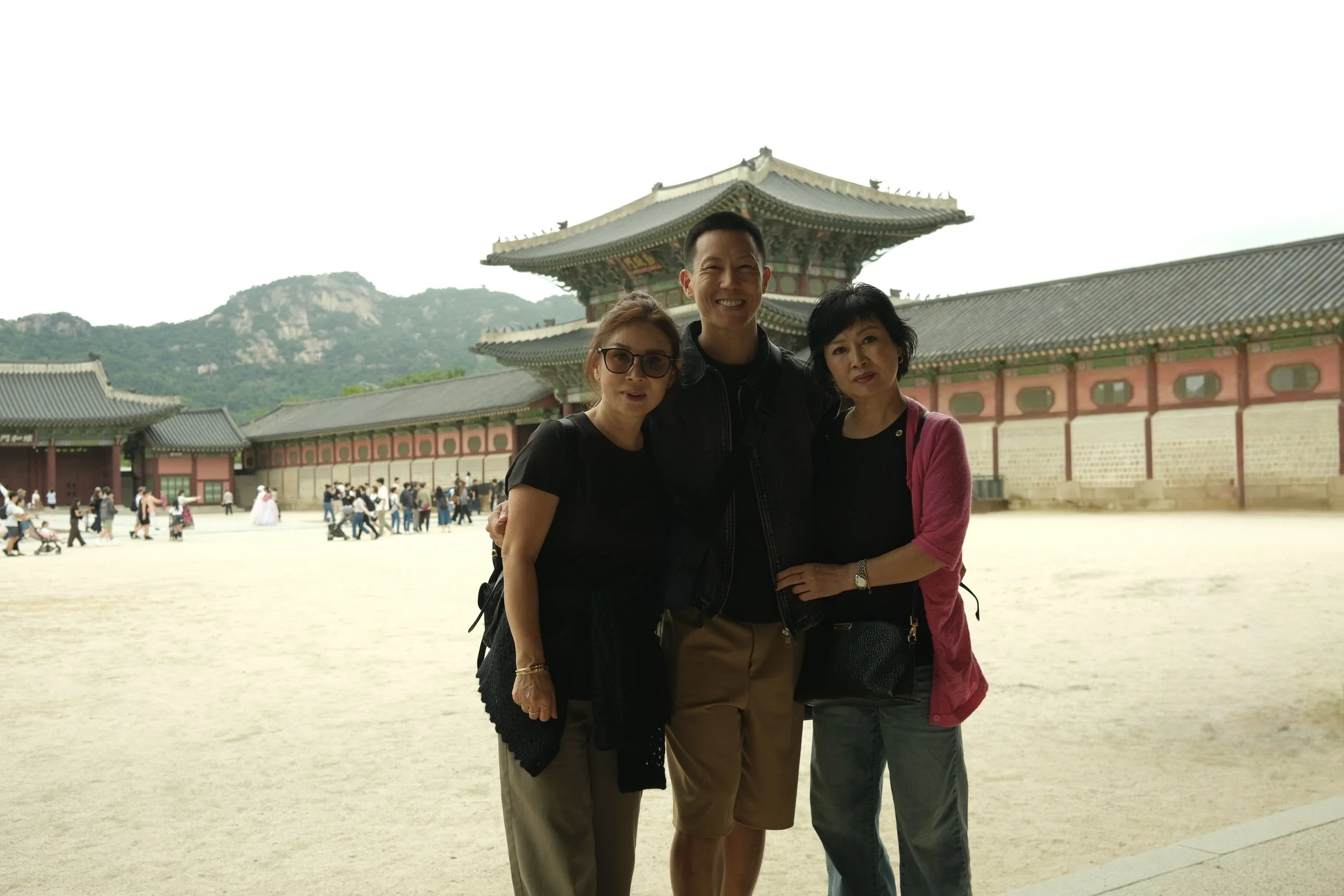
I used to wait for the world to accept me — to give me permission to take up space as all of myself. What I've come to believe is that it works the other way around. The relationship I have with myself is what colors my relationship with the world. The more I've accepted every part of who I am — Korean, American, gay, soft, strong, all of it — the more I've found that acceptance reflected back to me.
That's what Pride means to me now. Not a performance. Not a flag I wave to prove I belong. Just the quiet, steady practice of being all of myself, in every room.
The emerald ring was always there. It just took us both a while to see what it meant.