THIS MONTH IN THE KOREAN ADOPTEE COMMUNITY - August 2026

Fireworks illustration for 광복절 from the Korean National Assembly
By Jon Oaks
What Korean Independence Means to Me
Last month, I reflected on what it means to celebrate the Fourth of July as a Korean adoptee living in the United States. This month brings another independence celebration. August 15 is 광복절 (Gwangbokjeol), Korea's National Liberation Day, which commemorates the end of Japanese colonial rule in 1945. While it is often translated as "Liberation Day" or "Independence Day," the name literally means "Restoration of Light Day." That image has always struck me because it suggests that something precious was lost and, after years of darkness, finally returned.
Some adoptees may feel deeply connected to this history and others may know very little about it or may not think about it at all. Although there isn’t any one correct way for an adoptee to relate to Gwangbokjeol, for me the holiday brings up some very personal questions about how history continues to shape families and identities.
When History Becomes Personal
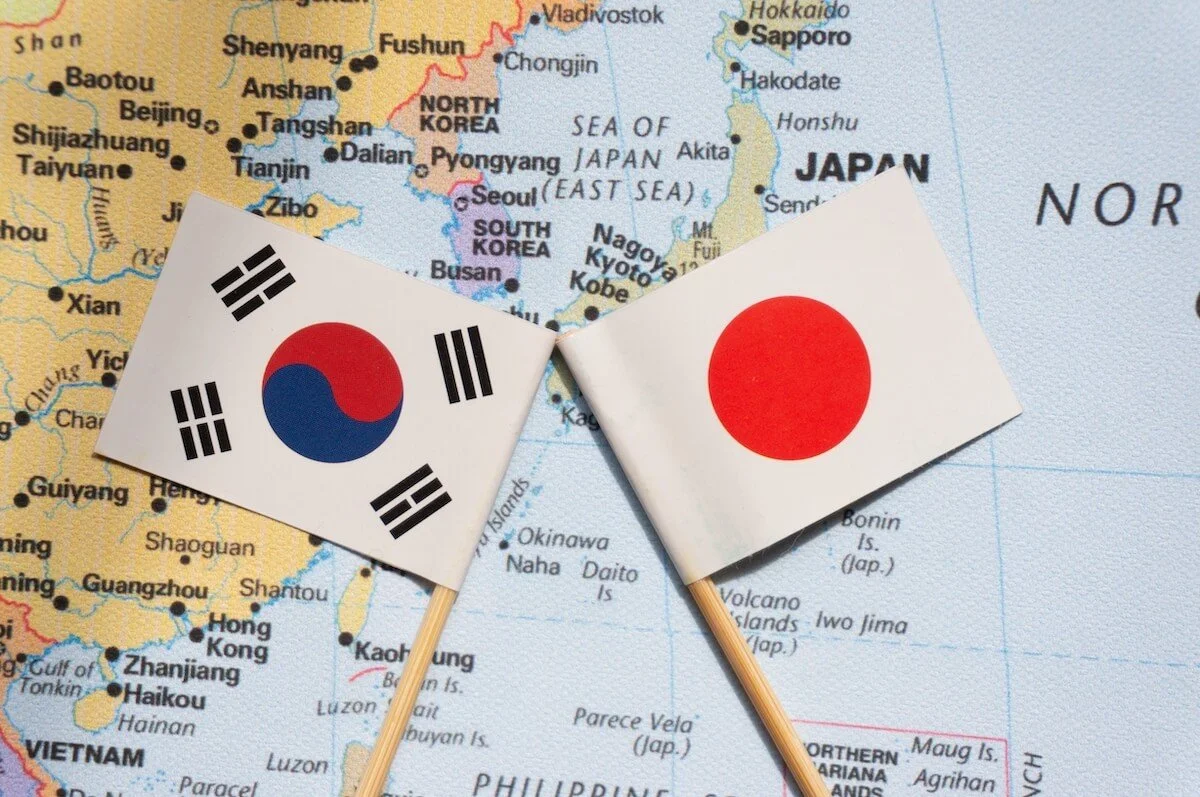
My biological grandfather is Japanese, and according to what my birth mother told me, he is one of the reasons she does not want to meet me. My understanding is that she believes he would not accept knowing that his daughter had a child outside of marriage due to what she views as the difficult temperament of Japanese men.
Because my Korean is still far from fluent, it is entirely possible that some of what she said was lost in translation or that I misunderstood part of the conversation. That uncertainty is one reason I continue taking Korean classes through KCCNYC. Language is not simply about learning vocabulary. For adoptees, it can affect how well we understand some of the most personal and consequential conversations of our lives.
Even with that uncertainty, what I understood from the conversation has affected me. My Japanese ancestry is part of my biological history, but it is connected in my mind to rejection and to the possibility that someone I have never met may have influenced my birth mother’s decision not to have a relationship with me. Although I know that one person, or one family story, cannot represent an entire nationality or culture, my personal experience has shaped my perception.
That makes me feel as if I am in an uncomfortable position. I am Korean, but part of my ancestry is Japanese. So, as an adult, I have tried to understand the importance of Korea’s liberation while also knowing that the line between the two countries runs directly through my own family.
Independence and the Weight of the Past
When discussing Korean independence, it is impossible to ignore the harm caused during Japanese colonial rule. That history includes efforts to suppress Korean language and culture, forced labor, and the sexual enslavement of women and girls through the Japanese military’s comfort women system. These are not distant or abstract issues. Their effects continue through family histories, public memory, political disputes, and the ways Koreans understand their national identity.
Recently, I read a Korea Times article reporting that 37.7 percent of Korean men surveyed said they had paid for sex at least once. The same report found that sexually exploited minors were being victimized at younger ages, with age 14 now the most commonly reported age of first exploitation among the young people surveyed. Much of the solicitation now begins through social media, messaging platforms, and other online spaces.
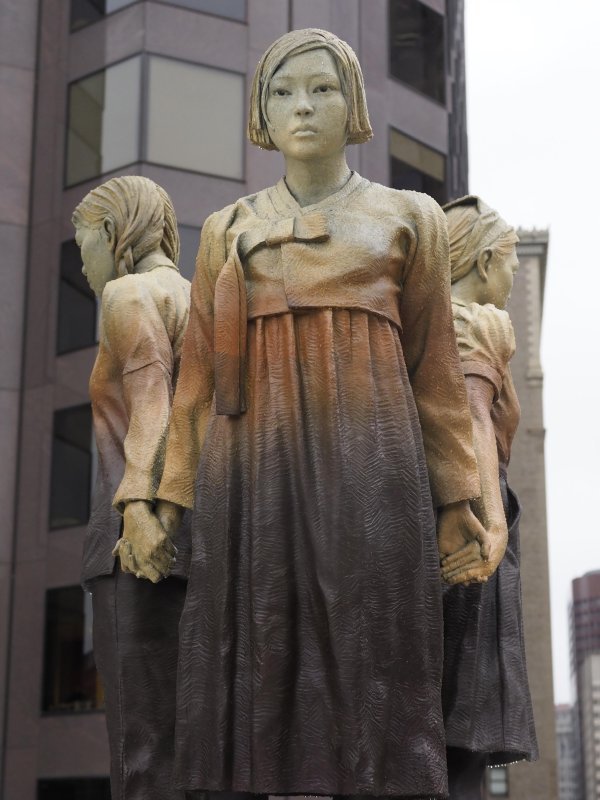
“Column Of Strength” by sculptor Steven Whyte in San Francisco in 2017. Photo by John G. Mabanglo/EPA-EFE
While those findings disturbed me, they also brought the history of comfort women into my mind, particularly the continued exploitation of vulnerable women and girls by men who view access to another person’s body as something that can be purchased or taken. The comfort women system was organized sexual slavery connected to imperialism and the Japanese military. Today’s sex trade in Korea involves different circumstances, laws, institutions, and individual experiences. It would be wrong to erase those distinctions. However, reading about the continued exploitation of women and children made me wonder what liberation means when exploitation and inequality continue to affect vulnerable people.
Political independence does not automatically bring freedom from every form of oppression. A country can regain control of its land and government while still struggling with sexism, exploitation, inequality, and the lasting influence of its past. Remembering Korean independence should include celebrating what Korea reclaimed while also asking what work remains unfinished.
Although I would like to say that Gwangbokjeol fills me entirely with pride, instead it brings conflicting emotions. I am grateful that Korea regained its independence and preserved a culture that colonial rule attempted to diminish. However, I cannot ignore the suffering inflicted on Korean people or the exploitation I continue to see within Korea today.
Connecting With Community
Learning about difficult history and exploring our identities can feel isolating, but we do not have to do it alone. Community gatherings, cultural celebrations, language classes, and adoptee-centered conversations can give us space to learn from one another without requiring everyone to arrive with the same knowledge or feelings.
The following are just a few upcoming opportunities to connect with Korean adoptees, Korean culture, and the broader community.
August 14–16 – KCON LA 2026 will take place in Los Angeles, California. The annual convention celebrates Korean culture through K-pop, food, beauty, fashion, workshops, and cultural experiences.
August 15 – Korean Connection will host its annual Liberation Day Picnic from 4:00 p.m. to 8:00 p.m. at Millennium Park (Shelter A) in Walker, Michigan. Celebrate Korea's National Liberation Day with food, fellowship, and an opportunity to reconnect with old friends and make new ones. Registration is required by August 12.
August 15 – The Korean Cultural Society of Boston will host a free concert and the finals of the 2nd Korean Art Song Competition in Boston, Massachusetts. The event will showcase Korean gagok (art songs) while promoting greater appreciation of Korea's classical vocal tradition.
August 16 – The Korean American Society of Greater Ann Arbor (KASGAA) will host a Korean Liberation Day celebration in Saline, Michigan. The family-friendly event will feature Korean food, traditional games, crafts, prizes, and activities celebrating Korean history, culture, and community.
September 19–20 – The Korean Festival Foundation will host the 2026 Korean Festival at Gwinnett Place Mall in Duluth, Georgia. The two-day festival will feature K-pop performances, Korean food, cultural exhibits, vendors, and family-friendly activities.
September 19 – Korea Fest: Chuseok at the Orchard will take place at Twin Star Orchards in New Paltz, New York. The festival will celebrate Korean heritage through food, culture, and community in honor of Chuseok, Korea's traditional harvest festival.
September 19–20 – Adopterade Koreaners Förening (AKF) will celebrate its 40th anniversary with a weekend gathering in Stockholm, Sweden. Korean adoptees are invited to enjoy food, shared experiences, and opportunities to connect while celebrating the organization's milestone.
September 30 – The National Korean American Service & Education Consortium (NAKASEC) is accepting submissions for its national A Livable Life Art Competition through September 30. U.S. residents of all ages are invited to submit original artwork exploring what "a livable life" means to them or their community, with cash prizes awarded in multiple age categories.https://alivablelife.com/
October 1–4 – The LA Korean Festival Foundation will host the 53rd Los Angeles Korean Festival at Seoul International Park in Los Angeles, California. The annual festival celebrates Korean culture with food, live entertainment, cultural performances, vendors, and family-friendly activities. https://www.lakoreanfestival.org/
October 25–28 – Me & Korea will host its Mosaic Family & Friends Tour to Jeju, South Korea. Open to Korean adoptees and their family members and friends, the four-day tour includes visits to Jeju's scenic landmarks, cultural experiences, meals, accommodations, and opportunities to connect with fellow adoptees. Registration is now open.
Looking Ahead
Independence can mean freedom from outside control, but it can also mean gaining the freedom to understand and define our own identities. For adoptees, that process may include learning histories we were not raised with, questioning the stories we have been told, and deciding for ourselves how those histories fit into our lives.
I am still working through what Korean Independence Day means to me. I do not have a simple or celebratory conclusion. What I do know is that Korea’s liberation deserves to be remembered, the people harmed under colonial rule deserve to be honored, and the work of restoring light is not something that ended in 1945.
Whatever connection you feel to Gwangbokjeol, whether you decide to celebrate, reflect, learn something new, or simply acknowledge that your feelings are complicated, I hope you give yourself permission to approach it honestly.