LETTER FROM THE EDITOR - VOL. 23
KCCNYC Monthly - April 2026
By Eun Byoul Oh
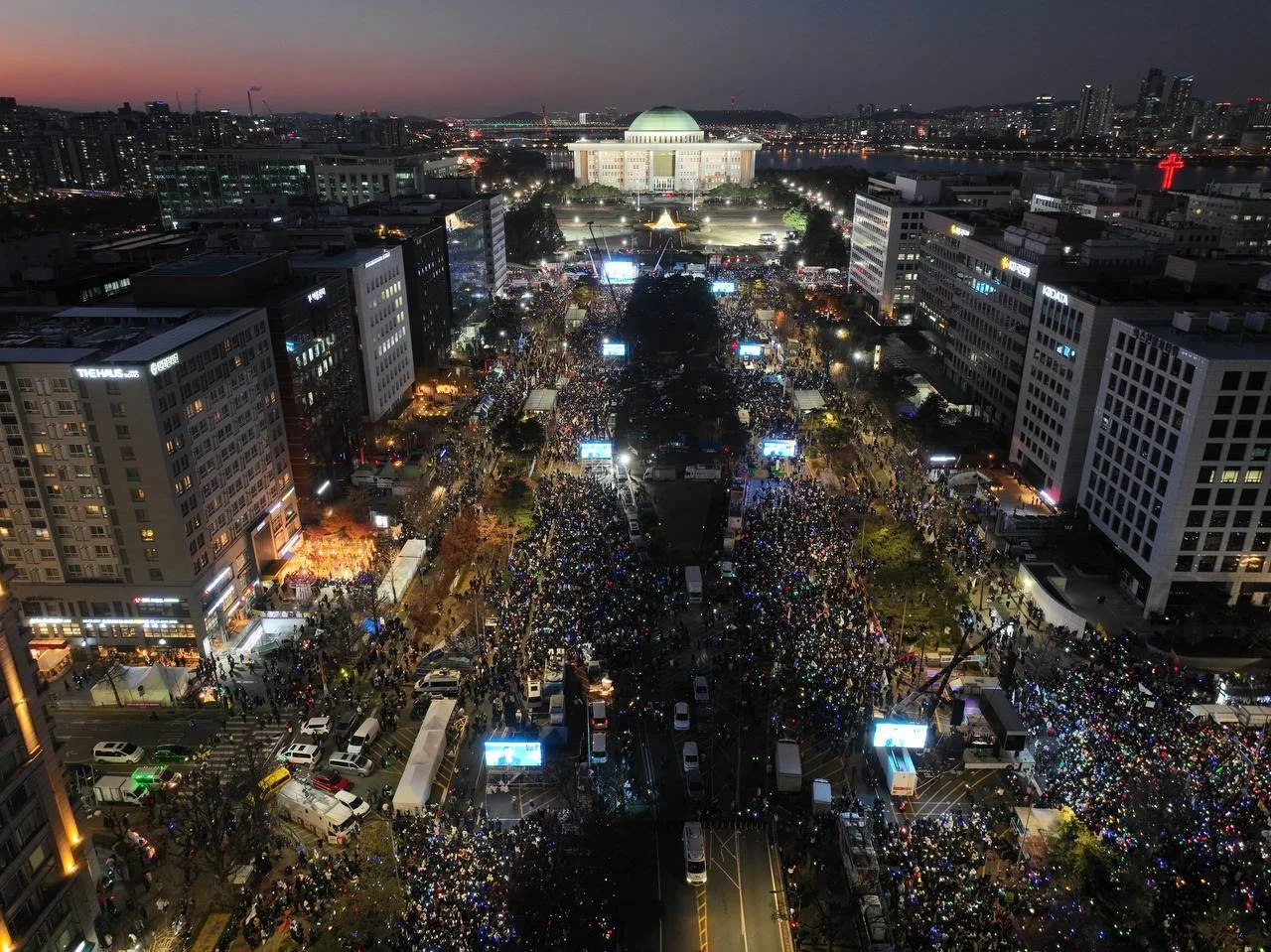
Korean protestors filling up streets in front of the National Assembly for impeachment of Yoon.
Last year on April 4, Korea was quietly watching the Constitutional Court’s decision to remove Yoon Seok Yeol from his Presidency. The removal of Yoon came after Koreans’ relentless days and nights of protesting, and showing solidarity on streets of major cities after Yoon’s self-coup attempt on December 3, 2025. The Constitutional Court’s upholding of Yoon’s impeachment, subsequently removing him from office has shown Koreans and the world how, in a democracy, the sovereignty lies in its people, and the people can restore the sanctuary of the constitution of their nation.
Since the conclusion of Yoon’s removal, many world breaking news events have been hitting Korea, and Korea still awaits for the final result of the removal of Yoon. There have been legal battles for those responsible for the December 3rd self-coup, which have not come to their final conclusions.
While I am writing this Editor’s Note on April 3, the day that we commemorate the Jeju 4.3 Uprising, I once again think about how Korean history has had waves of bringing sovereignty to its people. I also think about how there are still people fighting for their rights in Korea: people with disabilities, the LGBTQIA+ community, migrant workers, and those people whose voices are often ignored or brushed away, still fighting fiercely in Korea, every day, for their human rights.
On April 20, Korea celebrates the Day for People with Disabilities that remembers those who are still fighting for their basic rights. Every year around April 20, Korean newspapers publish countless articles on what needs to be done for the society to move forward for people with disabilities, and what has to be done to enhance the quality of life for people with disabilities and their families. However, I once again ruminate about whether these articles actually doing anything for people with disabilities.
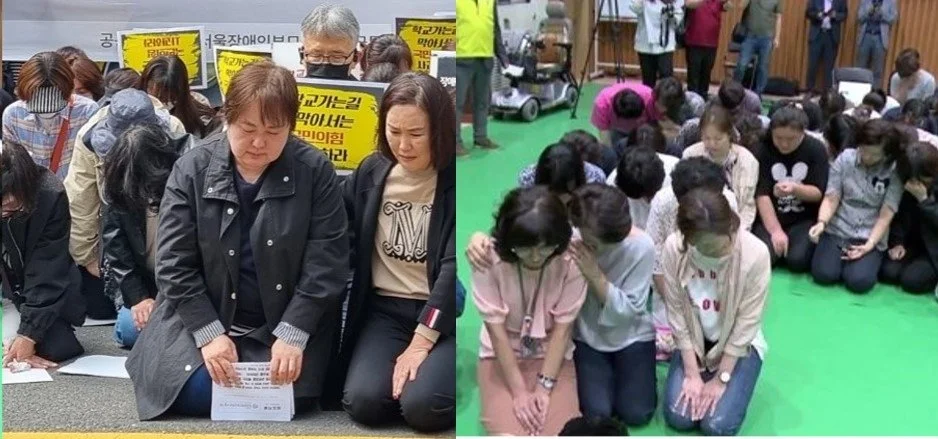
Right: Parents of students with disabilities kneel during a 2017 public hearing in Gangseo-gu, Seoul, appealing for the establishment of a special school. Left: A similar scene unfolds on Sept. 4, 2024, in front of the People Power Party headquarters in Yeouido, Seoul, as parents urge the withdrawal of a PPP candidate’s pledge to build an elite high school on a site already designated for a special school.
According to statistics provided by Korea Employment Agency for Persons with Disabilities in 2024, only about ten percent of students (890 students out of 8,899 students) with disabilities that have a high school diploma were able to go to college in Korea. When compared to the numbers in 2020, which was between 7% and 8%, the increase in 2024, can be interpreted as at least hopeful. Nonetheless, the statistics are quite devastating, as they do not include those who may have not even been given the chance to enroll in high school or middle school, because Korea still struggles to have sufficient resources dedicated to special education.
I have my own, personal, experiences in Korea, as a person growing up there with a disability. My parents, both educators, believed they were doing me a favor by allowing me to go to school and not hiding me in a cupboard, as was the norm. They thought that a college education for a person with a disability was a wasted investment, since I would not be able to be a productive adult in society. Despite that, my aunt, who had immigrated to this country, supported me and my desire for a higher education. I was able to obtain a full scholarship to Columbia and am here writing this article because of my aunt’s pushing back against those social structures to support me. It isn’t an underestimate to say that I would not have become who I am without that support. What could have happened to me if I had stayed in Korea?
In the April newsletter we are telling the story of disabled people in Korea. KCCNYC will stand alongside groups who fight for the rights of disabled people in Korea, such as SADD (Solidarity Against Discrimination against Disability) and 420sdrff (Seoul Disability Rights Film Festival) and we support their missions.
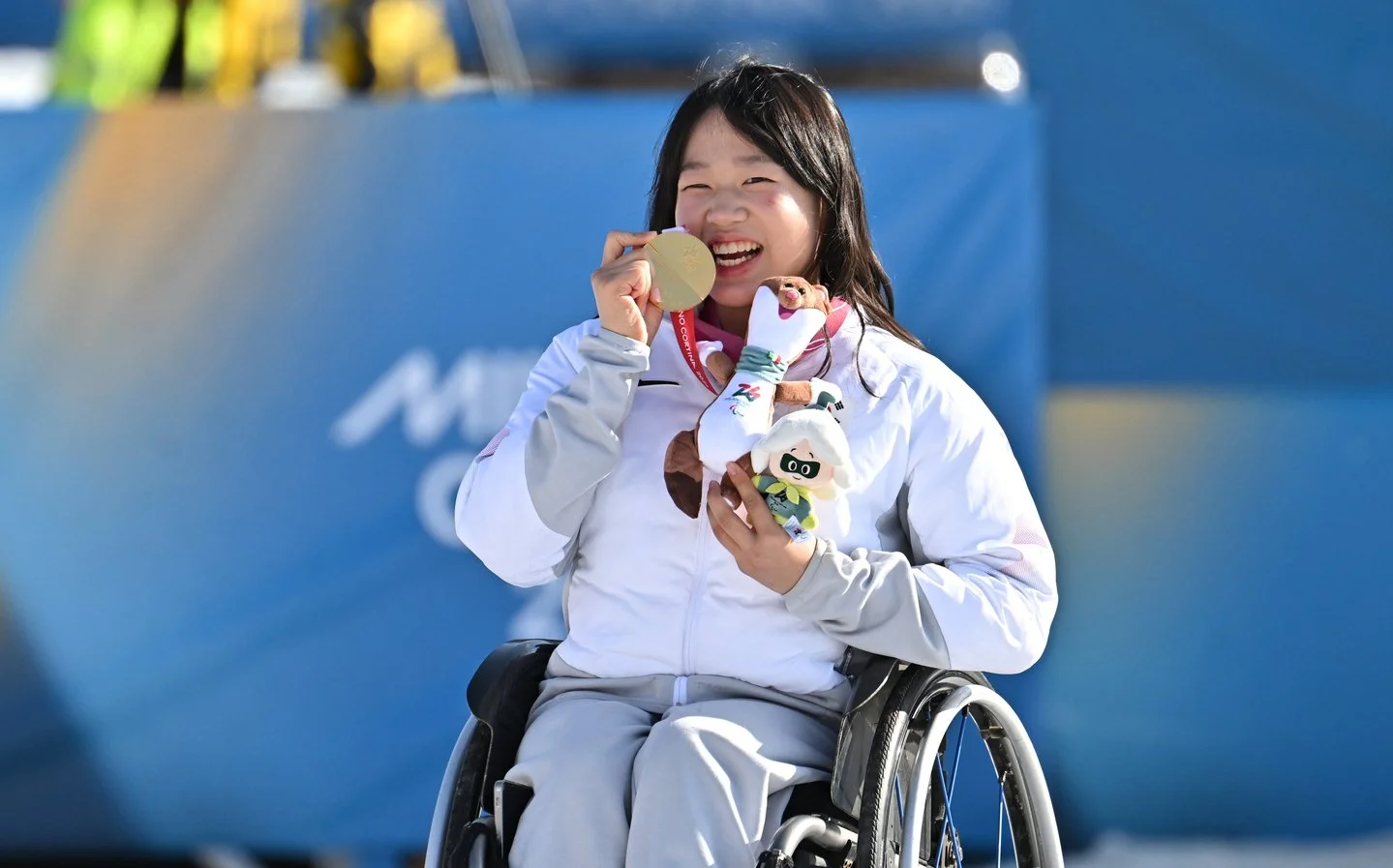
Kim Yun Ji became the most decorate athelete in South Korea’s Paralympics history.
We also want to congratulate Kim Yun Ji for becoming the most decorated athlete in South Korea’s Paralympics history. She won 3 silver and 2 gold medals in the 2026 Milan Paralympics in cross-country skiing and biathlon.
In this April 2026 edition of Newsletter, we present a very special book report for Han Kang’s We Do Not Part. The book club was able to learn about the 4.3 Jeju Massacre with commentaries from Professor Hur Sang Woo, who joined from Korea to share his insights on the book and on the 4.3 Jeju Massacre.
We also hosted a special roundtable for BTS’ new album, Arirang, with a mixed group of DJs, music professionals, ARMYs, and me! I hope you enjoy the podcast! Thank you to everyone for participating in the roundtable. I really enjoyed talking to everyone and I learned a lot from the talk myself!
Even if you don’t normally read the Adoptee section of the Newsletter, please take the time to read Jon’s words this month - he eloquently describes the difficulties of those with disabilities to adapt and maneuver in our world that forgets that not everyone can participate in the same ways.
With solidarity and love,
Eun Byoul Oh