
K-DRAMA & FILM SPECIAL: 5.18 Gwangju Uprising
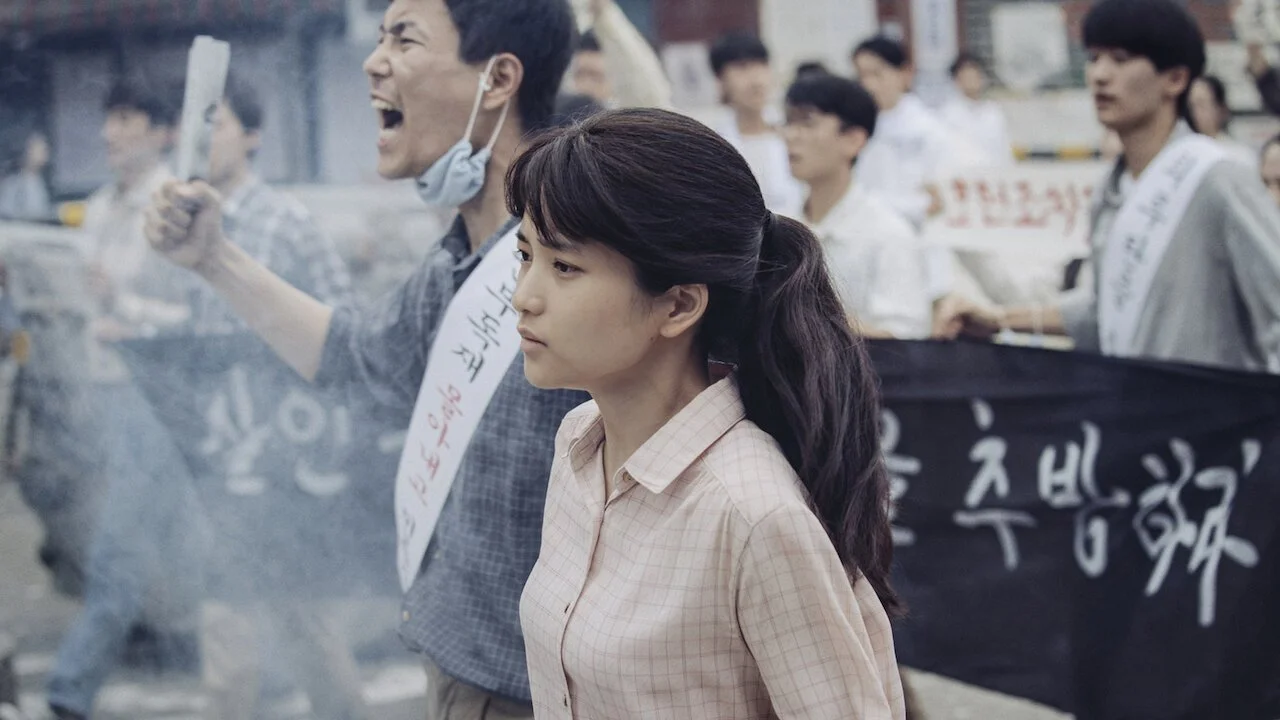
A scene from 1987: When the Day Comes
By Sharon Stern
These movies and dramas focus on the events before, during and after the Gwangju Uprising. This is an extremely painful period of history for South Korea and depicting it on the screen is always going to be controversial – critiques of whether the story was true enough, raw enough, etc. There are a number of movies that address this important period. Three of them are truly must-watch movies, if you want a good overview of what happened, without watching a documentary. Because they are not documentaries, the emotional settings of the films help you understand what was going on in a way that a documentary cannot. The three in combination give you a good historical overview to the events that began the multiple uprisings and protests that eventually led to the overthrow of military dictatorship and the beginning of democracy in South Korea.
These three films are described below in date order of when the events they depict took place.
12.12 The Day - 서울의 봄 - 2023
Available on Amazon Prime Video, Apple TV (rentable), Peacock, Viki (with subscription), Kocowa (free), YouTube (free with ads), Hoopla (free with a library card), Plextv (free) – Starring: Hwang Jung-min, Jung Woo-sung, Lee Sung-min, Park Hae-joon, Kim Sung-kyun
This film tells the history of the coup d’etat that took place December 12, 1979. You can read more about the historic context in this month’s history article, but the assassination of President Park Chun Hee in October of 1979, the state of martial law declared by the new president Choi Kyu-Hah, his swearing in as president on December 6, 1979 and subsequent coup on December 12, 1979 are all a continuum historic moments that lead up to the coup d’etat of the civilian government on May 17, 1980 and the Gwangju Uprising in May, 1980. It is important to understand all of these incidents as they fed into each other. This is a military-political film that keeps you on the edge of your seat. When it was released in theaters, people were uploading pictures to social media of their heartbeat while watching the film – it is that intense.
A Taxi Driver - 택시운전사 - 2017
Available on Amazon Prime Video, Apple TV (rentable without a subscription), The Roku Channel (free with ads), Hoopla (free with a library card), Viki (free), PlutoTV (free with ads), YouTube (free with ads), Amasian (free with ads) – Starring: Song Kang-ho, Thomas Kretschmann
The film is loosely based on the story of a real taxi driver from Seoul who unintentionally becomes involved in the Gwangju Uprising. The taxi driver is played by Song Kang-Ho and is based on German journalist Jürgen Hintzpeter’s interactions with the taxi driver Kim Man-Seob. At the time the film was made, not much was known about the real taxi driver, so the character in the film is mostly fictitious, but there really was a taxi driver named Kim Sa-Bok and his son was found and interviewed after the film was released. Unfortunately, in real life, Jürgen Hintzpeter searched and searched for him, but passed away before he was found. Kim ends up driving the journalist to Gwangju in the middle of the uprising. Hintzpeter is played by Thomas Kretschmann (The Pianist).
1987: When the Day Comes - 2017
Amazon Prime Video (rentable), YouTube (rentable), Viki, The Roku Channel (free with ads) – Starring: Kim Yoon-seok, Ha Jung-woo, Yoo Hae-jin, Kim Tae-ri, Park Hee-soon, Lee Hee-joon
At the other end of the timeline, this film tells the story of the events leading up to the June Democratic Uprising, triggered by the death of a student who was tortured to death, and which will finally end in the collapse of the military dictatorships. The film starts with the death of the student and the cover up by the police. Despite the Police Commissioner’s attempt to have the body cremated, an autopsy takes place. The autopsy results are leaked to the press. The Police Commissioner tries to have two detectives take the blame, but this information also gets leaked by a prison guard to activists. The guard’s niece reluctantly gets pulled into seeing evidence of the Gwangju Uprising and other atrocities and eventually joins the protest movement.
K-DRAMAS DEPICTING THE GWANGJU UPRISING
There are actually two dramas that are set in the timeframe of the Gwangju Uprising and focus on the events that took place during that time. Unfortunately, the older of the two is not streaming at the moment.
Youth of May - 오월의 청춘 - 2021
Kocowa – Starring: Lee Do-Hyun, Go Min-Si, Lee Sang-Yi, Keum Sae-Rok
Genre: Historic, medical, romance, melodrama
This drama follows the lives of medical student Hwang Hee-Tae (Lee Do-Hyun) and nurse Kim Myung-Hee (Lee Sang-Yi) in Gwangju during the Uprising. Instead of following the events like a documentary, it tells their love story and how it could not possibly be ordinary or normal because of what was going on around them. What would have been their plans get upended and their lives change. Because this is a K-drama, not every moment is serious nor political. It starts off pretty rosy, in fact. But it does thread the events of the time throughout. This is a good drama.
5th Republic - 제5공화국 - 2005
Available on YouTubewithout English subtitles, but you can have auto-generated Korean subtitles.
This 41-episode drama had a very large ensemble cast. This was the fifth in the Republic series of dramas and was set in the 5th Republic of Chun Doo-Hwan, between 1981–1988. It covers both the Gwangju Uprising and the June Democratic Uprising. 17 former politicians that were in the government of President Chun tried to halt the production of the drama. When they couldn’t halt the production, they threatened legal action because of claims of portrayal of historical distortion. Despite the threats, the series aired. I hope that this drama gets streamed again, at some point.
OTHER FILMS
A number of films about the Gwangju Uprising are available on streaming services. Many of these films are free and you do not need a subscription to the streaming service to watch. They are listed newest to oldest, but that says nothing about the quality – some of the old films are really excellent. And they are not all superior films. The films that only appear on YouTube, I directly linked to the word YouTube, since they are a little harder to find there.
In the Name of the Son – 아들의 이름으로 – 2021
Prime Video (rental), Tubi TV (free with ads) – Starring: Ahn Sung-ki, Yun Yu-sun, Park Geun-hyung
Chae-geun is a driver for hire with manic depression. He often talks to his son who is studying in the States and tells him he would keep his promise. He does a favor by acting as a temporary fiancé of a single woman named Jin-hee, who works as a waitress at a restaurant he frequents. Her father, who was a victim of the Gwangju Uprising in 1980, shows him a gun he stashed away 39 years ago and asks Chae-geun to help him exact revenge on those who were responsible for the May 18 incident.
The Man Standing Next – 남산의 부장들 – 2020
Prime Video (free with subscription), The Roku Channel (free with ads), Hoopla (free with library card), PlexTV(free), Amasian(free with ads), Apple TV(rentable), YouTube (rentable) - Starring: Lee Byung-hun, Lee Sung-min, Kwak Do-won, Lee Hee-joon
In the 1970s, South Korea is under the absolute control of President Park who controls the KCIA, the organization with an edge over any branch of government. The director of the KCIA, Kim Gyu-pyeong, is nearly the second-in-command, but faces rivalry from the president's security chief. Amid a reign of fear, a former KCIA director, Park Yong-gak, who knows all about the government's obscure and illegal operations, goes into exile, and testifies in front of the U.S. Congress, opening the floodgates to the investigation of Koreagate. As tension escalates, stifling political maneuvers by those desiring power collide explosively.
The Attorney – 변호인 - 2013
PlexTV, Amasian - Starring: Song Kang-Ho, Kim Young-Ae, Oh Dal-Su, Kwak Do-Won, Im Si-Wan
The film is inspired by a real event that took place in 1981 called the “Burim Case” where, under the regime of President Chun, 22 students, teachers and office workers that were in a book club were arrested without warrants on trumped up charges that they were North Korean sympathizers. A tax lawyer from Busan got together a legal team to defend them against the government’s charges. The lawyer was Roh Moo-Hyun who became a human rights attorney and later president of the Republic from 2003-2008. One of the team members was Moon Jae-In, who also served as president from 2017-2022. Part of the government’s arguments at the time in this case and others was that laws do not apply in cases of national security. The film is fictitious, but touches on true details and events. Even though this isn’t specifically about Gwangju, remember that there were many horrible incidents in a continuum during this period of history.
26 Years – 26년 - 2012
Viki (free), Plex TV (free), Tubi TV (free with ads), Hoopla (free with a library card), Amasian (free with ads), YouTube (free with ads) – Starring: Jin Goo, Han Hye-jin, Lim Seul-ong,Bae Soo-bin, Lee Geung-young, Jang Gwang
This film was based on a manhwa that was made into a webtoon. It is a completely fictional story of five people (an Olympic shooter, a business man, a policeman, a private security man and a gangster) that get together to assassinate President Chun Doo-Hwan, responsible for the massacre at Gwangju. In real life, Chun was convicted of crimes connected to the Gwangju Massacre, but then pardoned by President Kim Dae-Jung. In the film, 26 years after the massacre, these five people get together to final enact revenge on the man responsible for ruining their and many other people’s lives.
The Old Garden – 오래된 정원 - 2007
Amazon Prime Video (with subscription), The Roku Channel (free with ads) – Starring: Yum Jung-ah, Ji Jin-hee
The film starts when Hyun-Woo (Ji Jin-Hee) is released from prison after 17 years. He had been involved in the student movements during the Gwangju Uprising. The film flashes back to 17 years earlier, when Hyun-Woo fled to a rural area to hide, taking refuge at the home of Han Yun-Hee (Yum Jung-Ah) and the two form a relationship. When Hyun-Woo learns that most of his fellow protesters have been imprisoned, he feels guilty and returns to the heart of the protests in Seoul. He learns after his imprisonment and release that Yun-Hee stayed faithful to him throughout his imprisonment. The film is based on the best-selling novel of the same name by author Hwang Sok-Young.
The President’s Last Bang – 그때 그사람들 – 2005
YouTube – Starring: Baek Yoon-sik, Han Suk-kyu, Song Jae-ho
The film is a 2005 satirical black comedy film by South Korean director Im Sang-soo about the events leading to and the aftermath of the assassination of Park Chung Hee, then the South Korean President, by his close friend and Korean Intelligence Agency director Kim Jae-kyu. The film's portrayal of Park was a subject of controversy, leading to a lawsuit against the film's makers by Park Chung Hee's only son, Park Ji-man. In 2005, a ruling by the Seoul Central Court ordered that 3 minutes and 50 seconds of documentary footage (mostly of demonstrations) be censored out of the film. In response, the director had the excised footage replaced with a blank screen for its running time. During its theatrical run, both nationally and internationally, only the censored version was shown.
The ruling was appealed, and in August 2006 overturned, with the court issuing the following statement: "We must broadly confirm the right of free expression concerning the depiction of public historical figures." The court also concluded that several scenes were an unjust smear against the former president and ordered MK Pictures, the production company that financed the film, to pay President Park's family 100 million won.
Almost the entirety of the film focuses on the few hours before and after Park's assassination on October 26, 1979. Undoubtedly the most controversial aspect of the film is its portrayal of Park: in the film, he is shown to be a cowardly libertine who is seen having late-night drinking parties, pawing young women, and in particular having much admiration for Japanese culture to the point of occasionally speaking Japanese himself. The memory of Japanese occupation remains fresh in the minds of many South Koreans; this was seen to imply Park had affection for—if not association with—Korea's former colonial rulers.
Peppermint Candy – 박하사탕 – 2000
Apple TV (rentable), Amazon Prime, Hoopla, Plex TV (rentable) – Starring: Sul Kyung-gu, Moon So-ri, Kim Yeo-jin
This is a classic film in South Korea. This film tells the story of 20 years of a soldier’s life, from 1979 – 1999, but it tells it in reverse order. There are seven segments showing moments in the man’s life and it isn’t until the end that we understand the two-decade old experiences that have shaped the present, including his mandatory military service during the Gwangju Uprising. It is a tragic film that helps show critical moments in South Korean history through the eyes of a single individual. The film stars Sul Kyung-Gu (Just appeared in Hyper Knife).
A Petal – 꽃잎 - 1996
Available on Dailymotion here. There are actually several uploads of it on Dailymotion, if you look for the name. This film was just re-released in Korea and may be more available on a major streaming platform soon.
Starring: Lee Jung-hyun, Moon Sung-keun, Sul Kyung-gu, Chu Sang-mi, Park Chul-min
The film tells the story of a 15-year-old girl who lives through the Gwangju Uprising and shows how those events shape the rest of her life. It is not an easy watch, I’m warning you. There is a lot of real footage interwoven with black and white scenes and then carefully selected color scenes. The main actress had never acted before, but she does an outstanding job.
A Single Spark – 아름다운 청년 전태일 - 1995
YouTube (free) – Starring: Moon Sung-keun, Hong Kyung-in
This film is set in Seoul in the early 1980s and tells the story of an activist that is in hiding, writing the history of a garment worker who committed suicide to bring attention to labor abuses – working long hours and full weeks, no time off, dangerous working conditions, no benefits and very low pay. The worker who committed suicide had made a report of the conditions that broke labor laws for the Ministry of Labor. Because he did this, he is fired. The activist gets the help of a journalist who publishes a report in the newspaper. That gets the Ministry of Labor’s attention and the workers believe they can get change. They begin to protest in the street, like the students in Gwangju, but they realize the government isn’t going to do anything. That’s when the worker believes he needs to do something big and at a protest where they burn a copy of the labor laws, he pours petrol on himself and lights himself on fire.
7,646 people donated money to make this movie possible. All of their names appear in the credits.
Oh! Dreamland – 오! 꿈의 나라 – 1989
YouTube(no subtitles)
After the Gwangju Democratization Movement is terminated by brute force, Jong Soo runs from the authorities and goes to Dongducheon in search of Tae Ho, an older neighbor from his hometown. He is a student at Jeonnam University and a night school teacher who is on the run because of his involvement in the Gwangju Movement. Taek Ho works at a snack bar on a U.S. base, but he is actually an American goods dealer.
Jong Soo spends his days agonizing over his memories of the Gwangju Movement as he is unable to accept Tae Ho's dreams of saving up enough money to take off to America, and the girls who have become as tough as nails working with American soldiers. Tae Ho, who willingly deals in the black market through the PX, and the girls who think they will be able to lead a new life when they go to the U.S., remind Jong Soo of Goo Chil, a shoeshine boy and a night school student. Unlike these people who think of America as a paradise, Goo Chil had promised to keep fighting with him after becoming his comrade and working for democracy.
Jong Soo's recurring memories push him further from reality while the lives of the people around him are overtaken by suffering. Tae Ho, who had been dreaming of making it big and taking off to the U.S., is betrayed by his associate Steve and loses everything he has, while Jenny, who had been living with the hope of being with Steve, kills herself. The enraged Tae Ho and the hopeless Jong Soo are forced to return to everyday life, having achieved nothing.
NOT CURRENTLY STREAMING
Keep your eyes open for these because they could appear on a streaming service at some point. The first movie listed has just come out, so it may appear in art houses in the US sometime in the future. It is truly unfortunate that documentaries do not stay available for very long.
The Yearbook: Waiting for the Teacher – 졸업앨범: 선생님을 기다렸다 – 2026
Documentary - Releasing on May 18, 2026
On May 27, 1980—the last day of the Gwangju Uprising—students at Sinheung High School in Jeonju defied martial law. Their teacher disciplined them to protect them, but this act of love left forty years of misunderstanding. Now in his nineties, the teacher reunites with his former students to finally offer each other the reconciliation they had long set aside.
1980: The Unforgettable Day – 2024
Starring: Kang Shin-il, Kim Gyu-ri, Baek Sung-hyun, Han Soo-yeon
There is HWAPYONG Restaurant with full of hopes of the family of three generations. Grandfather, the first-generation owner, and the first son, the second-generation owner, who lives as a fugitive after being branded as a communist and his wife and Cheol-soo’s mom who has to work hard by juggling work and family without complaint. The second son, Cheol-soo’s uncle, who sometimes acts like a child with an excuse of being the second son but loves Cheol-soo more than anyone and seriously cares about the restaurant. To the third generation, young Cheol-soo, family is the most precious. By the time when ‘Seoul Spring’ longing for democratization came to nothing due to ‘Retreat from Seoul Station’ in 1980, there were a series of peaceful protests in Gwangju, Jeolla Province. In warm May, a large dark cloud is looming over HWAPYONG Restaurant, the home and everything of this ordinary family of Cheol-soo, in the middle of Gwangju.
Gwangju Video: The Missing – 광주비디오: 사라진 4시간 - 2020
Documentary
This is a documentary made for the 40th anniversary of the Gwangju Uprising. It includes archival footage of events, interviews with witnesses, international and national news footage. The first half of the film documents events leading up to the massacre. There are no photos or videos of the four hours of the massacre because everyone was either defending their lives or afraid. The filmmaker began by trying to find photos or film of this four hours. Realizing that none existed, he collected what testimony he could, regretting that many witnesses had already passed away.
The Confessions of May in the Wilderness – 황무지 5월의 고해 – 2020
The movie is a compilation of the movie "Wilderness" in which a member of the airborne unit who killed a girl during the Gwangju Democratization Movement burned himself to death with remorse and "Mr. Kant's Presentation", the story of a man who wanders around as a result of torture after participating as a civilian army.
"Mr. Kant's Presentation"
In May 1980, he joins the civilian army in Gwangju and loses his sister to the martial law army. Kant, a young man who becomes a wanderer due to aftereffect, gets dragged away by the police on the day the Justice Priests' Foundation announces the truth about the Park Jong Chul Torture Manipulation Case, being forced to reveal his identity...
"Wasteland"
In May 1980, with memories of Gwangju deeply engraved, Kim Eui Ki, a soldier who defected from the military, has been running away for six months, agonizing over his weakness in which he cannot perform any act of will. While wandering around, he works at a bar called "25 Hours", in Gunsan's base town of 'Silver Town', where there are countless human armies living against the U.S. military every day.
Good Light, Good Air – 좋은 빛, 좋은 공기 – 2020
Documentary
The name of the South Korean city of Gwangju means "good light", while Buenos Aires means "good air(s)". What these "good places" in two opposite parts of the world have in common is their experience with dictatorship. The lives of the young generations in these countries were shaped by the bloody suppression of the 1980 uprising in Gwangju and by the rule of the Argentinian military juntas in the 1970s, respectively. The sons and daughters of mothers and fathers who went missing forty years ago are on a quest for truth that had been corrupted for years by political regimes. Opening mass graves and exhuming family traumas cause phantom pain constantly reminding that parts of the collective past has been amputated.
Kim Gun – 김군 - 2018
Documentary
This is a documentary that starts with a photo of an unknown activist that the government claimed was a North Korean spy. 35 years after the photo was taken, the truth of who it is a photo of was still unknown. The identity of the young man has become a source of controversy: some claim he is “Gwang-su,” one of the North Korean special agents whose mission was to instigate anti-government violence, while others remember him as “Kim-gun,” a ragpicker who lived under a bridge over the Gwangjucheon Stream and who only went by his last name, KIM.
The filmmaker digs to find the story behind the photo, finally finding someone who recognizes the man and in so doing tells the bloody details of the Gwangju Massacre.
Starting with the vague memories of those who had crossed paths with him during that time, the film tracks down those who participated in the Uprising as “Citizen Soldiers.” It also traces Kim’s final steps, based on photographic clues found in the firearms he carried and the “Surveillance Truck No. 10” in which he rode. By identifying Kim Gun, we believe that we can find valuable leads to resolving the ongoing controversy over May 18. Why did a nameless young man join the Uprising? Why did he take up arms? Where has he gone afterwards? It is the answers to these questions that the film seeks.
Excavator (also known as Fork Lane) – 포크레인 – 2017
Starring: Uhm Tae-woong
The film tells the story of a paratrooper sent in to suppress the Gwangju demonstrations. 20 years later, he is working as an excavator and finds things that reveal the truth about what happened 20 years earlier.
May 18 – 화려한 휴가 - 2007
Starring: Ahn Sung-ki, Kim Sang-kyung, Lee Yo-won, Lee Joon-gi
This film tells a story in the middle of the Gwangju Uprising events, with common characters and their responses to harsher and harsher military crackdowns on their lives. It received some criticism for being overly melodramatic, but praised for it’s true-to-live depiction of the violence.
Min-woo (Kim Sang-kyung) leads a relatively peaceful life with his younger brother Jin-woo (Lee Joon-gi)—until the day the soldiers go on the rampage against the citizens. The citizens form a militia determined to protect their loved ones, and Min-woo finds himself in the middle of it all.
A tear gas rolls into the theater and a college student jumps into the theater, followed by a soldier. When all the people who watched the movie came out, martial law soldiers beat up college students and beat everyone out of the theater.
Gwangju citizens, who have lost friends, lovers and family members in front of their eyes in an unjust manner, start to form a civic group centering on Heung-soo (Ahn Sung-ki), who retired officer-turned-military officer, and begin a 10-day struggle.
Meanwhile, Jin-woo is angry that his classmate was beaten to death by martial law soldiers when he was not a college student, leading his friends to take the lead in the protest. Min-woo wants to stop his younger brother Jin-woo from taking the lead in the protest. But Jin-woo couldn't stay still, and in the end, Jin-woo was shot in front of Min-woo by martial law soldiers.
The governor of South Jeolla Province shows up on a helicopter to citizens in front of the provincial government to mediate between them. The broadcast was about to withdraw martial law troops until the hour of the day, and the civilian forces believe the words and cheer. Gwangju citizens wait for the right time, but the soldiers do not withdraw at the promised time. As the national anthem is played through the speakers of the provincial government building, citizens salute with their right hand on their left chests, while soldiers sit down and prepare to shoot in a posture at the civilians, and then fire away.
No Name Stars – 오월 - 2001
Documentary
This is a documentary, created for the 30th anniversary of the Uprising, is about the ordinary people that lived through the Gwangju Uprising. Civilian fighters struggled until the 27th of May 1980, the last day of the Movement. Local market merchants supported them by providing food despite poor living conditions. Now all of them are in their midlife. They live normal lives as citizens of Gwangju but the memory of the Gwangju Democratic Movement influences them still. Before the Movement, they were just young boys and girls of poor families but full of dreams. Martial law was proclaimed and Gwangju was surrounded by soldiers. But Gwangju's people formed an autonomous community with civilian fighters. This is a very precious memory for all of them because the community was formed by their own will, even in the worst situation. At that time, they were totally isolated from the outside world, without activists who were leading democracy movements in Korea. Who they are, what they did, didn't matter at all. Their lives reveal the desperate situation which made them civilian fighters of the May 18 Democratic Movement.
The Hintzpeter Story – 2018
Documentary
This documentary tells the story of the German journalist Jürgen Hintzpeter, whose story is featured in the movie A Taxi Driver. It features interviews with Hintzpeter and also witnesses that survived the Gwangju Uprising as well as footage and photographs that Hintzpeter took.
The March for the Lost – 임을 위한 행진곡 – 2018
Starring: Kim Kkot-bi, Kim Boo-sun, Jeon Soo-hyun
This is the story of a father who died mysteriously in May of 1980, a mother who lives in the shadows with a bullet in her head and not being able to forget May 18th and their daughter, and the nation's greatest comedian, Hee-soo.
May Story (also called Soon-ji) – 순지 – 2010
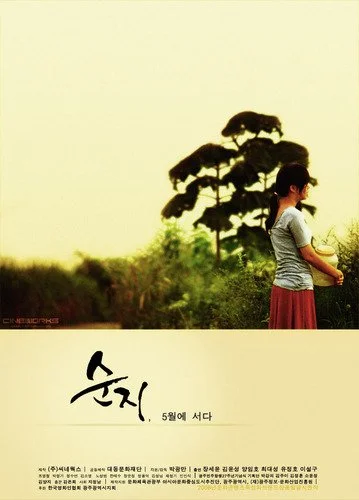
Starring: Jang Se-yoon, Choi Dae-sung, Lee Seol-gu
It is May 2008. The South Korean city of Gwangju, will commemorate the May 18th 1980 uprising in style. They will stage a grand re-enactment of the scenes of the May uprising 25 years earlier, when martial law troops killed civilians, including women and children, who were simply exercising their democratic right to assemble and protest, in the early days of the South Korean democracy. The May 1980 has ever since been a dark stain on South Korean history. For the re-enactment, two groups of Gwangju citizens will play the roles of Citizen Army on the one hand, and of the Martial-law troops on the other, and confront each other in the square in front of the provincial government's civic center. The movie begins with stark documentary footage dealing with the actual event. Gradually, the story of Soonji and Jaegu during the re-enactment takes hold. Before long, the historic facts and fiction run against each other, as Soonji remembers her parent's plight of earlier times. As the reenactment groups collide, so do the facts of Soonji's life and the fiction she is now engaged in, until she can no long separate fact from fiction.
The Song of Resurrection – 부활의 노래 – 1990
Starring: Lee Geung-young, Kim Yeong-jin, Kwan Oh-hyeon
Cheol-gi who dreams of a society that embraces justice begins classes at a night school. There he learns about political and social contradictions and the realities the people face. While doing research on factory conditions with his classmates Tae-il, Min-sook and laborers Hyun-sil and Bong-joon, Cheol-gi learns about the Revitalizing Reforms system and the improper practices in emergency measures. After the military revolution, during the election for a general student body in a move towards democracy, Cheol-gi unwittingly becomes a man on the run when emergency martial law is implemented in response by the government. Cheol-gi blames himself when hears about the deaths of Tae-il and Min-sook during the Gwang-ju Uprising from Hyun-sil and Bong-joon. Just when he and Hyun-sil try to start a new life together, Cheol-gi is arrested and put in jail. Inside the prison, he starts another move towards prison democracy.
Songam-dong – 송암동 – 2023
Starring: Choi Yeong-cheol, Seo Woo-jin
In May 1980, the sounds of gunfire came out of Songam-dong, Gwangju! A five-person fight took place between the 11th Airborne Brigade and the soldiers of the Teacher Training Corps. When nine soldiers were killed, their guns were pointed at the innocent citizens. In May 2023, the thump thump of that day will come back to life on the screen! The camera meticulously recorded and tracked the timeline of the day. One question is asked. Why did they pull the trigger?